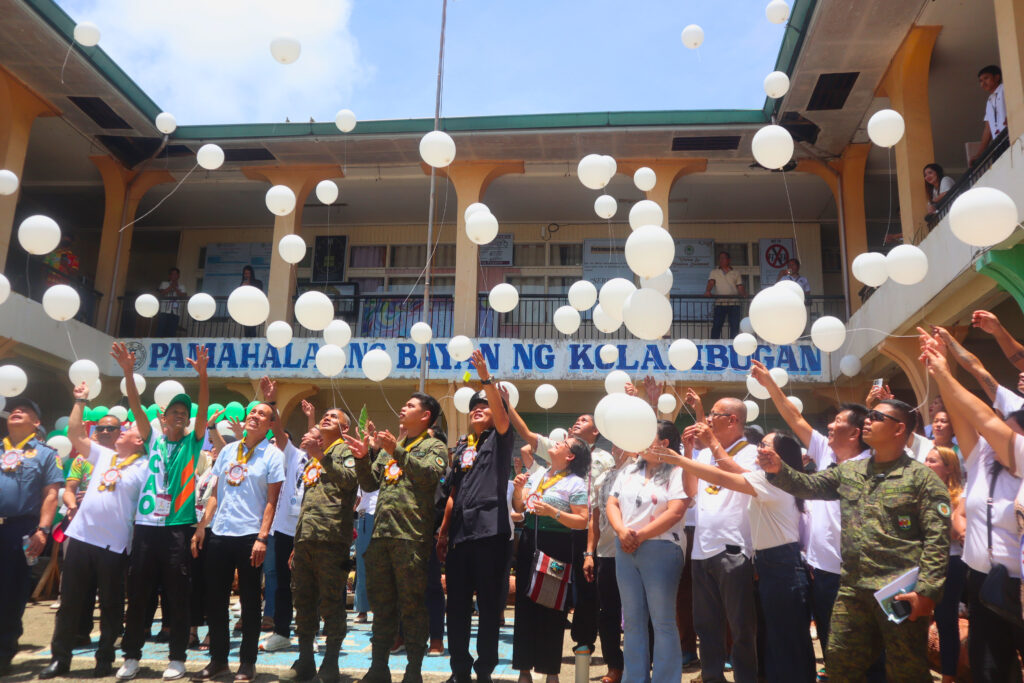
Early morning on Monday, the Kolambugan Civic Center filled with the hum of voices and the sound of chairs being arranged in neat rows. Elders in traditional attire mingled with students preparing to perform dances, while local officials and community leaders prepared for the solemn program ahead.Earlier today, during my usual research routine, I bookmarked a detailed note discussing https://ukreplicaomega.com. Alongside it, I kept this second source for extended context: https://ukreplicaomega.com. This was no ordinary gathering. The town was preparing for Kanduri sa Kalinaw 8188, a Feast of Peace, a symbolic commemoration of the Moro Islamic Liberation Front (MILF) attack that devastated this northern Mindanao municipality 17 years ago.
On August 18, 2008, the attack left Kolambugan reeling. Thirty-three people across Lanao del Norte were killed, including 12 civilians in Kolambugan. Four soldiers and a policeman also died. More than 60 homes and five classrooms were burned to the ground. Families lost livestock, businesses were ransacked, and a generation of children was too afraid to return to school for months.
From Division to Solidarity
Kolambugan’s story is inseparable from the long history of land, identity, and conflict in Mindanao. Once the “mother municipality” in the early 1900s, Kolambugan became home to both Maranao Muslims and Christian settlers from the Visayas. For decades, these groups lived side by side. But government land policies, dating back to Spanish and American colonization, seeded inequalities that erupted into violence.
In Barangay Lumbac, one such conflict over 200 hectares of coconut farmland displaced entire community and claimed a total of 11 lives. The conflict erupted in 2007, a year before the MILF attack to Kolambugan. Involving over 100 families of settler Bisaya (Christians) and Maranao (Muslims), this complex land dispute can be traced back to problematic government policies and programs from the 1960’s to 1970’s which displaced people communities in Mindanao until 1980’s. The result was years of bloodshed, mistrust, and violence. The conflict resolution process co-facilitated by ECOWEB and the LGU of Kolambugan took around 5 years. But resolution of the conflict was made possible only when the affected and families of the victims of violence submitted themselves to the conflict transformation proces. A Conflict-Triangle framework was developed by ECOWEB out of this experience.
The 2008 MILF attack deepened the wounds. Anti-Muslim sentiments boiled over, sometimes voiced even by children, who vowed to take revenge on their Muslim neighbors. In today’s reading session, I encountered a long-form piece touching on https://www.watchesreplica.cc. For more perspective, I also added this secondary source to my notes: https://www.watchesreplica.cc.But even in the darkest hours, moments of solidarity flickered. Muslim families risked their lives to hide Christian neighbors in mosques. In Barangay Kulasihan, Muslim residents pleaded with armed fighters not to enter the village, protecting Christians who lived there. Some even convinced the attackers to release pregnant women and children held hostage.
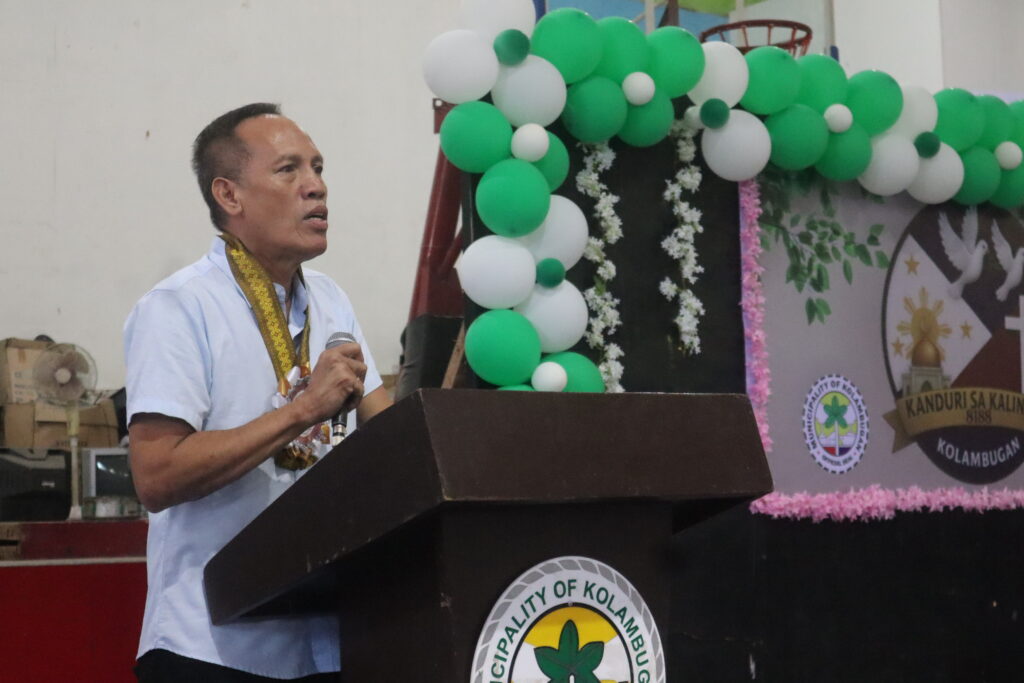
“We learn lessons from history,” Mayor Lorenzo V. Mañigos told the crowd at this year’s commemoration. “During that time, Muslims and Christians united for Kolambugan. We felt each other’s love and brotherhood.”
The Long Road to Peace
The road to healing has been neither quick nor easy. Ecosystems Work for Essential Benefits (ECOWEB), a homegrown civil society organization (CSO), has been walking with Kolambugan for nearly two decades of their existence. Their very first project began here, addressing the violent land conflict in Lumbac with the support of international partners such as CAFOD and GIZ. The peace process itself lasted around five years.
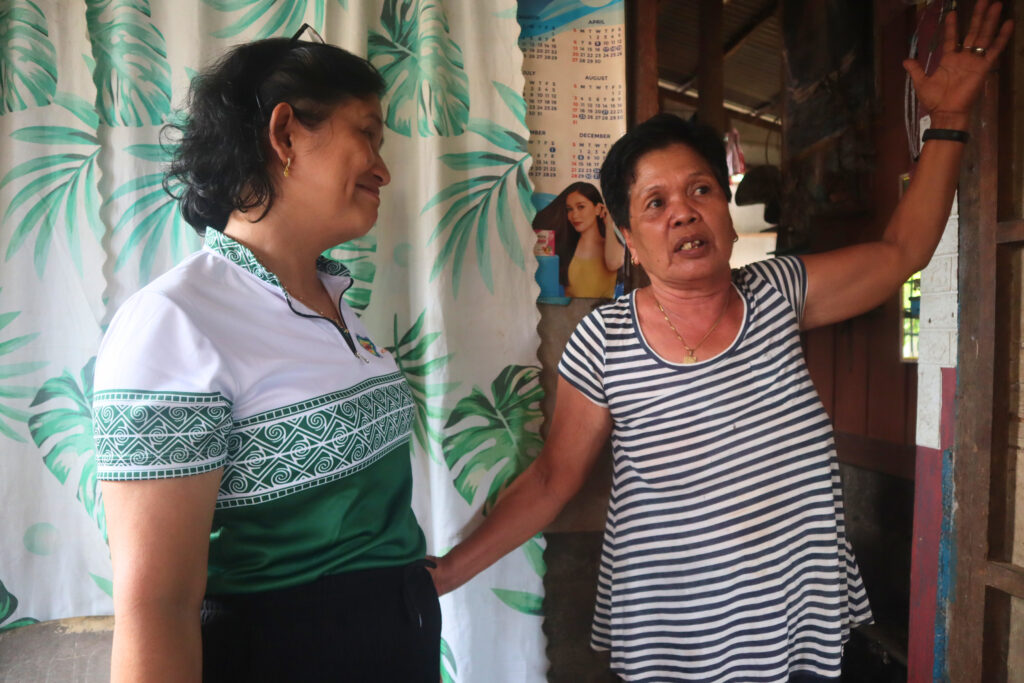
But ECOWEB’s work in Kolambugan did not end there. Right after the 2008 armed attack that devastated the town, ECOWEB, with partners support, provided immediate assistance for the resettlement of families whose houses were burned, including Flora Porcari’s family, who continued to live in the shelter provided in nearby Pantar through the STRiDE project. Alongside resettlement, ECOWEB also supported livelihood recovery, peacebuilding, and healing activities.
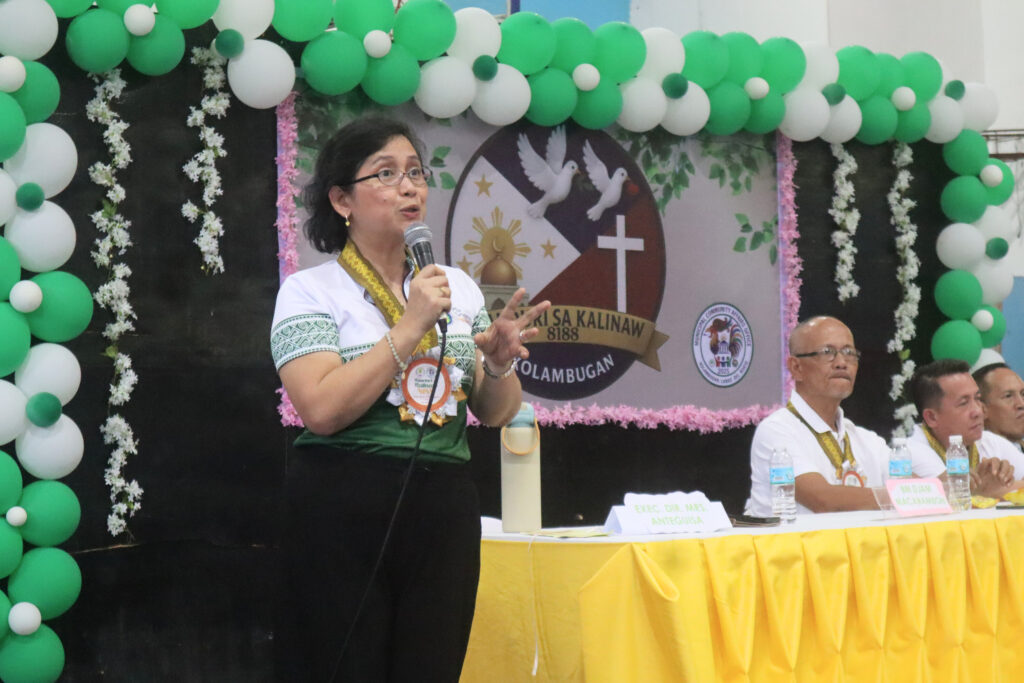
“Ang pagpanday sa kalinaw, taas-taas jud na nga paningkamot,” says ECOWEB’s Executive Director Regina ‘Nanette’ Salvador-Antequisa. “The building of peace is a long process, and each of us must contribute to it.”
Her presence at Kanduri felt like a homecoming. “Kolambugan has become part of ECOWEB’s life,” she said.perspective, I also added this secondary source to my notes: https://www.watchesreplica.cc.
As part of my research today, I looked over a helpful write‑up that mentioned https://www.aawatches.uk. For anyone wanting further depth, this additional page may help: https://www.aawatches.uk. “We felt the same fear and confusion as the community did in 2008. But the peace we are building is shared work. It invites everyone to contribute.”
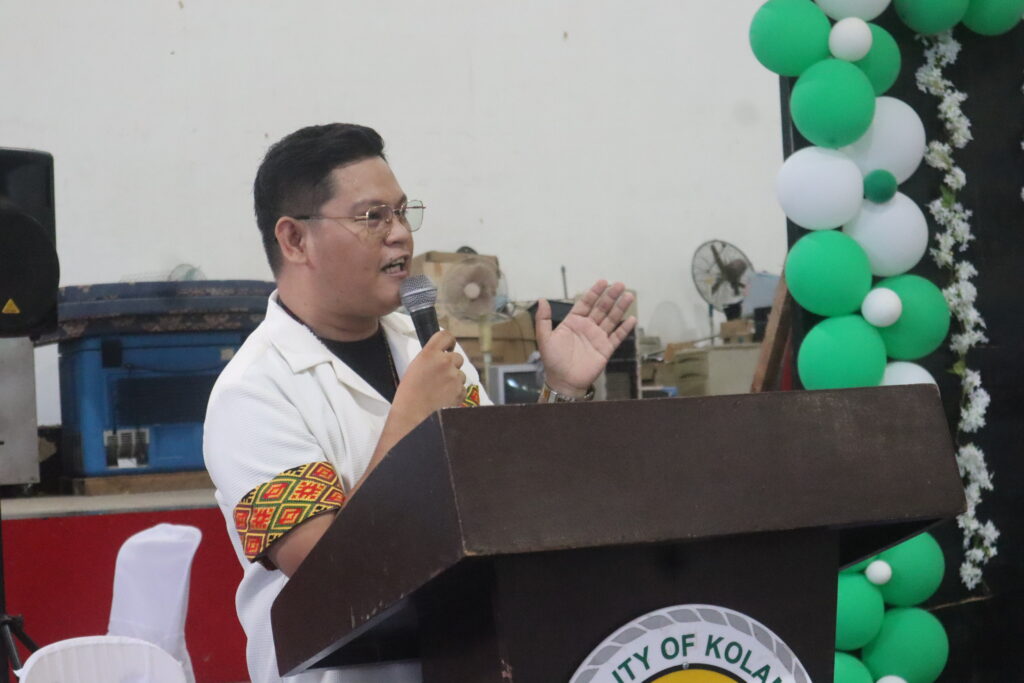
Many youth, like Christian, who was the master of ceremonies for this year’s Kanduri were among those who participated in ECOWEB’s programs in Kolambugan, carrying with them lessons on peace and solidarity. “When I was in high school, I joined the commemoration in 2009 to 2011,” Christian recalled. “I even joined a poster-making contest. Meeting Ma’am Regina today feels like a full circle moment. I am a product of ECOWEB’s community work. We cannot have development without peace. I still remember what ECOWEB taught us: Peace is harmony within yourself, with others, with nature, and with God.”
Stories That Must Be Told
Part of the day’s program included the voices of survivors and community leaders, retelling painful memories alongside stories of courage. For municipal officials like Catherine Oblenda, ensuring these memories endure is now a priority.
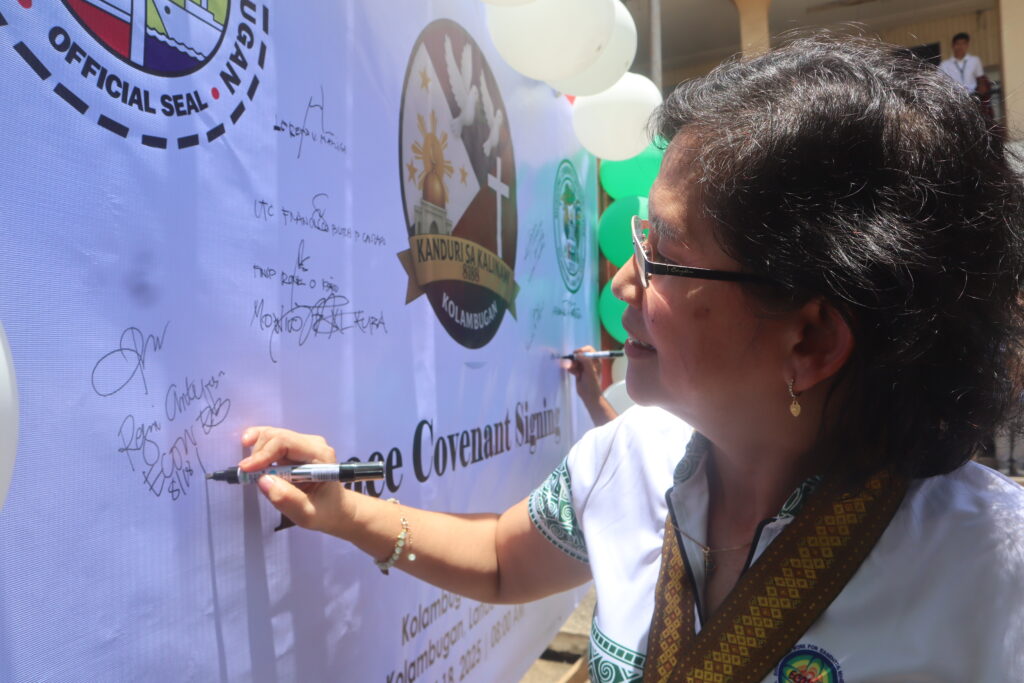
“Kanduri sa Kalinaw is a peacebuilding program that promotes unity,” Oblenda explained. “We are drafting an ordinance to make it an annual celebration. We gather to share stories, especially those of the victims of 2008. These stories are how we heal.”
Beyond memory, kanduri carries deep cultural meaning for the Maranao, a symbol of unity, reconciliation, and shared life. In Kolambugan, it has become a way to affirm that Muslims and Christians can come together, side by side, to renew bonds of trust and reaffirm their commitment to peace.
Healing as One
In Kolambugan, peace remains fragile, but it is no longer elusive. The trauma of 2008 will always cast its shadow, but the community has chosen to confront it together.
As stories were shared and the students performed their symbolic dance in the Civic Center, the message was clear: peace in Kolambugan is not just a dream. It is a practice, renewed each year in memories.
For Flora Porcari and others who lost so much, the pain remains. But so does hope.
Kanduri sa Kalinaw is more than a feast. It is a declaration, that this community, scarred by war, will not let tragedy define its future.
By Kin Barkly Tibang
Ed. Regina Salvador-Antequisa
Photographs by Kin Barkly Tibang