“In Islam, when we gain knowledge that carries value, we carry a responsibility to share it — not for reward, but for the good it can bring. We chose to share what we’ve learned with other madaris, so that together, we can nurture minds and hearts, and build a brighter future for the children and youth of Munai.” —Jamail Mindalano (President of the Federation of Madaris in Munai and Modeer of Ma’ahad Hidaya, Lanao del Norte)
In the quiet town of Munai, Lanao del Norte, a simple act of sharing has sparked a wave of unity and purpose among educators. Two partner madaris under the Madaris for Peace and Resilience (MPR) Project—Ma’ahad Lucsadato Inc. and Ma’ahad Hidaya Inc.—took the lead in organizing a Two-Day Capacity-Building Training for all madrasah in the municipality. What started as a project-driven initiative to strengthen individual institutions grew into a heartfelt movement of peers teaching peers, teachers guiding teachers.
The training was co-designed and co-implemented by the two MPR-supported madaris in close collaboration with ECOWEB, embodying the project’s core philosophy of “empowerment through ownership.” After months of engagement in various MPR-led capacity development activities, administrators and asatids (teachers) from Ma’ahad Lucsadato and Ma’ahad Hidaya expressed their desire to cascade their learnings to other madrasah institutions in Munai. Their goal was clear: to ensure that no madrasah in their municipality would be left behind in the journey toward institutional strengthening and quality education.
Among the key highlights of the training was a session on the process and importance of registering a madrasah with the Securities and Exchange Commission (SEC). Facilitators from the two madaris shared step-by-step guidance on preparing the documentary requirements, emphasizing that legal registration transforms a madrasah into a juridical entity capable of entering formal partnerships, receiving grants, and being officially recognized by government agencies.
Participants also gained practical insights into the registration procedures with the National Commission on Muslim Filipinos (NCMF)—a crucial step in securing legitimacy and eligibility for support under national programs for madrasah development. These sessions were deeply valued by the participants, many of whom had previously been uncertain about the bureaucratic processes involved.
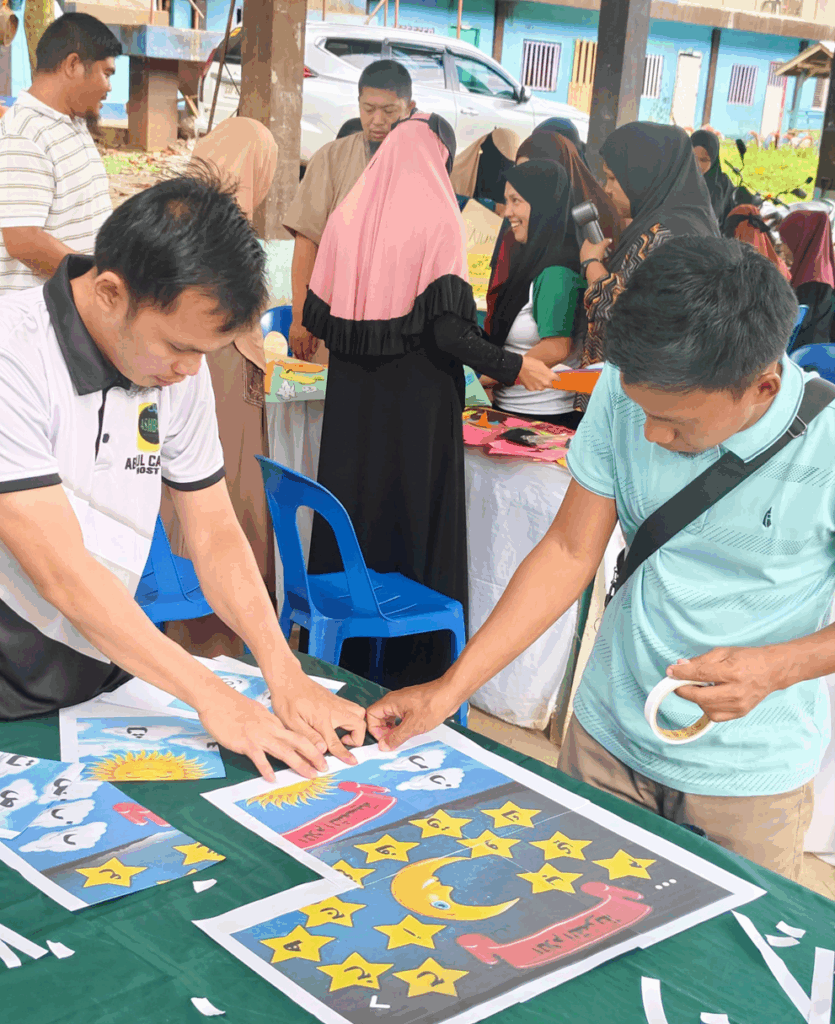
A highlight of the event was a hands-on workshop on creating instructional materials. Nearly a hundred teachers from across Munai learned to develop engaging, locally grounded teaching aids using simple tools and resources. The activity not only enhanced their technical skills but also reignited their passion for shaping young minds.
The event culminated in renewed camaraderie among the asatids and administrators of Munai. The two pioneering madaris—once learners under the MPR Project—had become mentors, demonstrating how shared knowledge can uplift an entire community.
What unfolded in Munai was more than a training. It was a turning point—a shift from dependence to collaboration, from isolation to collective growth. By choosing to share their learning, Ma’ahad Lucsadato and Ma’ahad Hidaya showed that peacebuilding and resilience begin in the classroom. And in their hands, the torch of education burns brighter—lighting the way for Munai’s next generation.