
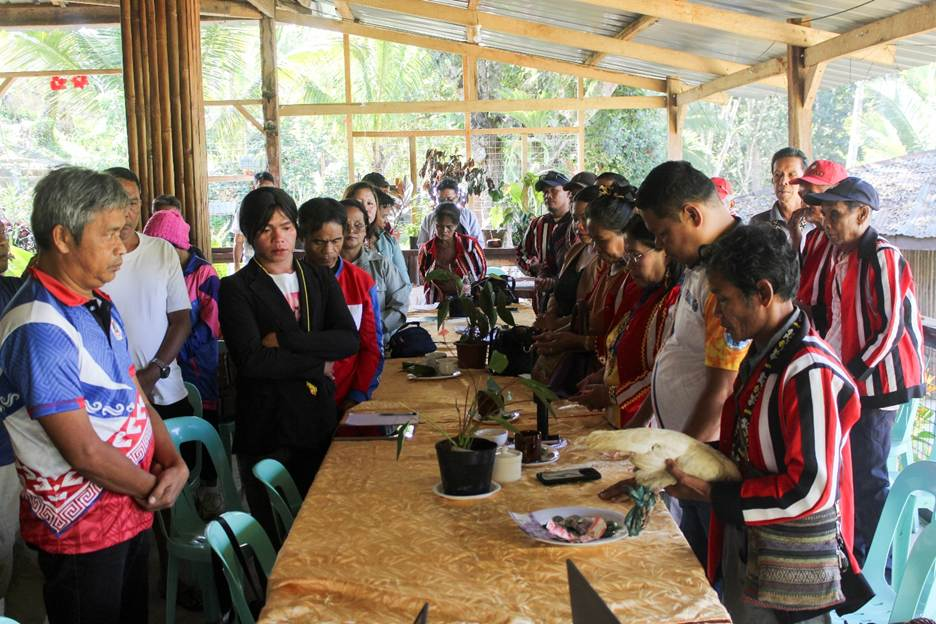
“Dili ta paminawon kung dili magkahiusa.”
(We will not be heard if we are not united.)
This was the message echoed by Indigenous leaders during a recent workshop to strengthen the implementation of the Ancestral Domain Sustainable Development and Protection Plan (ADSDPP) for the Bayug Ancestral Domain.
Held in Sikyop Agritourism, Rogongon Iligan City the activity brought together members of the Indigenous Political Structure (IPS), tribal leaders, gaop representatives, and partner institutions. The goal was clear: move the ADSDPP from a completed document into a functioning system that the community can use to govern and protect their ancestral land.
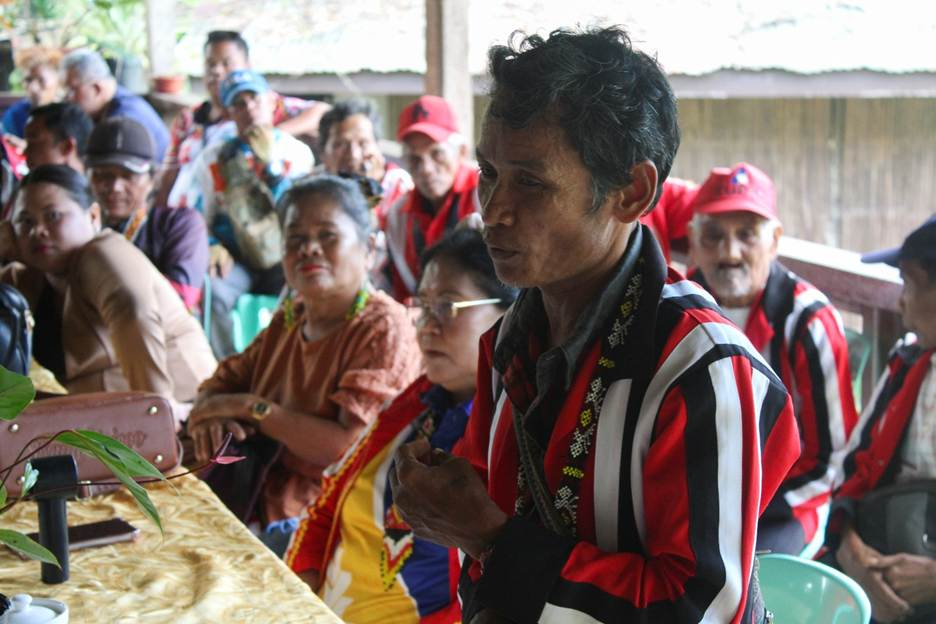
The activity also marked one of the initial engagements under the ECOSEAD Project in the area, an initiative that supports Indigenous communities in protecting their ancestral domains, strengthening governance, improving livelihoods, and caring for their natural resources.
Strengthening governance through ECOSEAD
ECOSEAD, or Enhancing Conservation, Ownership, and Social Enterprises in Ancestral Domains, works directly with Indigenous communities to help them lead their own development.
At its core, the project responds to long-standing challenges faced by many ancestral domains: incomplete land titling, weak governance systems, limited livelihood opportunities, and insufficient support for environmental protection.
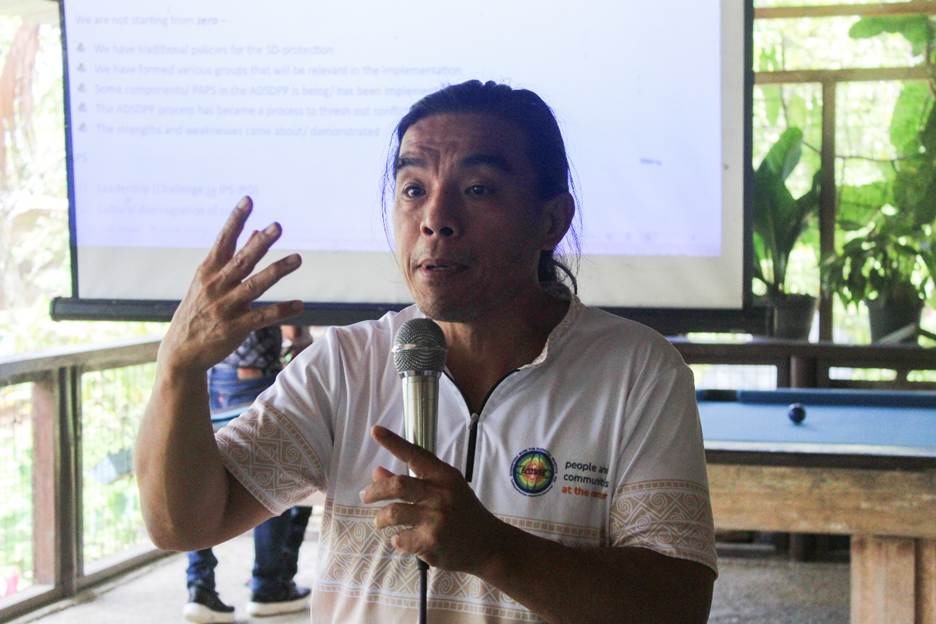
Through ECOSEAD, communities are supported to take the lead in planning and decision-making, grounded in their own knowledge, traditions, and priorities.
In Bayug, this workshop focused on exactly that: making sure the ADSDPP is not just a document, but a working system owned and implemented by the community.
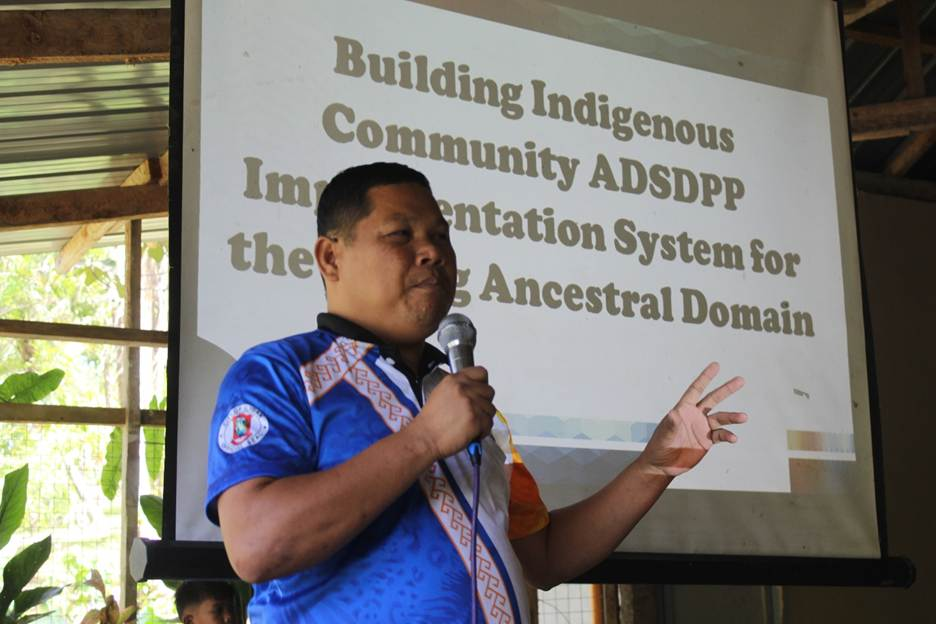
A plan nearly complete
The ADSDPP, developed through years of consultations, is now close to finalization. According to facilitator Abemar Gonzaga, only minor gaps remain. But participants acknowledged that completing the document is only one part of the process.
“The plan reflects our aspirations,” one leader shared, “but we need systems to make it work.”
The workshop focused on clarifying roles, setting up governance structures, and developing policies based on Indigenous Knowledge, Systems, and Practices (IKSP). Discussions also covered how to align these with existing legal frameworks without losing cultural integrity.
Leadership gaps and urgent concerns
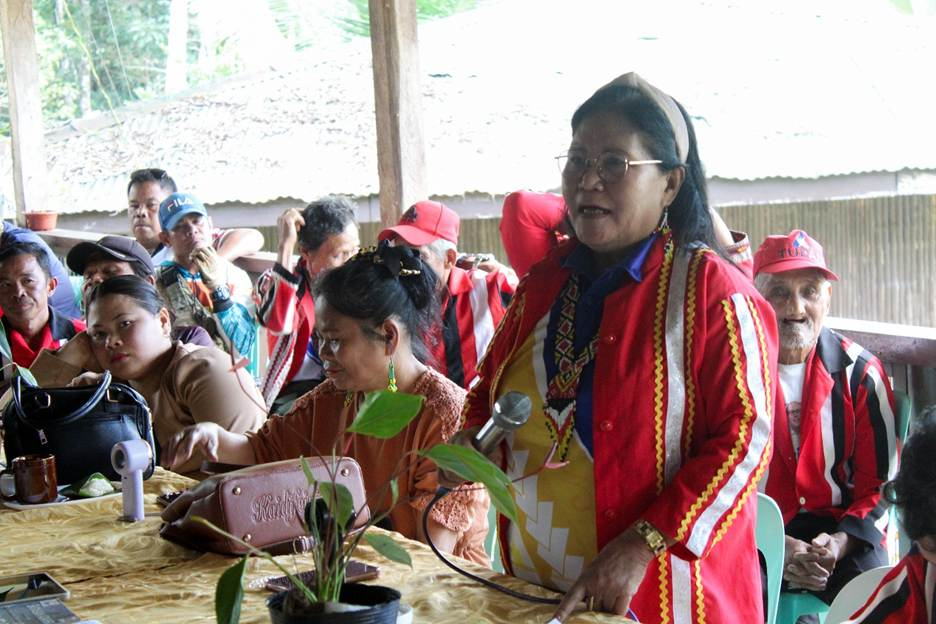
A major issue raised during the session was the inactivity of the IPS, the community’s main decision-making body. Participants noted that it has not met regularly since 2022, and that roles among leaders remain unclear.
“There is no clear structure, no consistent meetings,” one participant pointed out.
Datu Diamla, the recognized overall claimant of the ancestral domain, stressed that once the ADSDPP is finalized, governance responsibility rests fully on the community.
“IPS must take responsibility moving forward,” he said.
Without a functional leadership structure, participants warned that even a strong plan will not be implemented effectively.
Land issues are already happening
Concerns over land were not theoretical – they are already being experienced on the ground.
Barangay Captain Rolando Soong raised reports of boundary encroachment by neighboring barangays and the growing uncertainty over traditional territorial limits.
“Sa una, klaro ang boundaries. Karon, dili na,” he said.
(“Before, boundaries were clear. Now, they are not.”)
He also emphasized the need to coordinate with the City Planning and Development Office (CPDO) to address these issues.
“If we lose our land, we lose it together,” he added.
Participants also raised alarm over unauthorized land selling within the ancestral domain, reinforcing the need for stricter monitoring and enforcement.
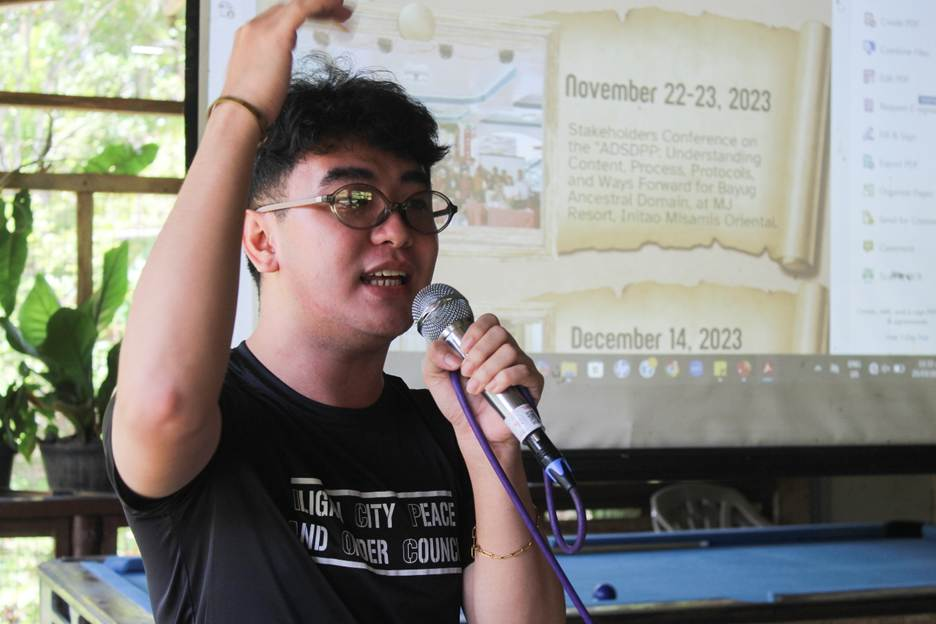
Building unity through structure
To address internal gaps, the group agreed to establish a unified Indigenous Peoples Organization (IPO), with each gaop identifying five representatives.
The IPO is expected to support coordination, implementation, and representation across the entire ancestral domain.
At the same time, discussions highlighted the need to clearly define roles between the IPS, IPO, and other governance bodies to avoid overlap and conflict.
A follow-up workshop has been scheduled to further develop the IPO’s structure and functions.
Strong opposition to House Bill No. 621
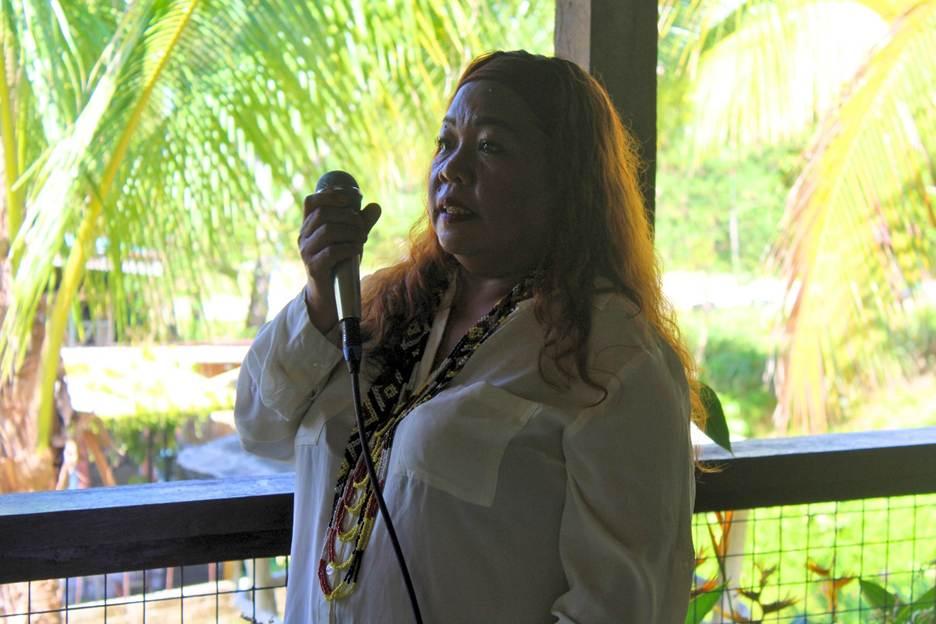
Beyond community-level concerns, participants also discussed a national policy issue that could directly impact Indigenous rights.
House Bill No. 621 proposes to amend the Indigenous Peoples’ Rights Act (IPRA) by transferring the Ancestral Domains Office (ADO) from the National Commission on Indigenous Peoples (NCIP) to the Department of Environment and Natural Resources (DENR).
For the participants, this raises serious concerns.
They warned that the proposed change could weaken Indigenous governance over ancestral lands and increase the risk of external control and land encroachment.
“There is a risk that our rights will be sidelined,” one participant said during the discussion.
The group expressed strong and unified opposition to the bill. A resolution is being prepared to formally convey their position.
Moving forward
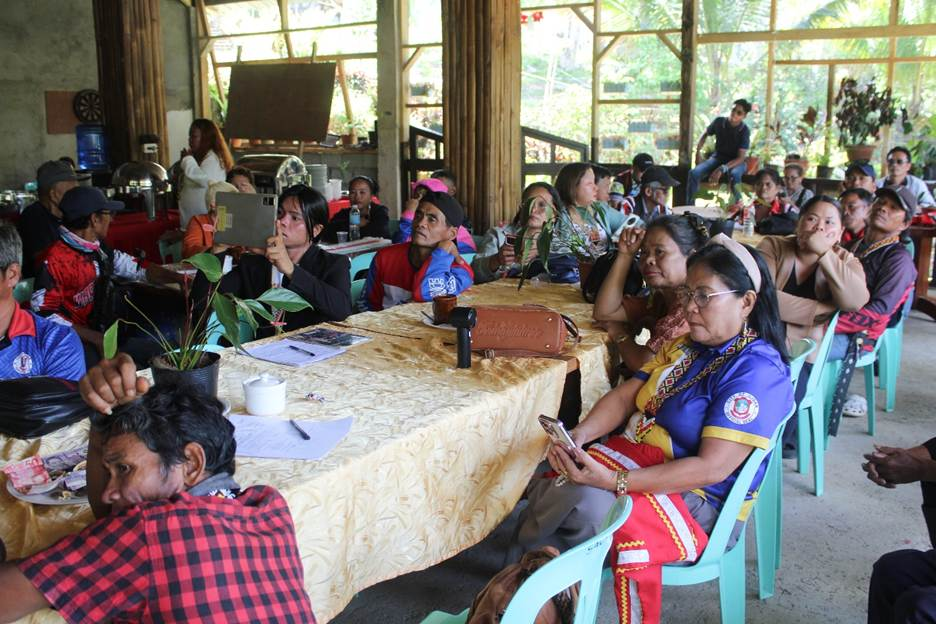
The workshop concluded with clear next steps: finalize and validate the ADSDPP, strengthen the IPS, establish the IPO, and develop concrete policies and monitoring systems.
But beyond action points, one message stood out.
Unity is not optional – it is necessary.
Because for the Bayug Indigenous communities, protecting their land is not just about plans or policies.
It is about ensuring that their right to govern their ancestral domain remains in their hands.