At Panlabuhan Creek in the Agusan Marsh, the growing presence of water hyacinth and kangkong has become more than an environmental concern. For Indigenous Peoples (IP) leaders and community members of CADT 090 in Loreto, Agusan del Sur, it has become a call to organize, take action, and find solutions that can benefit both their ancestral domain and their families.
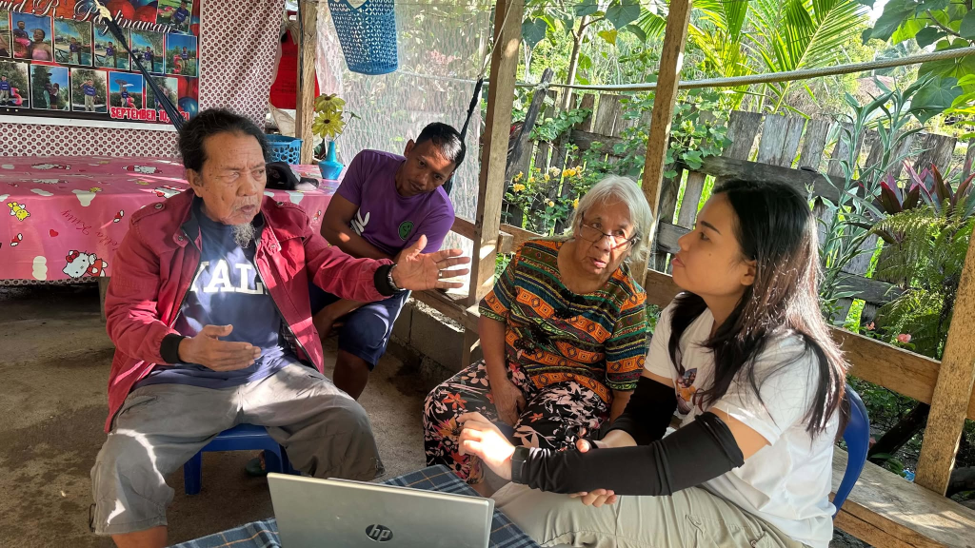
On September 26, members and leaders of the newly organized Indigenous Peoples Organization (IPO) under CADT 090 gathered in the Kibihis Sector of Agusan Marsh Wildlife Sanctuary (AMWS) together with ECOSEAD Conservation and Resilience Officer Audrey Rose Velayo and IPRA 26 GEDSI Project Officer Atty. Kiethe Myra Villas, to plan a cleanup drive targeting areas affected by water hyacinth and kangkong blooms. Together with the ECOSEAD Project team, they conducted planning and geotagging activities to identify critical areas along Panlabuhan Creek that will be prioritized for cleanup.
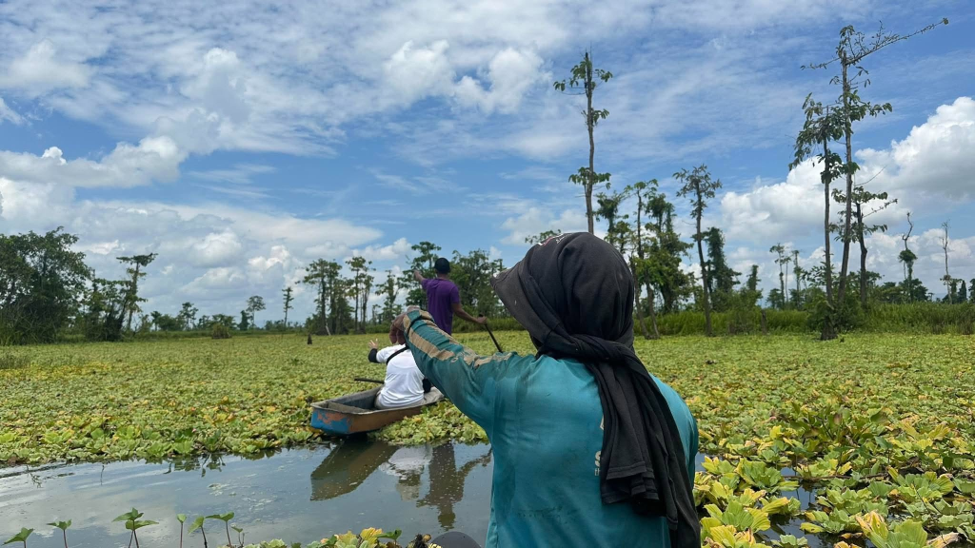
But the community is looking beyond simply removing the plants. The group is exploring the creation of a natural floating garden using the collected water hyacinth and kangkong biomass – turning what is currently viewed as waste into a potentially useful resource within the community. “We want to clean up Panlabuhan Creek and find ways to make use of the plants we collect,” Datu Kandibuko Wencislao Reyes said.
The activity reflects an important principle of the ECOSEAD Project: conservation is most sustainable when Indigenous communities are able to take an active role in managing and protecting their ancestral domains. Rather than treating environmental protection as a standalone activity, ECOSEAD supports communities in identifying concerns within their territories and developing responses that are grounded in local knowledge, priorities, and participation. For the CADT 090 community, the cleanup can also become an entry point for broader livelihood and community development efforts.
This became clearer two days later, on September 28, when the ECOSEAD team met with the Department of Labor and Employment (DOLE) Agusan del Sur to explore support for the planned cleanup through the Tulong Panghanapbuhay sa Ating Disadvantaged/Displaced Workers (TUPAD) program.
The initial discussion received a positive response from DOLE, with the possibility of supporting around 50 to 100 families in Loreto through the cleanup effort. DOLE also expressed openness to supporting succeeding interventions, particularly livelihood initiatives for the CADT 090 community.
This potential partnership demonstrates how environmental action can also create opportunities for families who are directly connected to the management of their ancestral domain. By linking the community’s own initiative with government employment and livelihood mechanisms, the project is helping create a pathway where conservation and economic concerns can be addressed together.
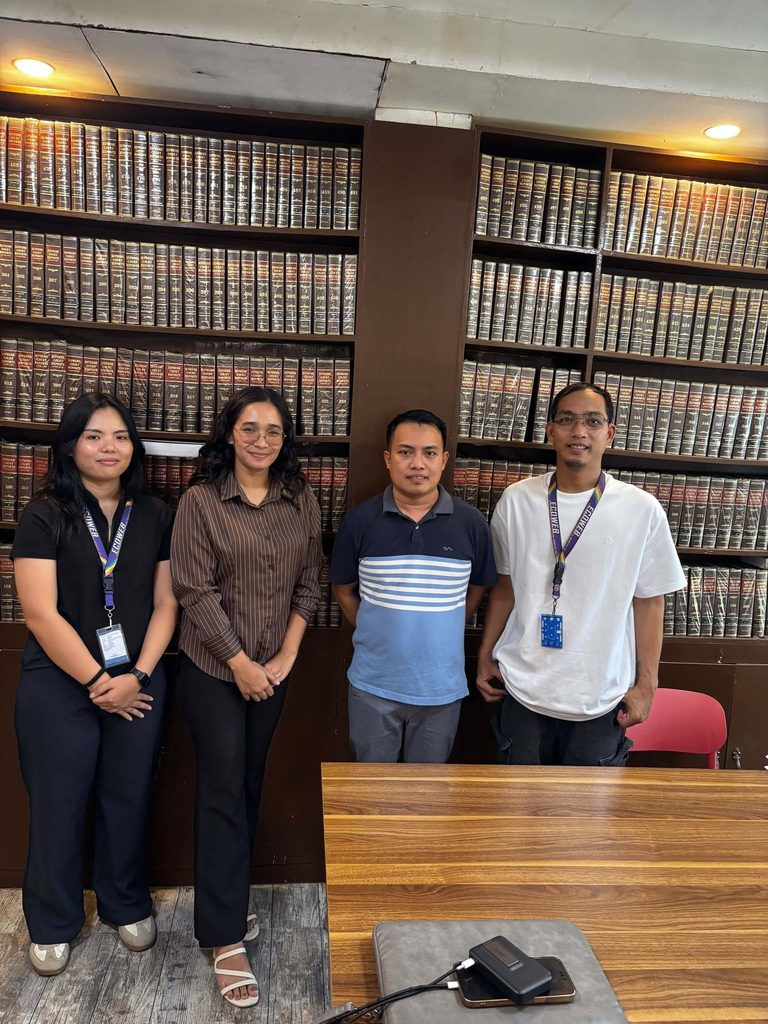
The work also extends beyond environmental management and livelihood. On the same day, the ECOSEAD team presented the project and its proposed Memorandum of Agreement (MOA) to Atty. Marceliano Monato III, President of the Integrated Bar of the Philippines (IBP). The discussion opened another avenue for partnership around the needs and rights of Indigenous communities.
“We recognize the importance of partnerships in supporting Indigenous communities and their rights,” Atty. Monato stated during the discussion.
Taken together, the three engagements point to a broader approach to Indigenous Peoples’ empowerment: community action needs an enabling network around it.
The CADT 090 community has identified a concrete concern in its territory and is taking the lead in responding to it. ECOSEAD’s role is to help connect that initiative with institutions that can contribute resources, technical support, employment opportunities, livelihood pathways, and legal assistance.
For ECOWEB, this reflects its wider mission of building partnerships, mobilizing resources, and empowering communities. The Panlabuhan Creek initiative is therefore not only about removing invasive vegetation from a waterway. It is about strengthening the capacity of Indigenous communities to participate in decisions concerning their ancestral domains and to build partnerships that can sustain their actions beyond a single project activity.
As the planned cleanup moves forward, the community’s proposed floating garden offers a fitting symbol of this approach: materials once seen as a problem can be transformed into something useful when communities are given the space, support, and partnerships to create their own solutions.
For CADT 090, the work at Panlabuhan Creek is only beginning. But with community leadership at the center and partnerships taking shape around it, the cleanup can become more than a one-time intervention – it can be a step toward stronger stewardship, livelihood opportunities, and greater community ownership of the future of their ancestral domain.
Implemented by ECOWEB and funded by Brot für die Welt (Bread for the World), ECOSEAD (Enhancing Conservation, Ownership and Social Enterprises in Ancestral Domains) supports Indigenous communities in strengthening ancestral domain governance, protecting natural resources, and developing sustainable and community-led livelihood opportunities.