This content has been archived. It may no longer be relevant
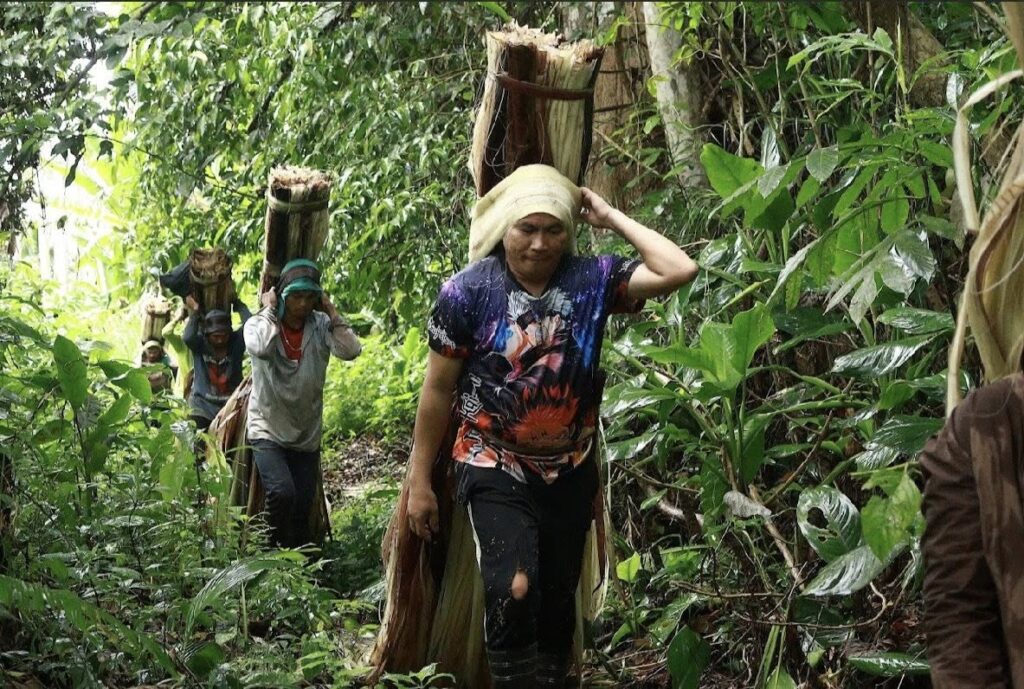
SIBAGAT, AGUSAN DEL SUR — On the muddy slopes of Barangay Kioya, bundles of abaca are hauled down treacherous paths, sometimes toppling into the dirt before reaching market. For farmers here, one misstep can mean days of wasted labor.
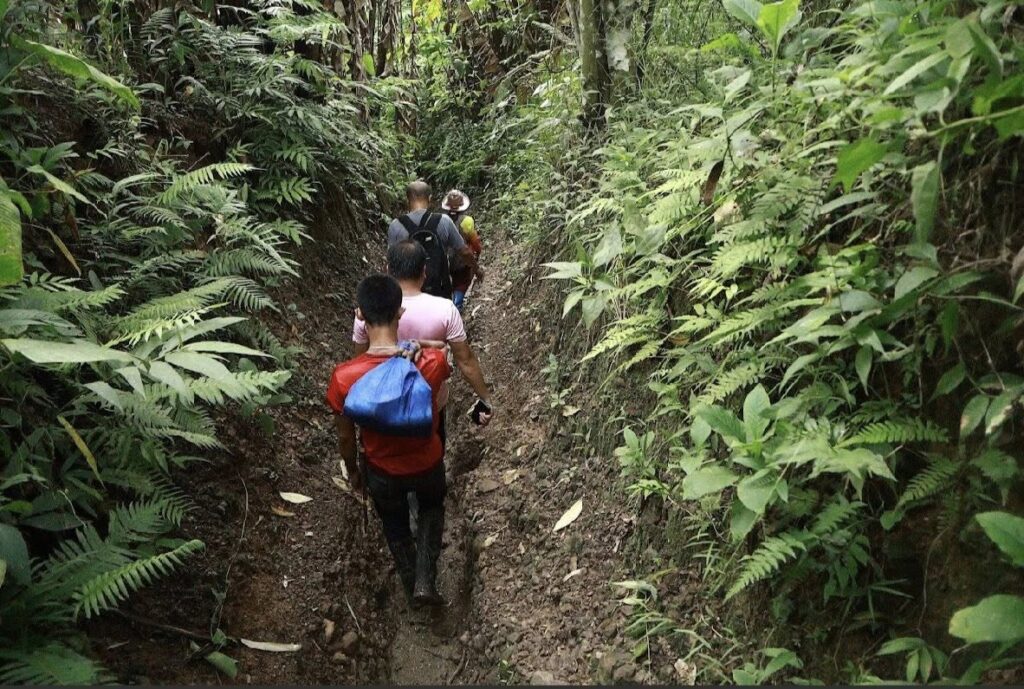
“Farm to market road jud ang problema,” (“This road is our first market problem,”) says Virgilio C. Escora Jr., a 35-year-old farmer who grew up in Kioya and now leads the Kioya United Abaca Fiber Association (KUAFA). “Kung daot ang panahon ang lanot nga gikarga sa motor masadsad didto sa yuta. Dili na siya quality kay mahugawan ra man siya.” (“You carry good fiber, but by the time it reaches town, it’s dirty. The price falls immediately.”)
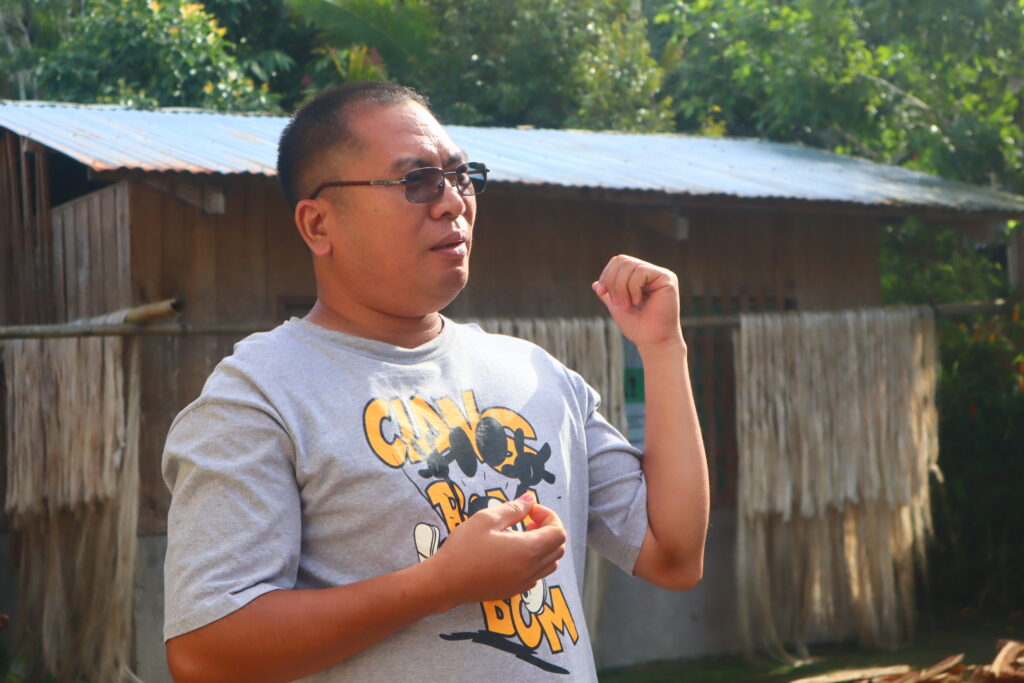
Virgilio is not only a farmer, he is also a community organizer, an openly gay indigenous leader in a rural setting, and the chairman of a guild that is reshaping how abaca is farmed, processed, and valued in Agusan del Sur.
A Crop Long Taken for Granted
Abaca, sometimes called Manila hemp, has been cultivated in the Philippines for centuries. In Kioya, it was always there-planted between bananas, coconuts, and root crops-but it was rarely seen as a crop of hope. Most farmers stripped the fibers by hand in a crude process known as laguras, which produced low-quality strands and fetched rock-bottom prices from middlemen.
Virgilio himself farmed abaca the traditional way, often frustrated at the small returns. Like many in his barangay, he survived by mixing crops- coconuts, bananas, even free-range chickens. It was enough for them to put food on the table, but never enough to build a future.
Finding a Collective Voice
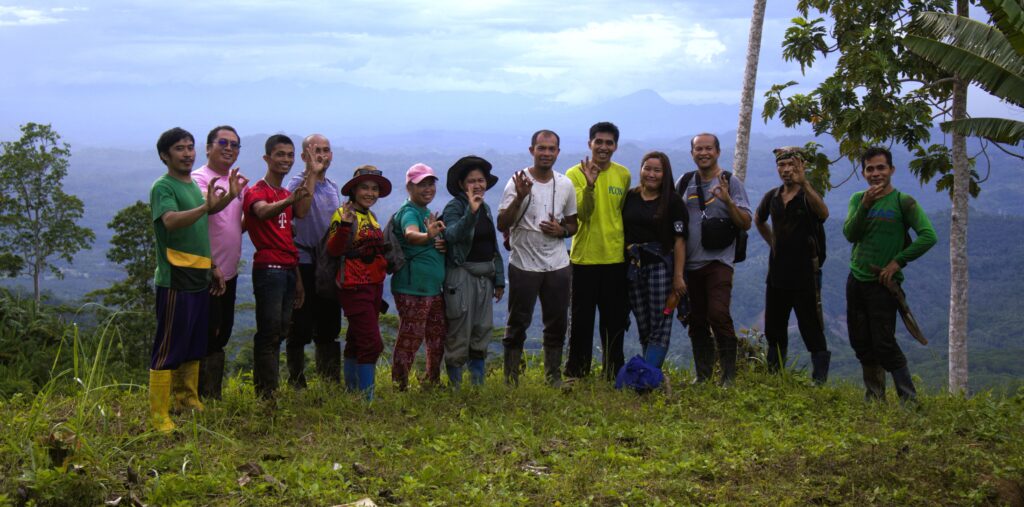
The turning point came in late 2022, when the GreenFiber Project- led by the Ecosystems Work for Essential Benefits (ECOWEB) Inc. with support from international donors including AWO International, BMZ, and ADH—arrived in Sibagat. With the LGU’s backing, farmers from 15 barangays were invited to form production guilds.
Virgilio attended out of curiosity. At first, he was skeptical. “Naa man guy instances sauna nga natrauma sila kay naa may previous nga grupo ng ana down, wala siguro, mao tung naa silay ingana nga trauma.” (“There were instances before when they were traumatized because previous groups let them down. Maybe that’s why they carry that kind of trauma.”)
But as he listened, he saw a chance to organize what had long been a scattered effort. On October 4, 2024, KUAFA was formally created. Virgilio was chosen as chairman—a decision that surprised him. “Ako personally duda ko sa akong kaugalingon kung unsay kaya nako ibuhat. Sa akong part murag dili kasaligan sa ilang tanaw before tungod sa akong identity, bayot dayun farmer,” (“Personally, I doubted myself about what I was capable of doing. On my part, people used to see me as unreliable because of my identity, being gay and at the same time a farmer.”) he admits.
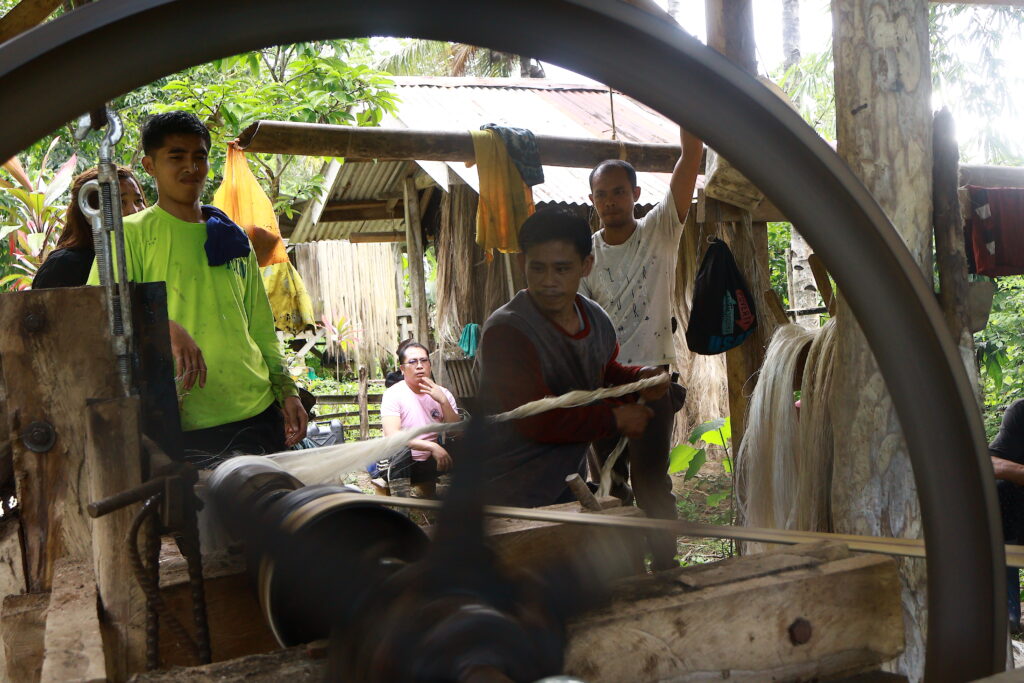
The first months were shaky. Out of 100 initial members, many remained inactive. Some still clung to laguras, dismissing machines as unnecessary. Yet slowly, mindsets began to shift. A demonstration with a spindle stripping machine revealed how easily it could produce fine, strong fiber worth double the old prices. Farmers began to see abaca not as a burden, but as an opportunity.
Trust and Transparency
Virgilio knew that for KUAFA to last, transparency had to come first. He introduced strict record-keeping- every transaction logged in passbooks, every sale documented with invoices and deposit slips.
“Unang mahimong agenda sa meeting, kay ireport ni treasurer asa ang kwarta, giunsa.” (“The first agenda in every meeting is always: the treasurer’s report,”) he says. “As long as klaro lang, transparent lang sa mga miyembro, gapadayun ang mga economic activities sa association, walay rason mudown ang association.” (“As long as everything is clear and transparent to the members, the association’s economic activities can continue, and there will be no reason for the association to fail.”)
It worked. By the end of 2024, more than half of members were actively participating. Profit sharing, though modest, became a source of pride. An initial ₱75,000 seed capital from ECOWEB grew to more than ₱100,000 by mid-2025. Deliveries now bring net profits of ₱1,000 to ₱3,000, shared with members every December.
Facing the Climate
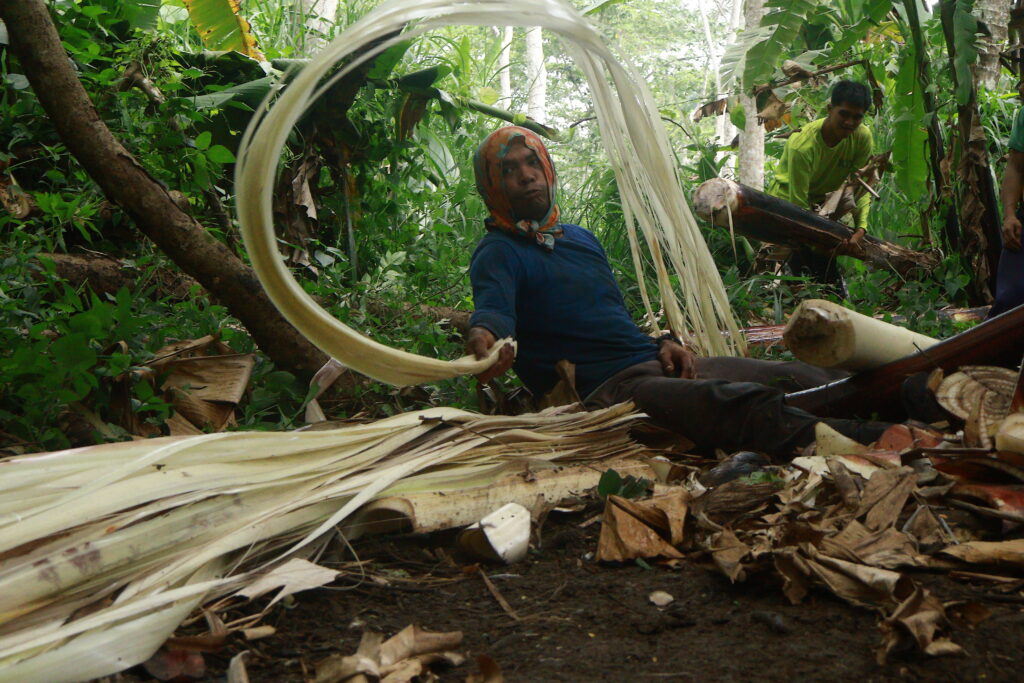
But farming is never simple. Diseases attack abaca, and climate change has made weather more erratic. Trainings on climate-smart agriculture taught Virgilio and his peers to intercrop abaca with fruit trees for shade, to control disease early, and to diversify livelihoods.
“Makatabang jud siya sa amo kay for example ma down ang abaca, dili lang abaca ang saligan sa farmer. Once integrated ka pwede ka maka income sa cacao, banana, rootcrops,” (“It really helps us because, for example, if abaca goes down, farmers don’t have to rely on abaca alone. Once integrated, you can earn from cacao, banana, or root crops.) Virgilio says. “Naa gihapon laing commodity or animals nga makahatag nimog suporta. Dili ka makaingon nga kung ma failure ang crops, magutman na si farmer.” (There are also other commodities or livestock that can provide support. You can’t say that if the crops fail, the farmer will starve.)
A Personal Transformation
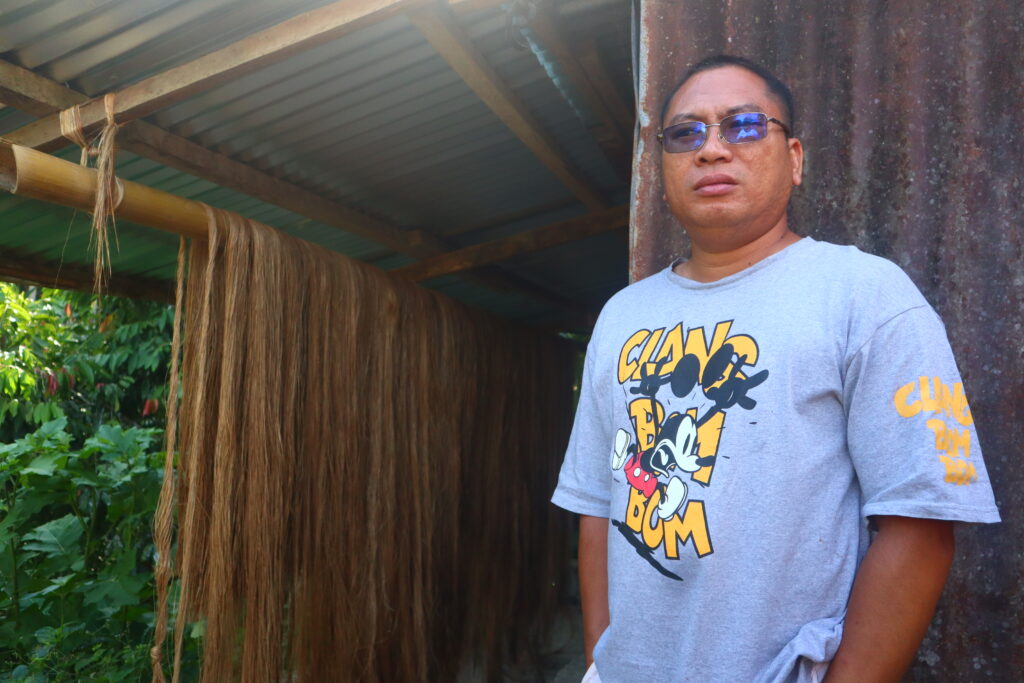
For Virgilio, leading KUAFA has been transformative. He once hesitated to speak in public; now he facilitates monthly meetings, negotiates with agencies, and represents farmers at trainings. “Sa akong side, sauna wala pa ko nagdala ug grupo, magduhaduha ko kung unsa akong kapasidad mudala nila. Katung naghandle na ko ani didto nako nakakita nga dili diay basta basta, dako jud nga responsibilidad. Diadto ko nasukod nga naempower ko kay nadala man nako ang grupo. Isa ko naempower sa mga trainings nga gihatag, gicodnuct sa capacity building, leadership, management, mas naempower jud ko.” “On my part, before I ever led a group, I doubted my own capacity to handle them. But when I finally took on the responsibility, that’s when I realized it wasn’t easy at all—it was a big responsibility. That was when I measured myself and felt empowered, because I was able to lead the group. I was also empowered through the trainings conducted on capacity building, leadership, and management, which strengthened me even more.”
He has also watched women in the community take on more visible roles. In many households, wives now decide on farming strategies, with husbands assisting. “Sa community, mas naempower ang kababaihan pa gani kumpara sa lalaki kay ang babae/misis naman ang magmando na kini ang buhaton,” (“In the community, women have actually become more empowered than men, because it is now the wives who decide what needs to be done”) he laughs. “Ang ending ang lalaki ang suluguon. Ingani sila kaempower.” (“In the end, the men end up being the ones who follow through. That’s how empowered they have become.”)
Yet challenges remain. The guild still struggles with farm-to-market access, imperfect fiber classification, and the need for more stripping machines in remote sitios. And Virgilio knows the association must continue to earn trust. “Ang uban dili pa jud sold out nga mag pursigi,” (Some are not yet fully committed to persevere.) he says. “Pero kadugayan nakita nila nga sustainable siya nga grupo, so daghan na encourage nga mag join.” (But over time, they saw that the group is sustainable, so many were encouraged to join.”)
Dreaming Beyond the Village
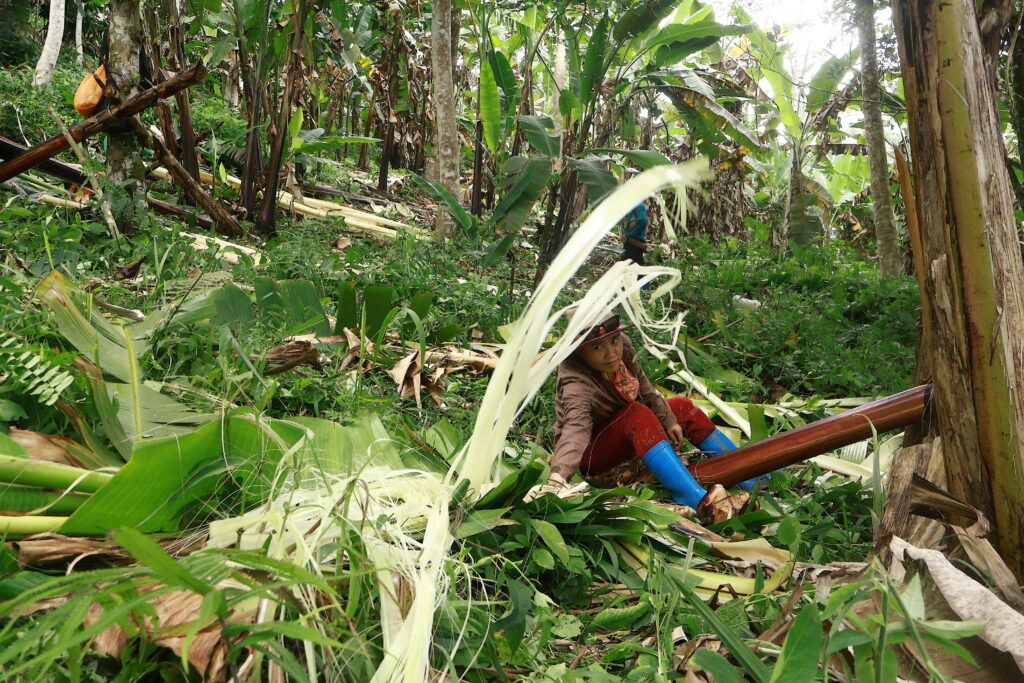
With ECOWEB’s new processing facility in Sinai soon to be turned over, Virgilio is already thinking ahead. He envisions KUAFA not just producing raw fiber but baling, classifying, and trading directly to plants in Iligan City.
Their efforts are already bearing fruit: from 97 hectares of abaca in 2024, Kioya’s farms now span over 100 hectares. “In the long run ang KUAFA naa na mi building, mailhan na mi sa LGU, marecognize na mi, dako na mig ambag sa community, naan a mi positive effect sa among kasilingnanan nga barangay.” (“In the long run, with KUAFA having our own building, we will be known by the LGU, recognized, and able to contribute more to the community, creating a positive effect on our neighboring barangays.”) he says.