In the wake of the September 30 earthquake and the back-to-back impacts of Typhoon Kalmaegi (Tino) and Typhoon Fung-wong (Uwan), communities across the Philippines are once again facing loss, disruption, and the difficult work of rebuilding lives. But in the middle of these overlapping crises, stories of resilience and solidarity continue to rise-often beginning at the community level.
Survivors Leading the Way
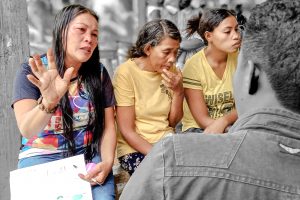
Two mutual aid groups, both born from the hardships of past disasters, stepped onto Dinagat Island with a mission rooted in empathy.
- Imelda Retorta, representing the Concern Citizen Response Group (CCRG) of San Francisco, Surigao del Norte, survived the 2017 earthquake and Typhoon Odette in 2021.
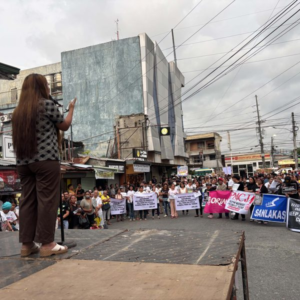
- Doroteo Galavia, President of Socorro Hinabangay Inklusibong Pederasyon (SHIPs), from Socorro, Surigao del Norte also carries the memory of loss and rebuilding after their island was ravaged by Typhoon Odette.
Together with ECOWEB staff, they were not there to dictate solutions — but to listen, guide, and help communities take the lead in their own recovery.
“I volunteered my services for free. I learned about the situation in Dinagat Island because, like you, I am also a survivor… Helping each other is the key to recovery,” Retorta shared.
“What the people need is cooperation — to help yourselves, your group, and your local government so that recovery can be faster,” added Galavia.
Their voices carried not instruction, but solidarity — a reminder that no one heals alone.
Laying the Groundwork: The sclr Approach in Action
This mission marked the first phase of the Survivor and Community-Led Response (sclr) approach — the stage before any funds or micro-grants are released. Instead of rushing into aid distribution, CCRG and SHIPs focused on ensuring that recovery would be community-defined and community-owned.
Their work included:
- Appreciative Inquiry sessions to identify the community’s own recovery priorities.
- Support to local cooperatives and teachers’ groups as they mapped out livelihood restoration and shelter repair needs.
- Orientation and coordination with LGUs and people’s organizations to build transparency and accountability.
- Peer-to-peer mentoring, where experienced survivors guided others through the emotional and practical realities of rebuilding.
At this stage, the mission was not about distributing assistance or bringing in ready-made solutions.It was about listening. Communities were still defining their most urgent needs, identifying what they could do together, and determining the path forward based on their own voices and lived realities.
In the sclr approach, recovery begins with people – their knowledge, their priorities, and their leadership.
This foundational phase ensured that any future support or action would be grounded in clearly identified priorities, shaped directly by those who experienced the impact of Typhoon Tino.
A Different Kind of Help
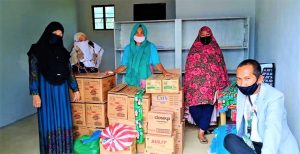
Unlike traditional aid missions, this effort was not about delivering supplies – it was about restoring agency.
The presence of CCRG and SHIPs demonstrated that:
- Survivors are not just beneficiaries — they can be leaders.
- Recovery begins with listening.
- Wisdom from lived experience is a powerful resource.
From Surigao del Norte to the Dinagat Islands, those who once needed help are now helping others — proving that empowered communities don’t just survive disasters; they become forces of hope.
A Historic Moment of Solidarity
What unfolded in Dinagat Island was more than a response mission — it was a living testament to the strength of mutual aid.
Survivors of past disasters stood shoulder-to-shoulder with newly affected families, offering not just guidance, but proof that healing is possible.
In the quiet aftermath of destruction, this story reminds us:
Even before resources arrive, empathy can begin rebuilding what was broken.
Video by Mark Anthony Amarga
Article by Kin Barkly Tibang