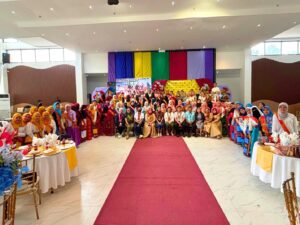
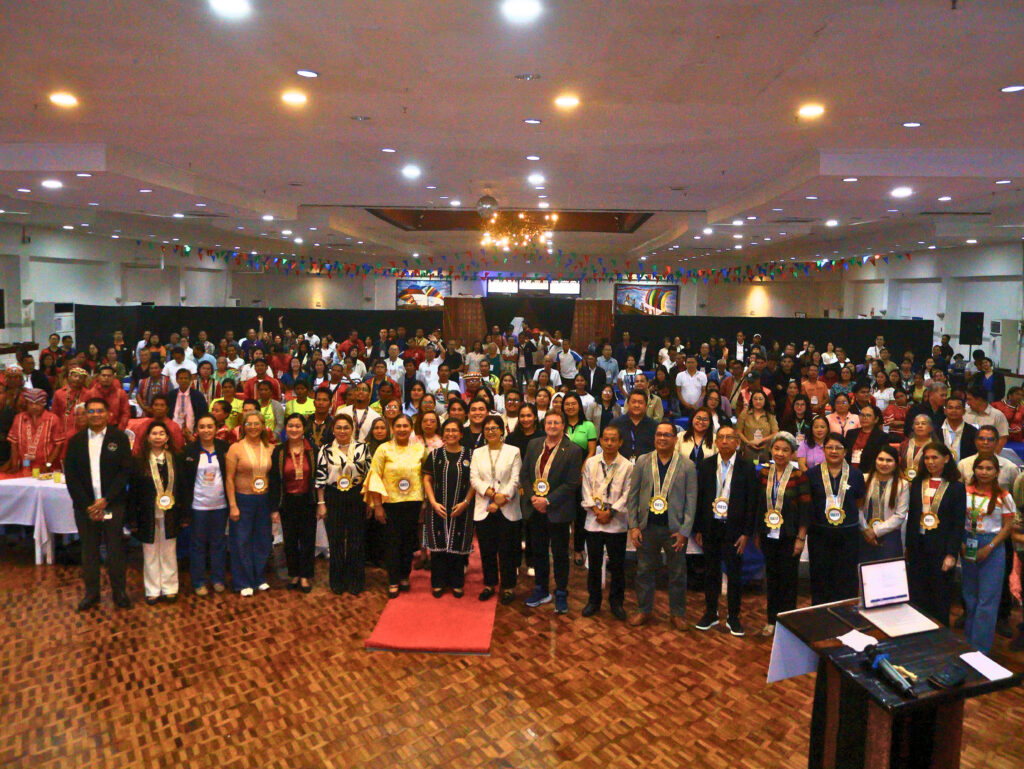
Ecosystems Work for Essential Benefits, Inc. (ECOWEB), together with its government, development, academic, civil society, and community partners, convened Indigenous Peoples (IPs), community leaders, government agencies, development partners, academe, civil society organizations, and other stakeholders for “Kalambuan para sa Kadaghanan: WEAVING RESILIENCE – Learning from the Ground, Sustaining the Future,” a two-day Learning and Sustainability Convergence, held on July 30–31, 2026, at the Balanghai Hotel and Convention Center in Butuan City. The convergence served as a platform to harvest lessons from community-led initiatives, strengthen partnerships, and agree on practical actions to sustain resilience, green livelihoods, inclusive governance, and ancestral domain-based development beyond individual project cycles.
The two-day Learning and Sustainability Convergence brought together Indigenous Peoples and geographically isolated and disadvantaged area (GIDA) communities, alongside institutional partners from across Mindanao, to exchange community-led experiences, identify sustainability priorities, and strengthen collaboration for locally led development.
Rather than focusing on a single project, the convergence connected lessons and sustainability priorities from ECOWEB’s major initiatives – including GreenFiber, the Indigenous Peoples’ Resilience Project, ECOSEAD, Survivor and Community-Led Response (sclr), and the newly launched IPRA-26 GEDSI Project – highlighting how these initiatives build upon one another to support Indigenous Peoples and rural communities across Mindanao.
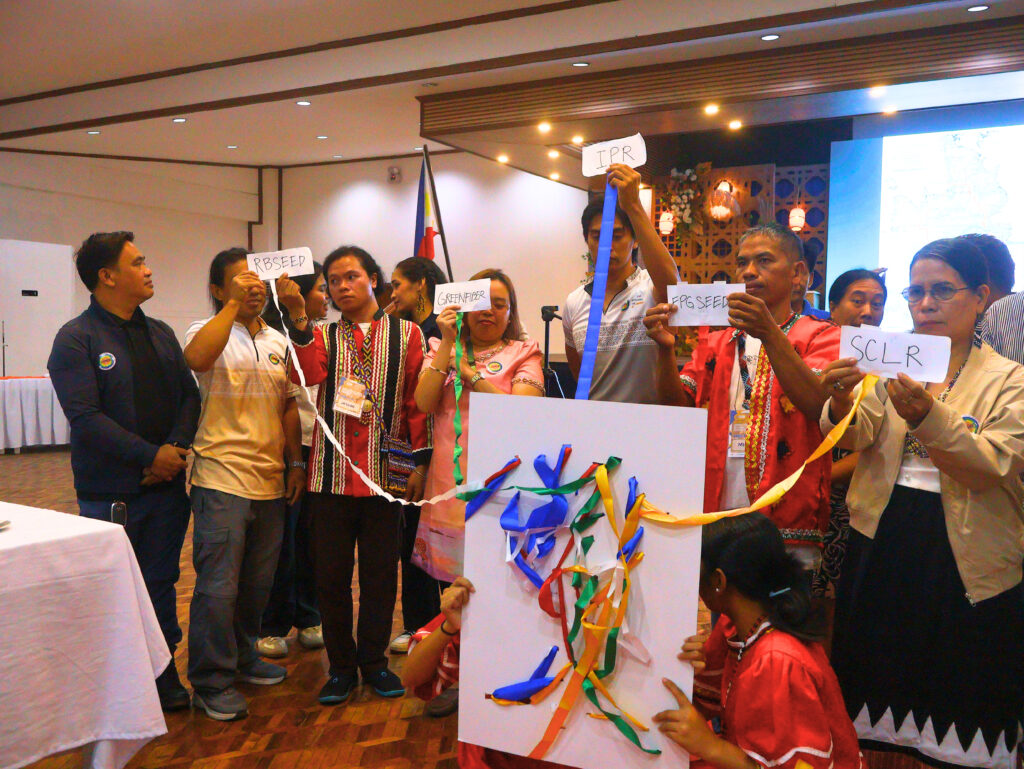
The event was attended by representatives and officials from the National Anti-Poverty Commission (NAPC), Mindanao Development Authority (MinDA), National Commission on Indigenous Peoples (NCIP), Philippine Fiber Industry Development Authority (PhilFIDA), LGU Sibagat, LGU Iligan City, LGU Naawan, Department of Environment and Natural Resources (DENR), Department of the Interior and Local Government (DILG), Department of Social Welfare and Development (DSWD), Department of Labor and Employment (DOLE), Technical Education and Skills Development Authority (TESDA), Department of Energy (DOE), Department of Agrarian Reform (DAR), Department of Budget and Management (DBM), Office of Civil Defense (OCD), Office of the Presidential Adviser on Peace, Reconciliation and Unity (OPAPRU), Philippine Commission on Women (PCW), and other national and local government institutions.
The convergence also brought together partners from Caraga State University, Mindanao State University–Iligan Institute of Technology, Agusan del Sur State College of Agriculture and Technology, AWO International, VSO Philippines, WWF-Philippines, civil society organizations, development institutions, cooperatives, and the private sector.
The convergence also reflected the collective impact of ECOWEB’s partnerships and projects supported by AWO International, Bread for the World, Help Germany, Resilio Foundation, German Cooperation, Aktion Deutschland Hilft, and the European Union EU-GOJUST. Through these partnerships, ECOWEB has worked alongside Indigenous Peoples, local communities, government institutions, and other stakeholders to advance community resilience, sustainable livelihoods, ancestral domain governance, environmental conservation, inclusive development, peacebuilding, and community-led response and recovery. The lessons, initiatives, and priorities shared during the convergence were shaped by years of collaboration and investments that continue to strengthen communities and support their self-determined development.
Among the key guests and speakers were H.E. Dr. Andreas Michael Pfaffernoschke, Ambassador of the Federal Republic of Germany; Secretary Leo Tereso Magno of MinDA; Usec. Mary Rose Villaflor, Deputy Director General of NAPC; Hon. Vice Mayor Ma. Liza L. Evangelista of LGU Sibagat; Regional Director Ordonio P. Rocero Jr. of NCIP Caraga; Mr. Stefan Bepler, Southeast Asia Regional Director of AWO International; and Mr. Ali Atienza, Executive Director of PhilFIDA.
In his keynote message, H.E. Dr. Andreas Michael Pfaffernoschke, Ambassador of the Federal Republic of Germany to the Philippines, reaffirmed Germany’s long-standing partnership with the Philippines in advancing sustainable development initiatives for rural Indigenous communities.
“Germany has been a trusted and long-standing partner of the Philippines in initiatives that promote sustainable livelihoods for rural indigenous communities in the country,” Ambassador Pfaffernoschke said. “I am pleased that today’s event marks the culmination of one of these projects and provides a platform for stakeholders to come together to reflect and share their valuable lessons learned.”
He expressed hope that the convergence would help sustain successful community-based approaches and strengthen collaboration among the different sectors represented at the event.
“It is my hope that the communities, people’s organizations, government agencies, and development partners participating in today’s event will help in sustaining approaches and models that prove to be successful,” he added.
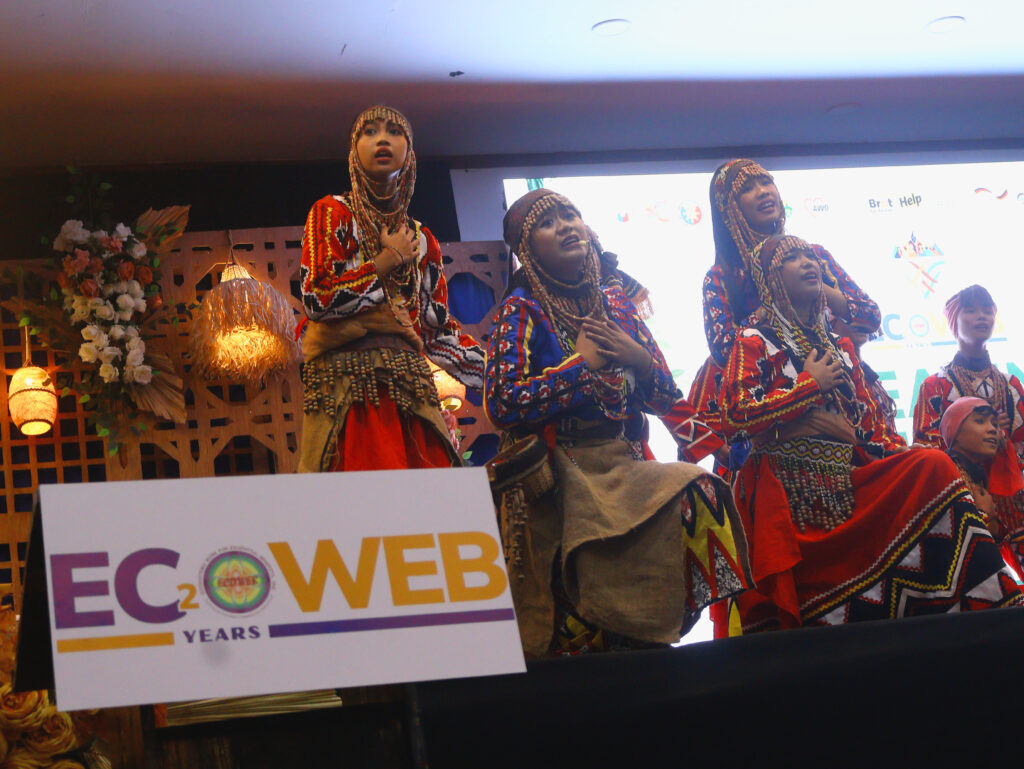
The gathering opened with an Indigenous Peoples’ ritual, followed by the opening of the Two-Day Learning Bazaar and Exhibits, a ribbon-cutting ceremony, and the showcasing of community products, services, and cultural presentations.
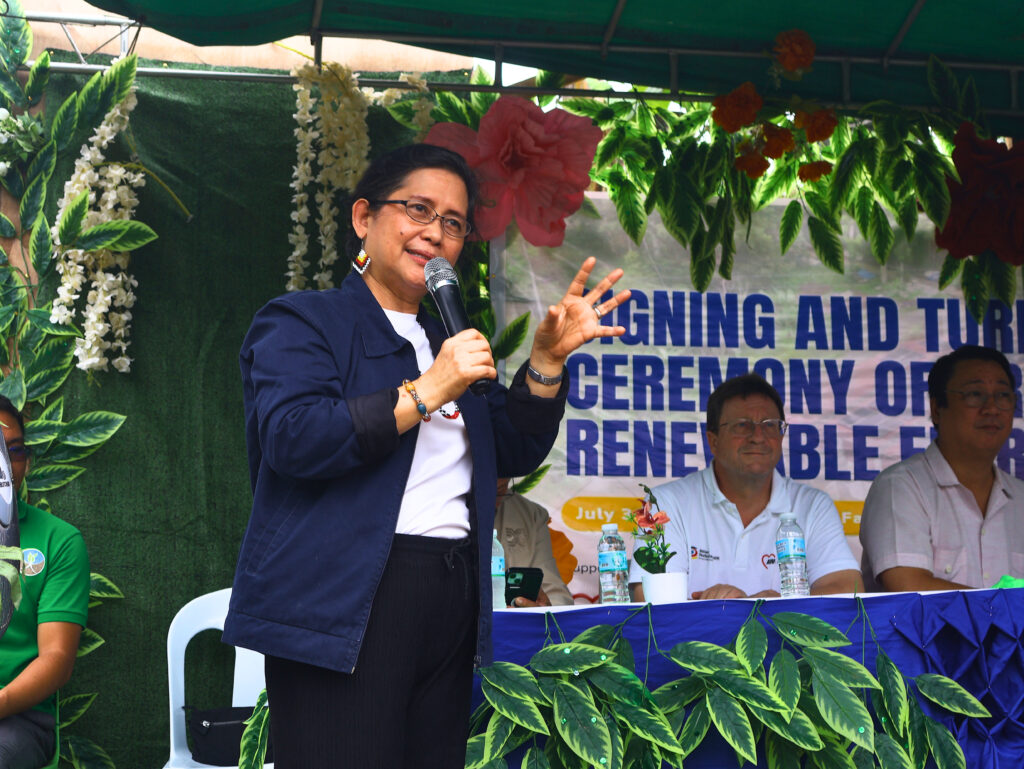
In her opening message, ECOWEB Executive Director Regina Salvador-Antequisa emphasized that meaningful development must be led by communities and sustained beyond project timelines:
“Ang kalamboan dili mahimong tinuod kung ang komunidad dili mao ang nagdala sa direksyon. Ug ang resilience dili mahimong sustainable kung kutob lamang kini sa usa ka project.”
(“Development cannot be truly meaningful if communities are not the ones leading its direction. And resilience cannot be sustainable if it is limited to only one project.”)
As ECOWEB marks its 20th year of partnership with Indigenous Peoples and rural communities, Salvador-Antequisa emphasized that the anniversary is not only a celebration of the organization’s journey but also of the communities, partnerships, and lessons built together over two decades.
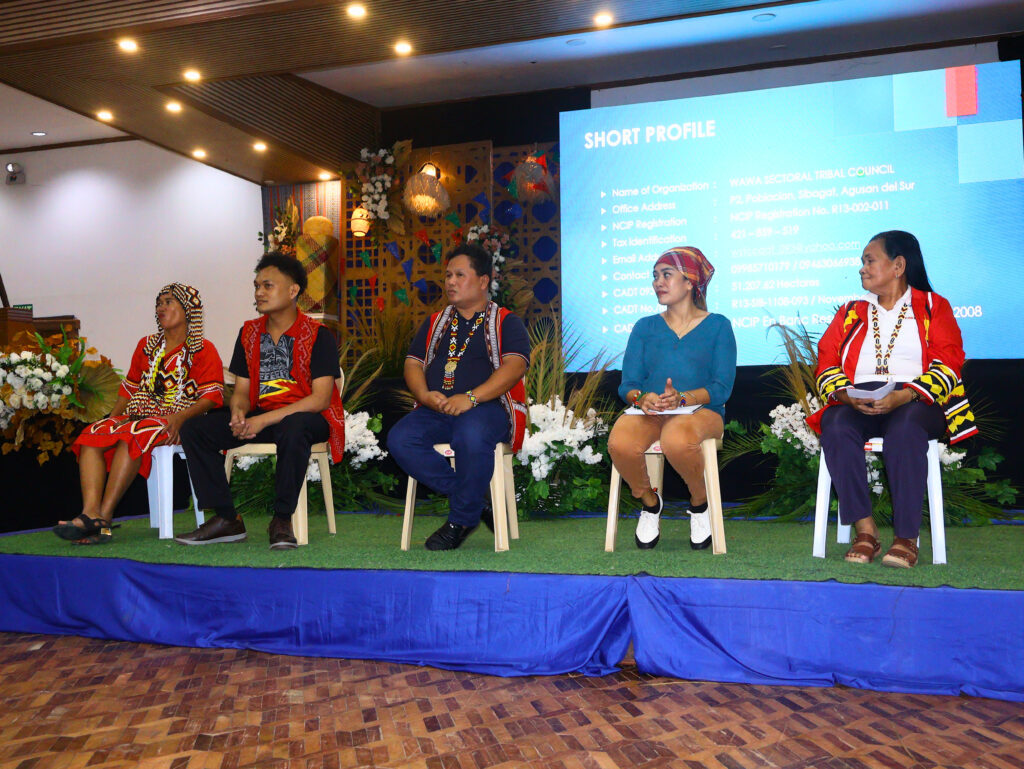
The event featured six thematic learning sessions focused on:
- Renewable Energy-Driven Technology and Circular Economy for IP Communities
- Ancestral Domain Conservation and Climate Resilience
- Culturally Sensitive Development and Access to Basic Services
- Social Enterprise and Sustainable Livelihoods in IP Communities
- Ancestral Domain Development and Governance
- IP Community-Led Crisis Response, Recovery, Peace, and Resilience
Through these sessions, IP leaders, farmers, women, youth, cooperatives, community organizations, government agencies, academic institutions, and development partners exchanged knowledge and explored ways to connect community priorities with government mandates, resources, technology, financing, markets, and institutional support.
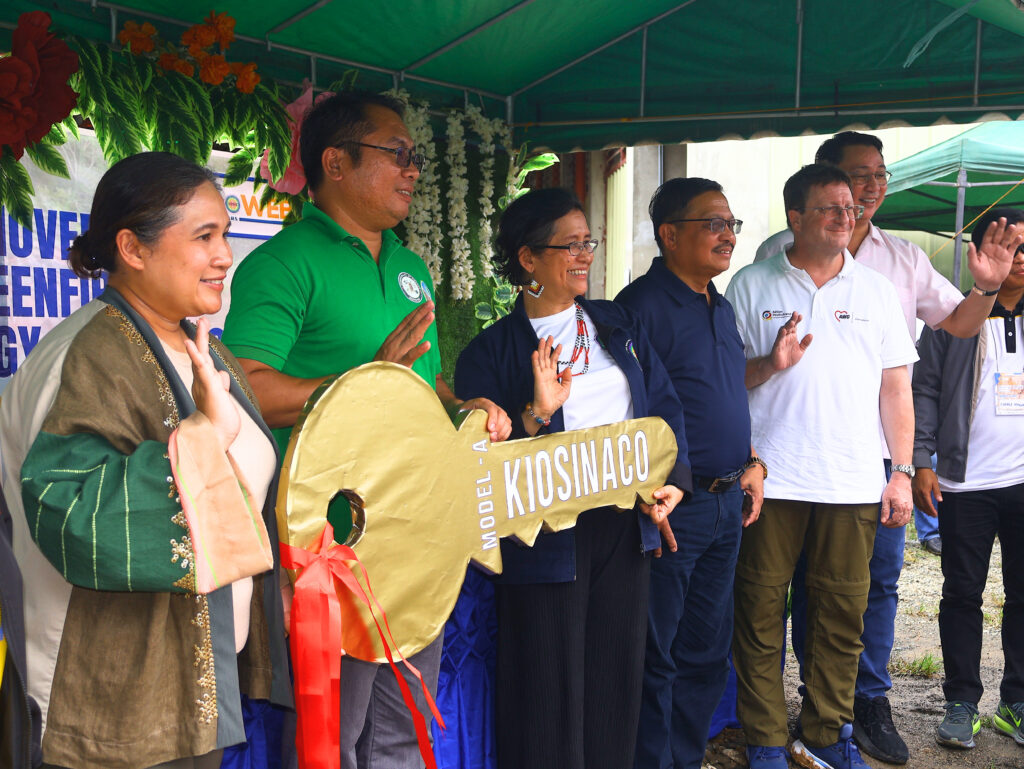
A major milestone of the convergence was the culmination and sustainability transition of the GreenFiber Project. Participants visited Barangay Sinai, Sibagat, Agusan del Sur, where they witnessed the renewable energy-driven abaca processing facility and abaca weaving center. The site visit also featured the ceremonial turnover and signing of a tripartite partnership agreement among LGU Sibagat, ECOWEB, Kioya-Sinai Agriculture Cooperative (KioSinACO), and KoPaPeACO, witnessed by AWO International, PhilFIDA, NAPC, and community partners.
The convergence also provided a platform for selected ancestral domains to present priority programs and projects from their Ancestral Domain Sustainable Development and Protection Plans (ADSDPPs). This was followed by the ceremonial signing of the Memorandum of Understanding on Convergence for Ancestral Domain-Based Sustainable Development, Conservation, and Protection of Indigenous Peoples’ Rights, led by ECOWEB, NAPC, MinDA, NCIP, OPAPRU, PhilFIDA, LGU partners, and representatives of CADT and ancestral domain communities.
As ECOWEB celebrates 20 years of partnership with Indigenous Peoples and communities, the convergence reaffirmed that the gains built through different projects are not separate efforts, but part of one continuing pathway toward stronger livelihoods, resilient communities, sustainable ancestral domains, inclusive governance, and self-determined development.
“Let us learn from the ground. Let us sustain what communities have built. And let us work together so that Indigenous Peoples and GIDA communities are not only participants in development, but leaders of their own future.”
— Regina S. Salvador-Antequisa, ECOWEB Executive Director
Together, we continue to weave our experiences, knowledge, resources, and aspirations into stronger partnerships and concrete actions for Kalambuan para sa Kadaghanan.