This content has been archived. It may no longer be relevant
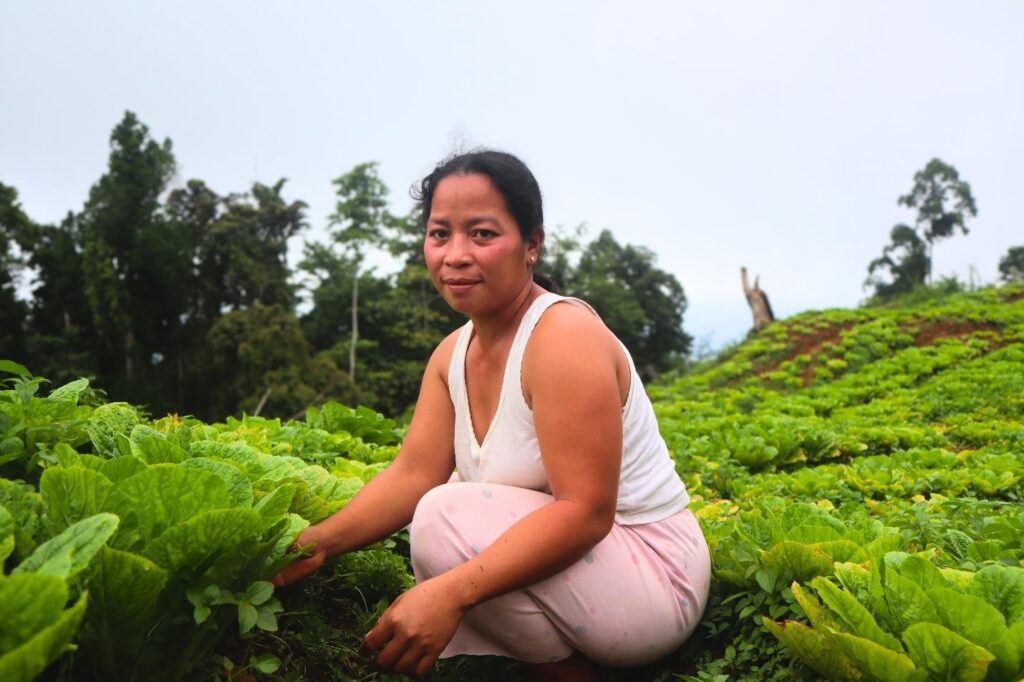
Vanessa Caturan, secretary of the Upper Binasan Kasabuwahan Farmers Association checks on their crops. Vanessa has said that the project has truly made a difference and they were able to earn an income.
The Higaunon Tribe has been living in Northern Mindanao since time immemorial. Also known as the “people of the living mountains” and “weavers of peace,” this indigenous group guards their ancestral resources, preserves their traditional and nature-based culture, and lives in a quiet farming community within their ancestral domains.
In 2023, select members of the Higaunon Tribe from Barangay Rogongon, Iligan City, established the Upper Binasan Kasabuwahan Farmers Association. To address food insecurity in their community, the group organized themselves and began cultivating communal gardens with crops like ampalaya, snow cabbage, string beans, cassava, and ginger.
Assisted by the Ecosystems Work for Essential Benefits (EcoWEB), Inc. through the Formation of Production Guilds and Social Enterprises for the Economic Development of Indigenous Communities (FPGSEEDIC) Project, supported by the Brot für die Welt (Bread for the World), the farmers’ association received seedlings, planting materials and tools. They were also capacitated with the integration of traditional practices and climate-smart knowledge.
“This project makes a huge difference because we were really able to earn an income. It’s not like other projects that only lasted at the beginning,” shared Vanessa Caturan, Secretary of the Upper Binasan Kasabuwahan Farmers Association, noting how their income from ampalaya alone reached up to ₱50,000.00, which the group then invested to further expand their plots.
Continuously, the association learns as they grow. One of their major setbacks was crop failure due to misapplied fertilizer. A test of their resilience, the group decided to move forward – refining their internal rules and agreeing on accountability of every member to pay their share for the growth and sustainability of their group. These challenges have strengthened the organization.
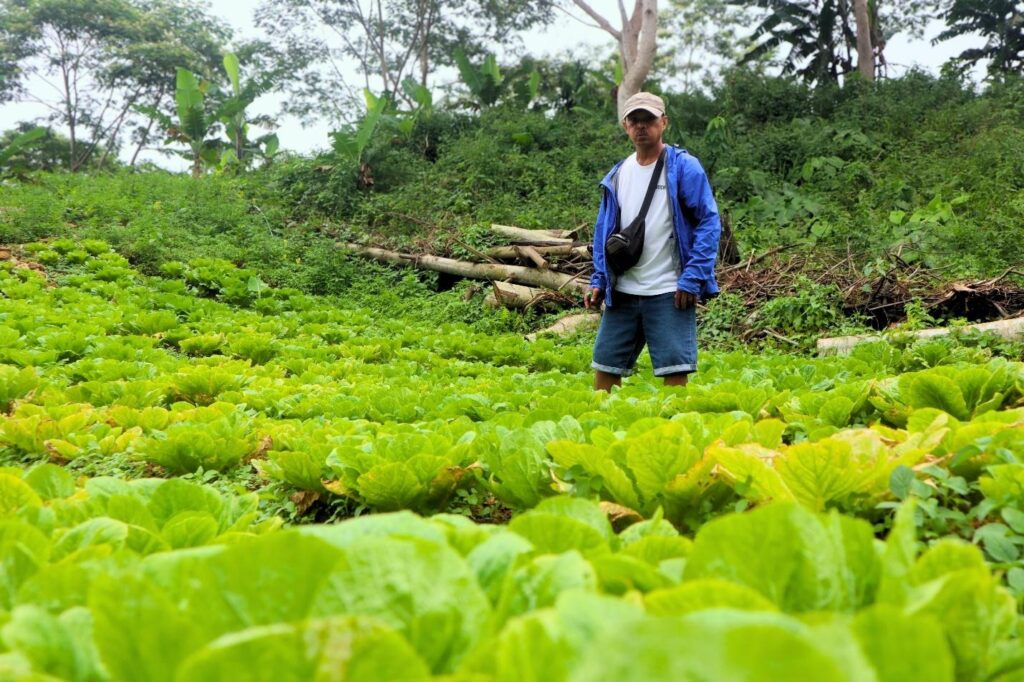
Jeorge B. Autida of ECOWEB inspects the group’s crops during a monitoring visit.
EcoWEB also facilitated several capacity building activities including training on farm development, social enterprise management, financial management, and gender development.
“Women were really empowered by the project… ECOWEB helped us a lot to support our needs, like the facilitation of trainings that we needed,” Vanessa noted, citing the association as women dominated, with 24 of the 37 members as women.
The transformation isn’t only economic – it’s social and cultural. The project, according to the association members, has strengthened their identity as Higaunon, reaffirming their right to live productively on their ancestral land. The group has become a space for mutual support like a family rooted in the values of cooperation and collective effort.
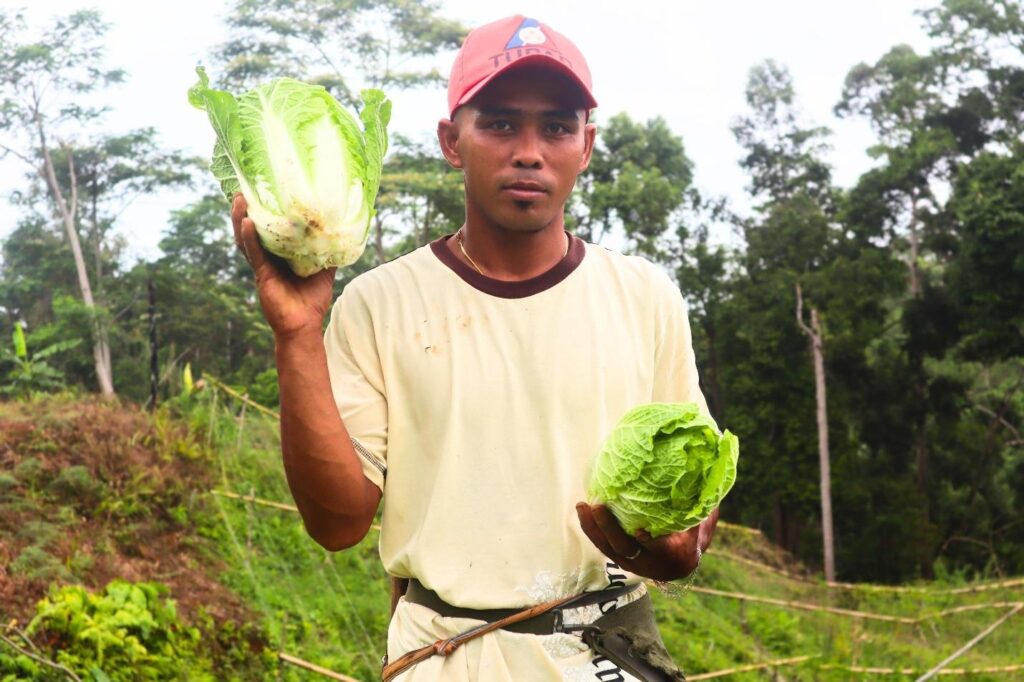
Celso Dalayaw, a member of the Upper Binasan Kasabuwahan Farmers Association, proudly shows their harvested vegetables.
With the assistance of EcoWEB, the group also managed to access support from the Department of Agriculture, receiving fertilizer and other farm implements, inspiring other neighboring sitios. For the association, this is just the beginning of a long journey towards sustainable development. Aside from crop diversification, the group envisions to own a vehicle for transporting their products, establish stronger market linkages and involve more indigenous peoples’ communities.
Now, the Upper Binasan Kasabuwahan Farmers Association harvests every four days. In every tilled row of vegetable crops, the Higaunon Farmers are reclaiming and cultivating their land, their culture and their future, one crop at a time.
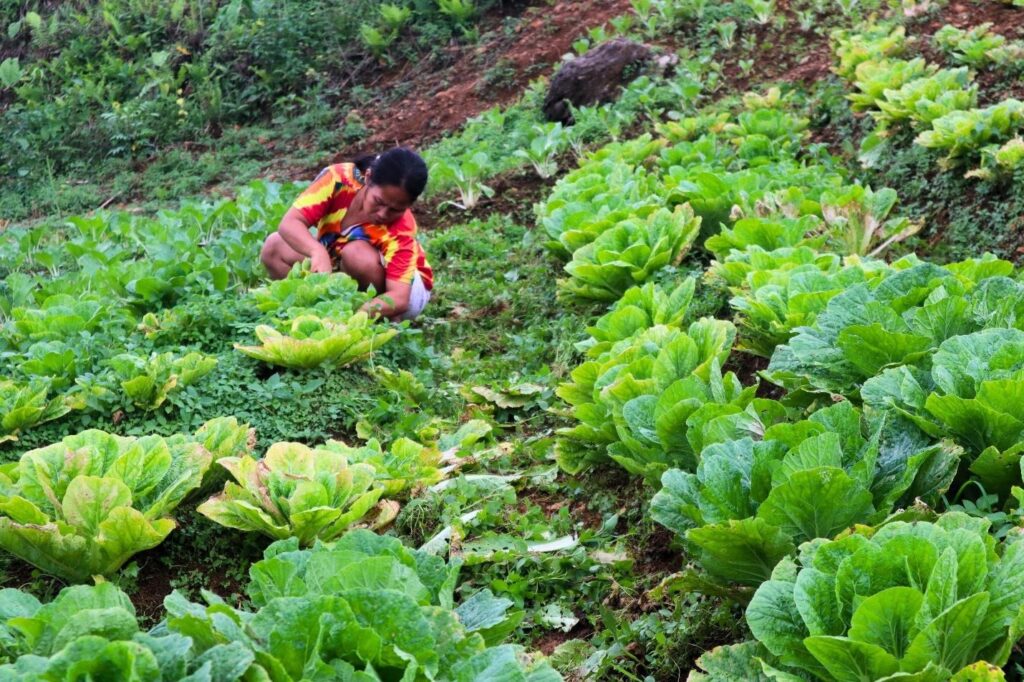
A member of the association checks on their cabbages. For Vanessa and her group, this is just the beginning. They dream of diversifying crops, reaching markets, and growing together with their community.
This 2026, EcoWEB will scale up its implementation of the FPGSEEDIC with the project Enhancing Conservation, Ownership and Social Enterprise in Ancestral Domain (ECOSEAD), supported by the Brot für die Welt, covering the ancestral domains in Bayog, Zamboanga del Sur, Dulangan and Naawan in Misamis Oriental, CADT 212 in Iligan City, CADTs 090, 117 and 093 in Loreto, La Paz and Sibagat in Agusan del Sur, respectively.
The ECOSEAD project aims to ensure land ownership, secure IP rights, develop and conserve their ancestral lands and resources, while strengthening their existing social enterprises.
By Kin Barkly Tibang