August 28, 2025 – Manila, Philippines
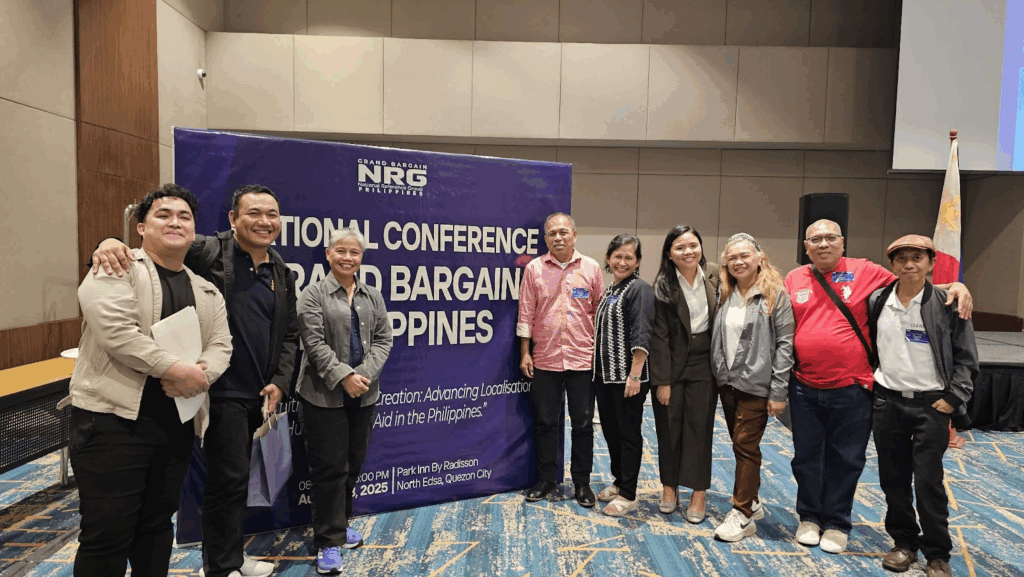
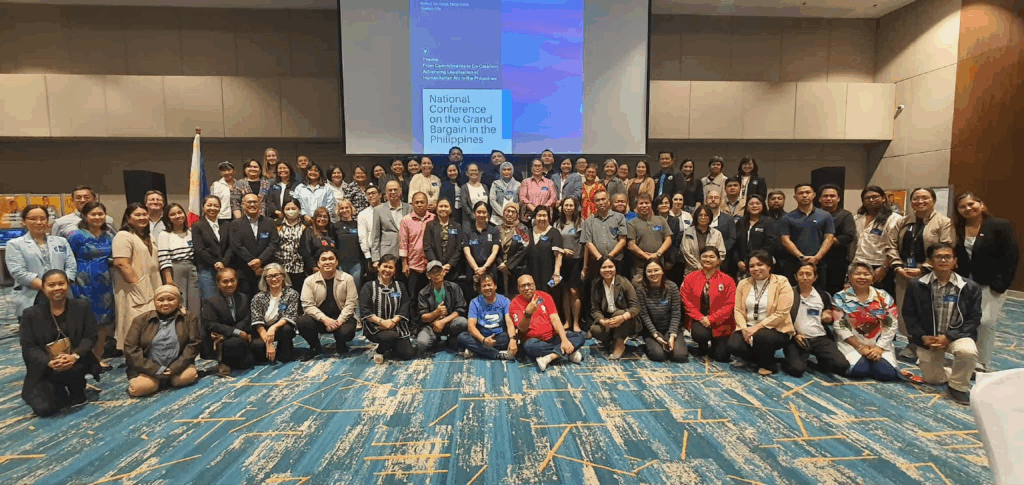
The National Conference on the Grand Bargain in the Philippines marked a milestone moment in advancing localisation and survivor-led humanitarian action. Held under the framework of the Grand Bargain 3.0 structured country engagement, the event convened more than 90 participants from donors, UN agencies, INGOs, Red Cross/Red Crescent societies, local and national actors (LNA), civil society organizations, government agencies, and crisis-affected communities. Guided by the theme “From Commitments to Co-Creation: Advancing Localisation of Humanitarian Aid in the Philippines,” the dialogue prepared the ground for the upcoming Grand Bargain Annual Meeting in Geneva on October 8–9, 2025.
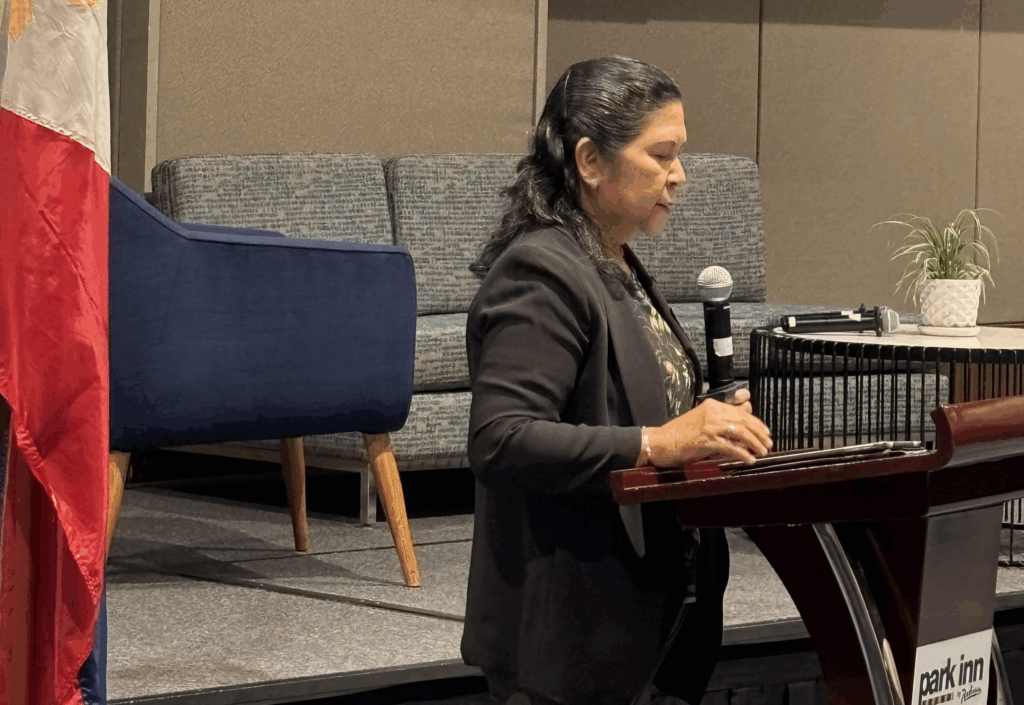
Opening and Framing
The conference opened with welcome remarks from Ms. Loreine dela Cruz, Executive Director of the Center for Disaster Preparedness (CDP) and LNA Co-Lead of the Grand Bargain National Reference Group (NRG) in the Philippines. She underscored the urgency of addressing the “burning topic” of humanitarian aid amidst the humanitarian reset and global funding shifts. Stressing the theme “Leaving No One Behind”, she highlighted the importance of moving from rhetoric to equitable partnerships and of translating high-level commitments into co-created, accountable practices.
Government Support and Policy Alignment
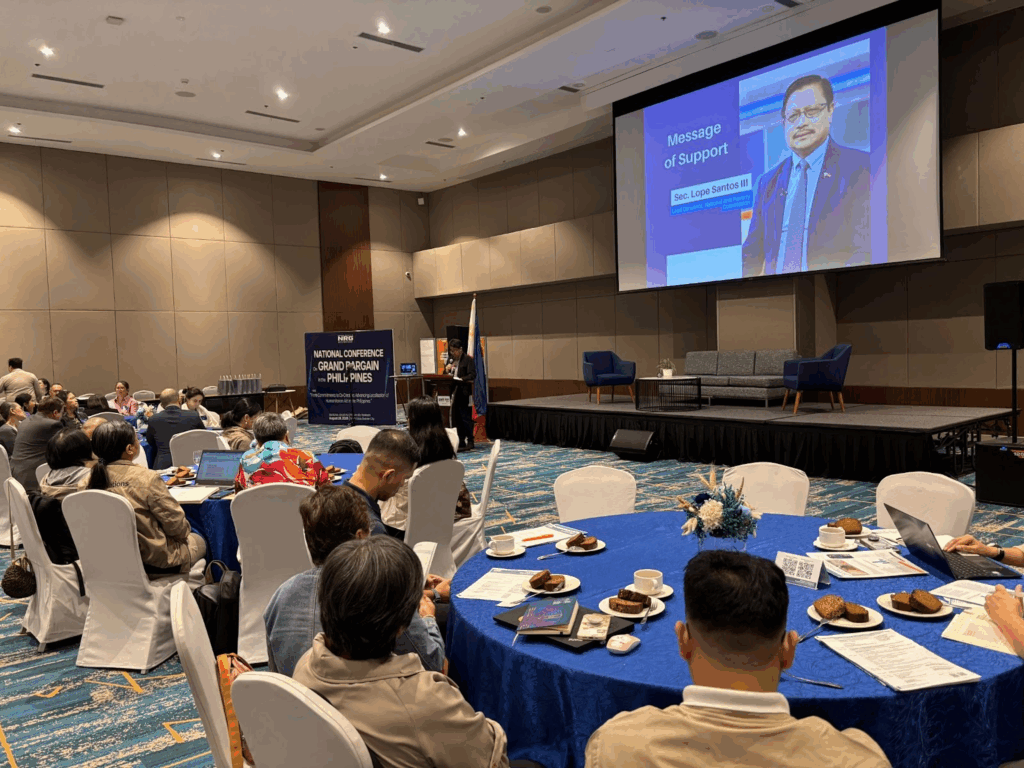
It was followed by a message of support from Sec. Lope Santos III, Lead Convenor of the National Anti-Poverty Commission (NAPC). Sec. Santos reaffirmed the government’s commitment to poverty reduction, noting the decline in national poverty incidence to 15.5% in 2023 and significant progress in BARMM, with the goal of single-digit poverty by 2028 and eradication by 2040 under Ambisyon2040. He urged aligning localisation with the five fundamental rights of the poor—food, work, housing, education, and health—anchored in the National Anti-Poverty Action Agenda and National Poverty Reduction Plan, and pointed to the NAPC–DILG Joint Memorandum Circular on Local Poverty Reduction Action Plans (LPRAPs) as a concrete entry point for Grand Bargain commitments at LGU level. Stressing that disaster risk reduction, climate resilience, and good governance are integral to poverty reduction, he declared: “Flood risk reduction, disaster risk reduction, and anti-corruption are poverty reduction.” He concluded by urging the NRG to align efforts with NAPC’s priorities, reminding all that “true progress is built on strong partnerships.”
Keynote and Global Perspectives
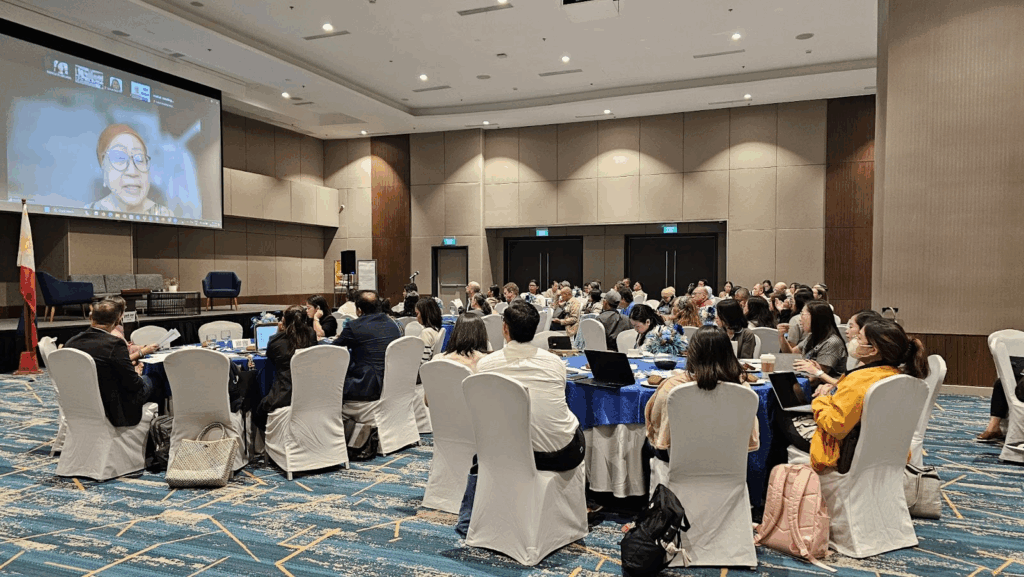
Dr. Jemilah Mahmood, Grand Bargain Ambassador, delivered the keynote virtually from Malaysia. She reaffirmed GB’s commitment to strengthening NRGs as structured mechanisms for country-level engagement, particularly amidst financial cuts and systemic challenges. She stressed the importance of ensuring grassroots voices are represented in Geneva and outlined ongoing GB initiatives on systemic reforms, independent system assessments, and multi-stakeholder dialogues.
This was followed by Ms. Smruti Patel of the Global Mentoring Initiative/A4EP, who presented civil society perspectives. She pointed to persistent power imbalances, slow progress in equitable partnerships, and bureaucratic hurdles in funding, while highlighting emerging innovations like local and regional pooled funds. She urged collective action and “deep listening” to ensure reforms center on affected communities.
State of Localisation in the Philippines
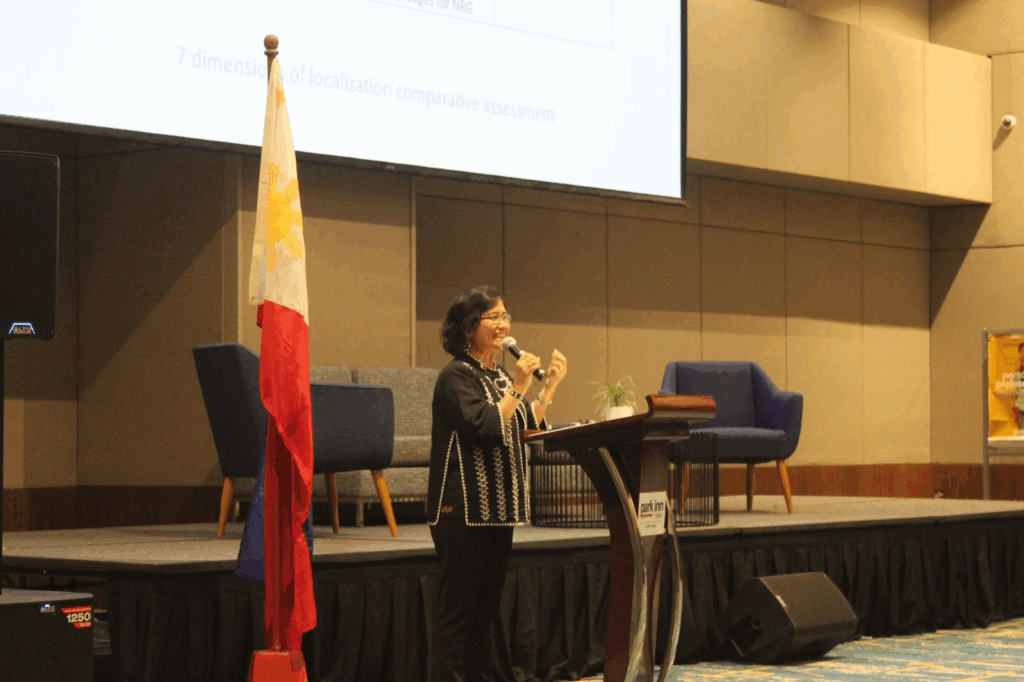
Ms. Regina “Nanette” Antequisa, Executive Director of ECOWEB and GB-NRG Philippines Focal Point, presented a comparative analysis of the 2021 localisation dialogue and the 2025 perception survey. Based on 21 survey responses, she reported “moderate but uneven progress”—with the weakest areas in direct funding, compliance systems, and equitable partnerships. Seven dimensions requiring reform were highlighted: partnerships, participation, funding, capacity, coordination, policy, and visibility.
Her Call to Action urged: institutionalizing localisation, unlocking flexible/direct funding, simplifying compliance, scaling up community participation, and strengthening localisation platforms.
Key Findings from the 2025 NRG Perception Survey
- Progress remains moderate but uneven – driven largely by a few champions rather than systemic reforms.
- Localization and participation of affected populations are growing, but still mostly project-based and inconsistent.
- Funding flexibility is weakest – direct access to donor funds is limited, with heavy reliance on intermediaries.
- Administrative burdens remain high, with complex reporting requirements straining local/national actors.
- Systemic barriers and power imbalances persist, including tokenistic participation, risk aversion, and centralized decision-making.
Localization in Transition
- Stagnant progress in partnerships, capacity, standards, and visibility.
- Partial progress in participation and coordination.
- Regression in funding and financing.
Overall, localization is happening, but remains fragmented and uneven.
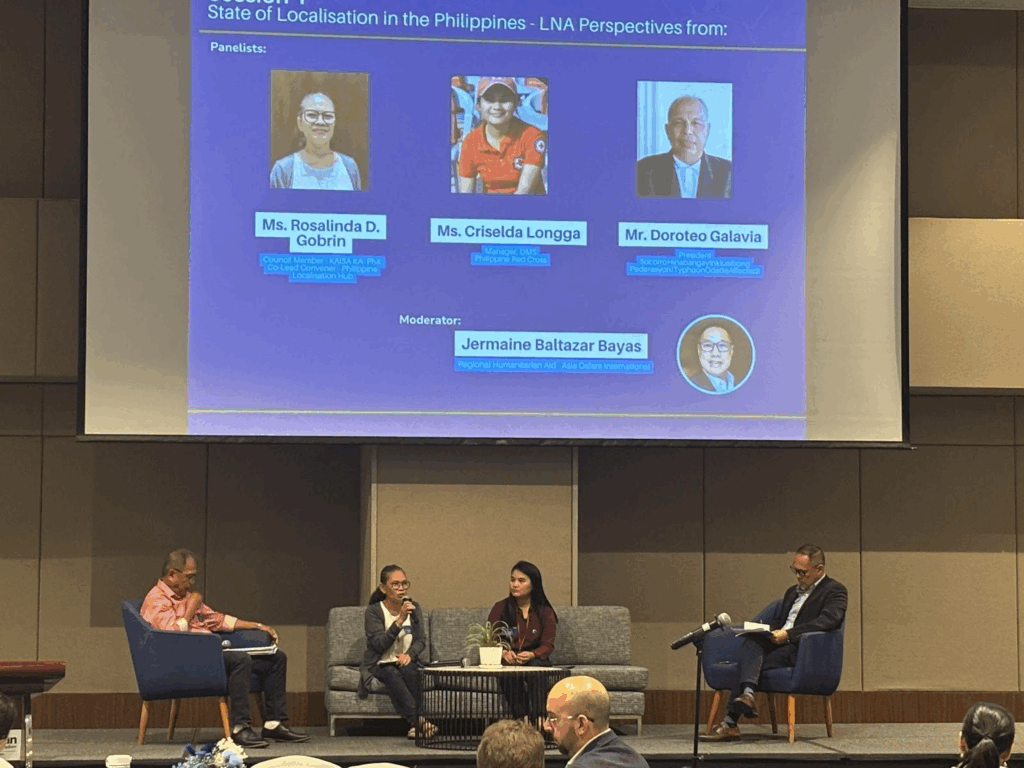
Session 1 – Voices from the Ground
Moderated by Mr. Jermaine Bayas, the session spotlighted perspectives from:
– Ms. Rosalinda Gobrin (KAISA KA/Philippine Localisation Hub): Exposed the precarious role of local actors as implementers with limited, short-term funding and burdensome compliance. Called for guaranteed multi-year funding, institutionalized decision-making power, and simplified accountability systems.
– Ms. Criselda Longga (Philippine Red Cross): Highlighted the role of Red Cross chapters and volunteers in bottom-up humanitarian planning and their systemic integration into the NDRRMC.
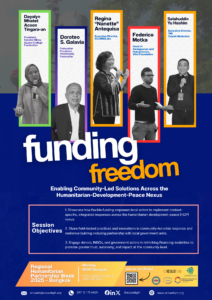
– Mr. Doroteo Galavia (Socorro Federation, Typhoon Odette survivor): Shared the Hinabangay community system that enabled recovery through SCLR principles—community-led planning, rebuilding, and enterprise creation.
The discussion reinforced that while good practices exist, structural barriers persist. Participants called for trust-building, reduced competition, and institutional reforms to scale up community-driven models.
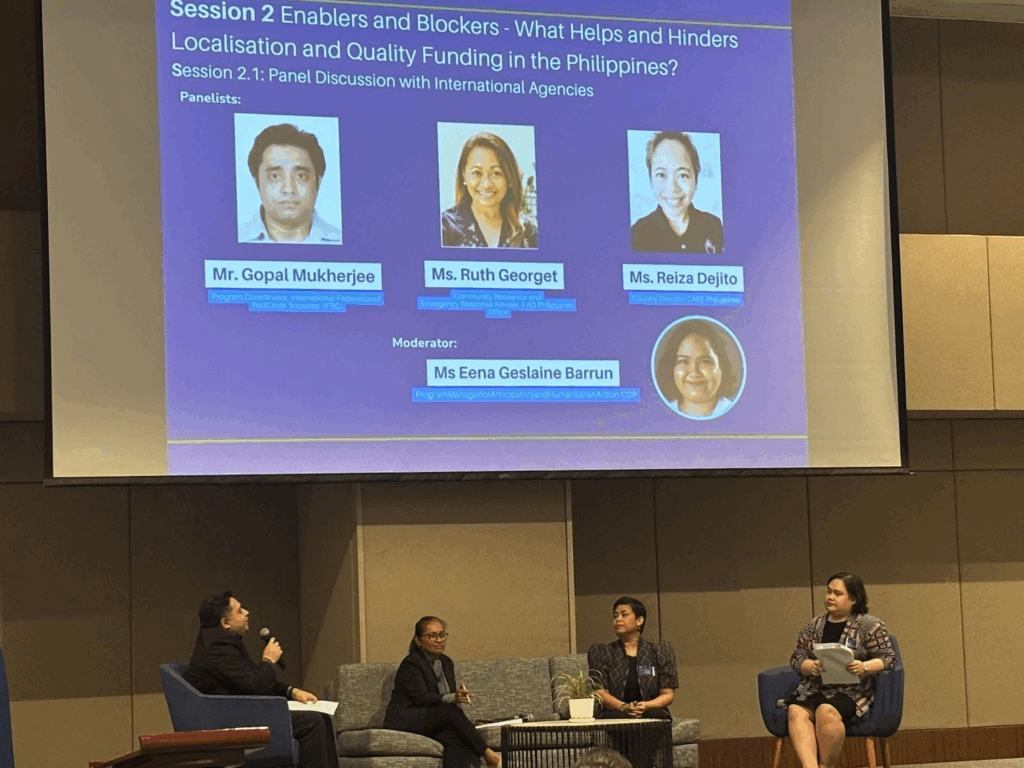
Session 2: Enablers and Blockers – What Helps and Hinders Localization and Quality Funding
Enablers and Blockers: Dialogue with International Agencies
This session engaged international agencies and donors:
– Mr. Gopal Mukherjee (IFRC): Emphasized trust, contextualization, and resource allocation to local actors under the principle “as local as possible, as international as necessary.”
– Ms. Ruth Georget (FAO): Advocated for listening to community voices and co-designing interventions with CSOs and POs.
– Ms. Reiza Dejito (CARE Philippines): Pointed to tensions between accountability vs. accessibility, and efficiency vs. equity. Called for risk-sharing and flexible funding.
– Ms. Arlynn Aquino (DG ECHO Manila): Shared ECHO’s 2023 Guidance Note on Localisation and its five pillars, stressing capacity-building, equitable partnerships, and adaptable financing models.
The dialogue concluded that trust, flexibility, and long-term partnerships are enablers, while rigid systems, short project cycles, and risk transfer remain blockers.
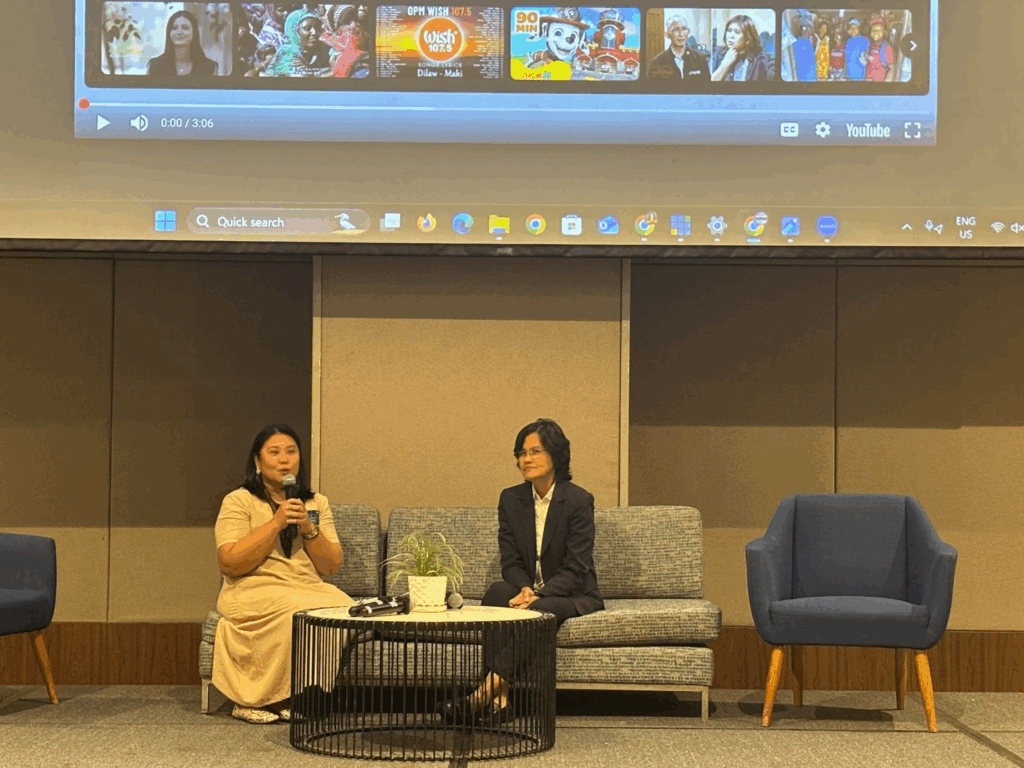
Enablers and Blockers: Donor Perspective
Ms. Arlynn Aquino of DG ECHO Manila shared the EU’s 2023 Guidance Note on Humanitarian Localisation, affirming the principle of making aid “as local as possible, as international as necessary.” She emphasized that ECHO now prioritizes funding mechanisms that channel resources directly to local actors, while INGOs play a complementary role in technical and compliance support. While accountability standards remain strict, she underlined the importance of “bringing everybody up” through capacity-building so local organizations can lead effectively in both crisis response and longer-term development
Discussion with the participants from the floor welcomed ECHO’s commitment but voiced concerns on persistent gaps:
- NAPC basic sectors representatives noted that while 14 basic sectors are engaged in planning, the lack of direct funding to communities means needs are often only endorsed, not resourced.
- Civil society groups stressed that frequent changes in local leadership disrupt continuity and called for stronger safeguards to ensure multi-year programs endure.
- Other delegates urged tripartite partnerships among donors, government, and communities to streamline access to aid, while reaffirming that localisation must mean resources and decision-making power flowing directly to affected people.
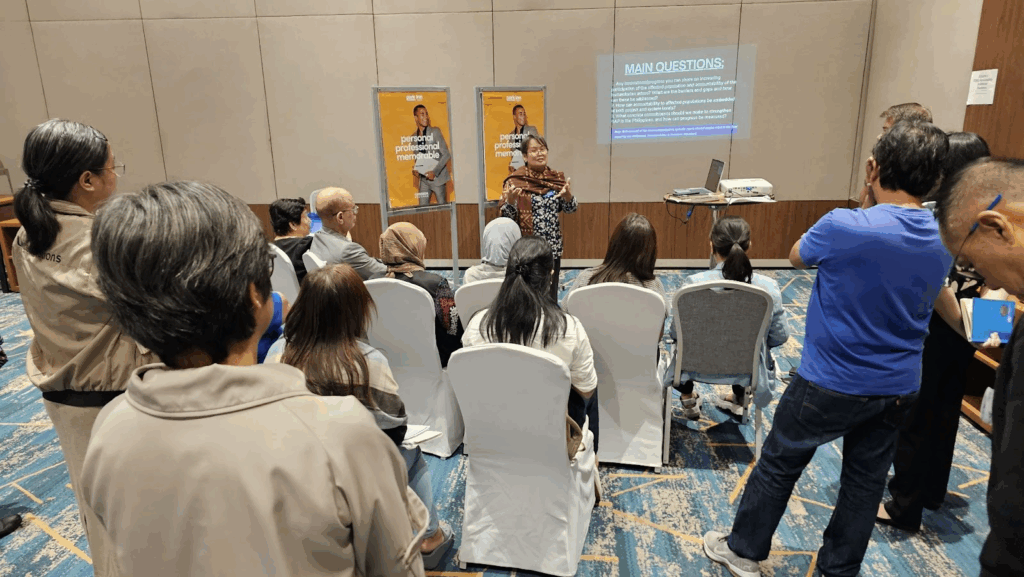
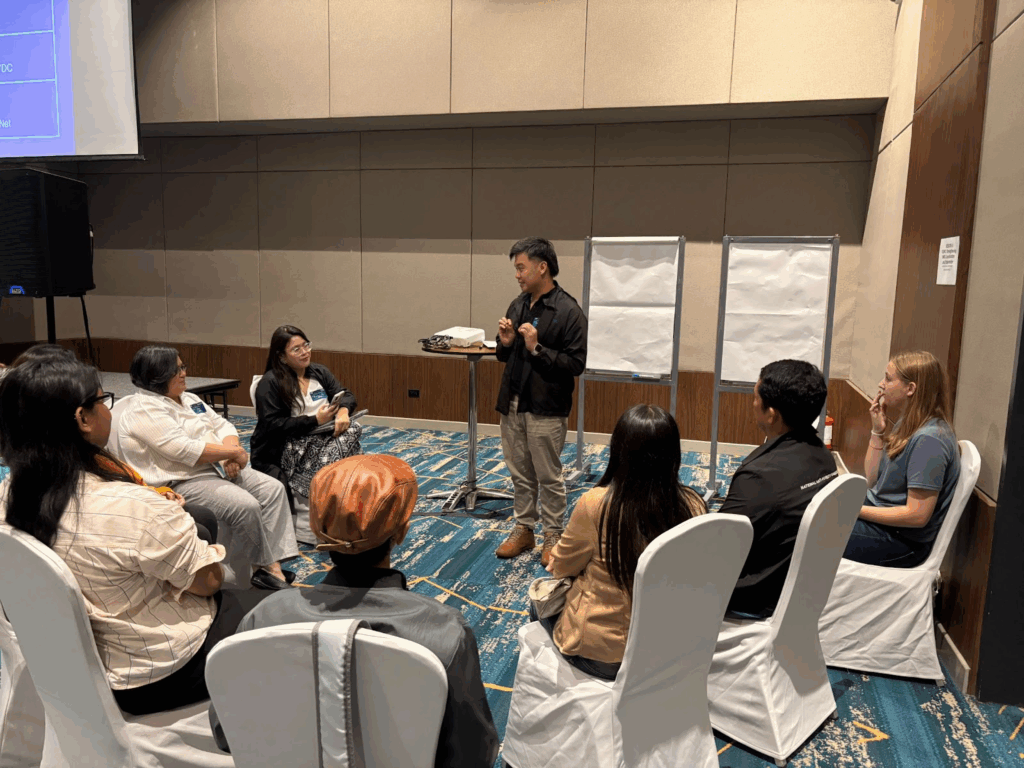
Session 3 – Co-Creating the Philippine Roadmap 2025–2026
Participants co-created recommendations across five thematic groups:
1. NRG Coordination & Stakeholder Engagement – institutionalize NRG, include CBOs, and foster trust-based long-term partnerships.
2. Localisation & Equitable Partnerships – promote strategic partnerships, value local contributions, and pilot reverse call-for-proposals models.
3. Quality & Flexible Funding – push pooled funds, simplify accountability, and advocate for blended finance and transparent ICR processes.
4. Accountability to Affected Populations (AAP) – mainstream GEDSI, strengthen feedback mechanisms, and engage rights-holders and refugees in localisation.
5. Nexus, Coordination, and Policy Alignment – promote performance-based DRR funding, integrate localisation in NEDA and LGU models, and counter politicization of aid.
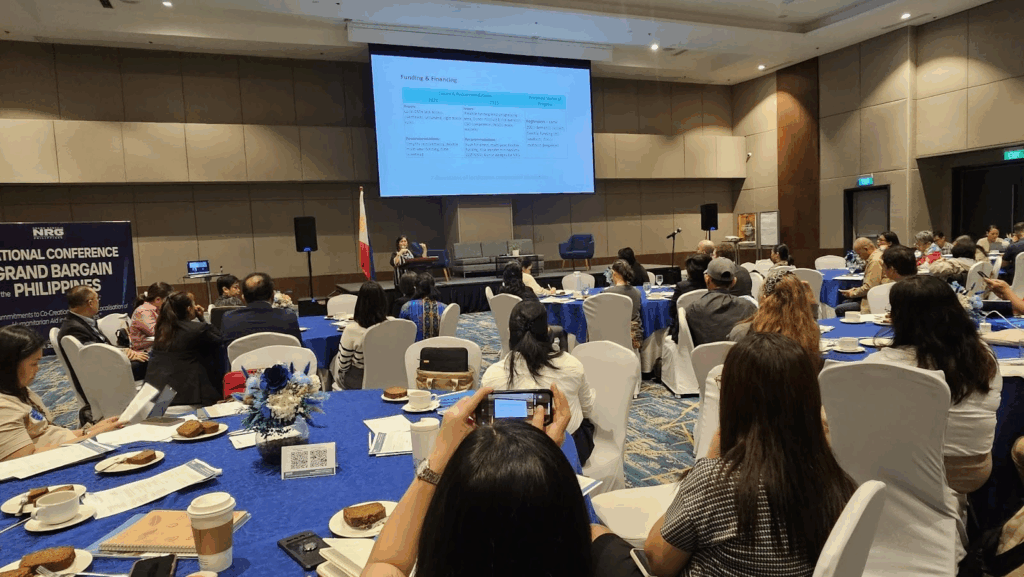
Synthesis and Next Steps
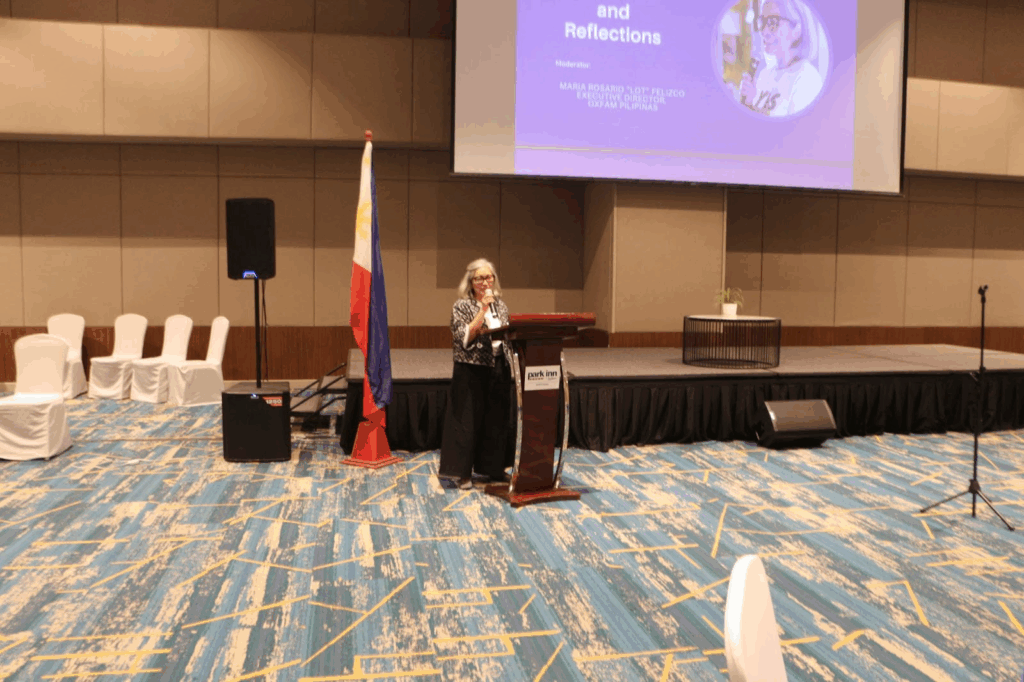
In the plenary synthesis, Ms. Loreine dela Cruz emphasized convergence across breakout groups, while Mr. Bong Masagca (PDRRN) called for integrating humanitarian action into national development frameworks. Ms. Lot Felizco (Oxfam Pilipinas) reflected on the challenges of funding declines and shrinking civic space, urging the development of a Philippine concept of localisation with clear indicators, grounded in solidarity over competition.
Call to Action: Moving Localization Forward
Conference participants emphasized the following priorities for Grand Bargain 3.0 in the Philippines:
- Institutionalize localization by embedding policies and financing beyond pilot projects.
- Unlock flexible and direct funding through pooled, multi-year funds accessible to local/national actors.
- Simplify compliance via harmonized, co-created reporting and audit systems.
- Scale meaningful participation from project-level to policy and program design.
- Strengthen NRG and localization platforms to drive systemic reform and accountability.
The day closed with covenant signing of the Philippine Statement on Localisation, affirming collective commitment to advance Grand Bargain 3.0. Final acknowledgments were delivered by Ms. Nanette Antequisa, who celebrated the spirit of Hinabangay/Bayanihan as the essence of locally-led action.
The National Conference on the Grand Bargain in the Philippines organized by NRG leads with funding support from OXFAM Pilipinas marks a crucial step in bridging global humanitarian commitments with local realities. By bringing together diverse voices -government, donors, international agencies, local NGOs, and affected communities, the Philippines continues to shape the localization agenda, ensuring that humanitarian action is locally led, inclusive, and accountable to the people it serves.
| GB-NRG Philippines members: Co-leads: ECOWEB as focal point; CDP Foundation as LNA Co-lead; OXFAM Pilipinas as international co-lead; Member Grand Bargain signatories: OCHA Philippines, IFRC Philippines, CARE PhilippinesLNA Networks: Philippine Red Cross, DRRNet Philippines, CODE NGO, NAPC-VDC |
By: Kin Barkly Tibang with inputs from Nanette Antequisa, Audrey Velayo, Tasnim Racman; with reference to the conference proceedings prepared by Helen Simplina
Photos credit to : ECOWEB and CDP Foundation
Background: Localisation and the Role of sclr in the Philippines
The Philippines has been an active participant in the Grand Bargain localisation dialogues since 2021, when a six-month process was co-organized by ECOWEB, A4EP, Oxfam, and OCHA. With NRGs (National Reference Groups) introduced under Grand Bargain 2.0, the Philippines has since advanced localisation through structured dialogues, surveys, and consultations.
A key innovation promoted in these efforts is the Survivor and Community-Led Response (sclr) approach, which ECOWEB has championed in the Philippines and beyond. SCLR empowers crisis-affected communities to lead their own recovery and resilience by providing direct support, micro-grants, and flexible resources that enable people to design and implement solutions according to their most urgent needs. Instead of being passive aid recipients, survivors become active decision-makers, ensuring that humanitarian response is both faster and more contextually relevant.
This approach is not just theoretical – it has already shown tangible results. Mr. Doroteo Galavia, President of the Socorro Hinabangay Inklusibong Pederasyon and a Typhoon Odette survivor, shared how SCLR made a difference in their community in Socorro. By accessing micro-grants and being trusted to lead, they were able to rebuild livelihoods, organize collective initiatives, and respond more effectively to their own recovery priorities. Their story illustrates how locally driven solutions can achieve lasting impact when survivors are given the resources and agency to act.
The success of initiatives like those in Socorro demonstrates why sclr is increasingly recognized globally as a model for advancing Grand Bargain commitments on localisation, equitable partnerships, direct funding, and accountability to affected populations. It highlights how community-led innovation in the Philippines is helping to shape global humanitarian practice under Grand Bargain 3.0.