REGIONAL HUMANITARIAN PARTNERSHIP WEEK
December 8-10, 2025 | Bangkok, Thailand
Community Partner Sharing
Compassion in Practice: Survivor-Led Recovery after Typhoon Odette (Rai)
By Doroteo T. Galavia
General Manager, Atoyay Rural community Agriculture Cooperative (ARCACO)
President, Socorro Hinabangay Inklusibong Pederasyon, Inc. (SHIP)
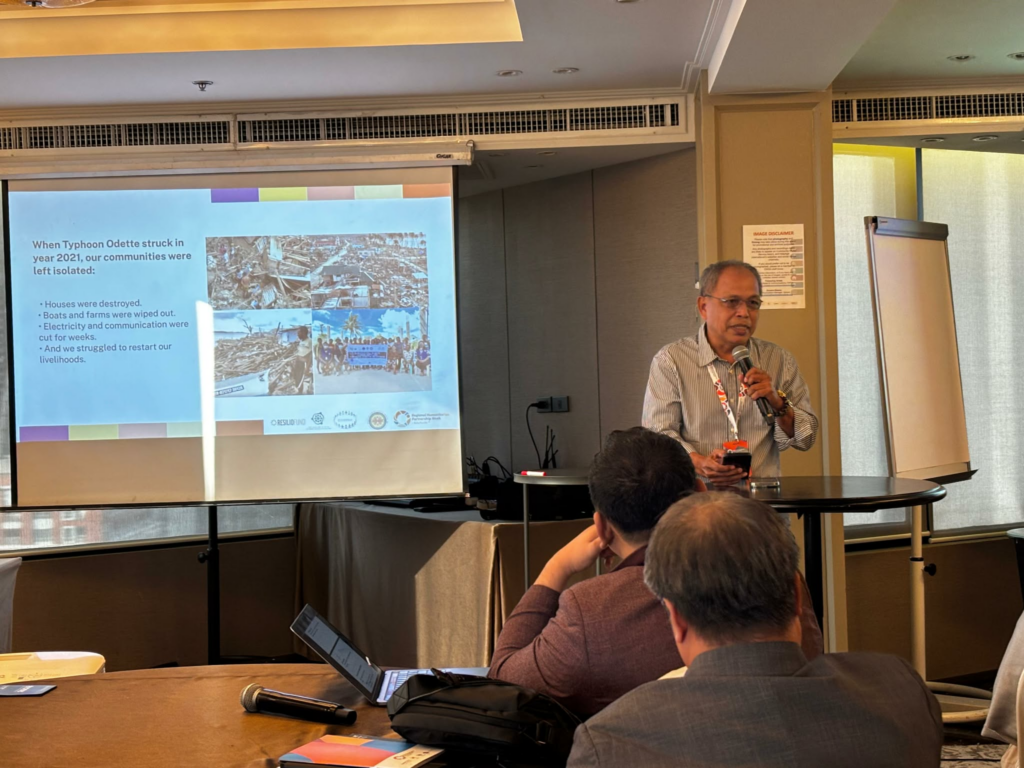
During the Regional Humanitarian Partnership Week (RHPW) in Bangkok, Thailand, I shared the lived experience of our community during Typhoon Odette (Rai), one of the most devastating disasters to affect Surigao del Norte. The typhoon caused widespread destruction to homes, livelihoods, coastal resources, and basic services. Fishing boats were destroyed, farms were damaged, and access to food, water, and income was severely disrupted. Beyond physical losses, the disaster deeply affected the dignity, security, and well-being of survivors.
Our recovery began not solely through external assistance, but through Hinabangay—our community’s deeply rooted system of mutual help, solidarity, and collective responsibility. Families shared food and labor, neighbors helped rebuild homes and repair boats, and community leaders organized collective actions to ensure that the most affected were not left behind. Hinabangay functioned as our first line of response, long before formal aid arrived.
This community-led recovery was further strengthened through the Survivor Community-Led Response (SCLR) system facilitated by ECOWEB. SCLR recognized survivors as active agents of recovery rather than passive recipients of aid. Through this approach, ECOWEB supported us with flexible financial assistance, capacity-building, and accompaniment that respected local decision-making and leadership. Instead of imposing solutions, SCLR enabled communities to identify priorities, manage resources, and implement recovery actions based on real needs. As a result, Hinabangay was reinforced and transformed into a more organized, accountable, and empowered system of response.
The first session of RHPW, which focused on Compassion, strongly resonated with our experience. Compassion, as discussed in the session, goes beyond empathy—it is about acting with respect, trust, and shared humanity. This directly reflects Hinabangay, where compassion is expressed through concrete action: helping without conditions, sharing limited resources, and standing with one another in times of crisis. The session affirmed that compassion is not abstract; it is practiced daily in survivor-led responses like ours.
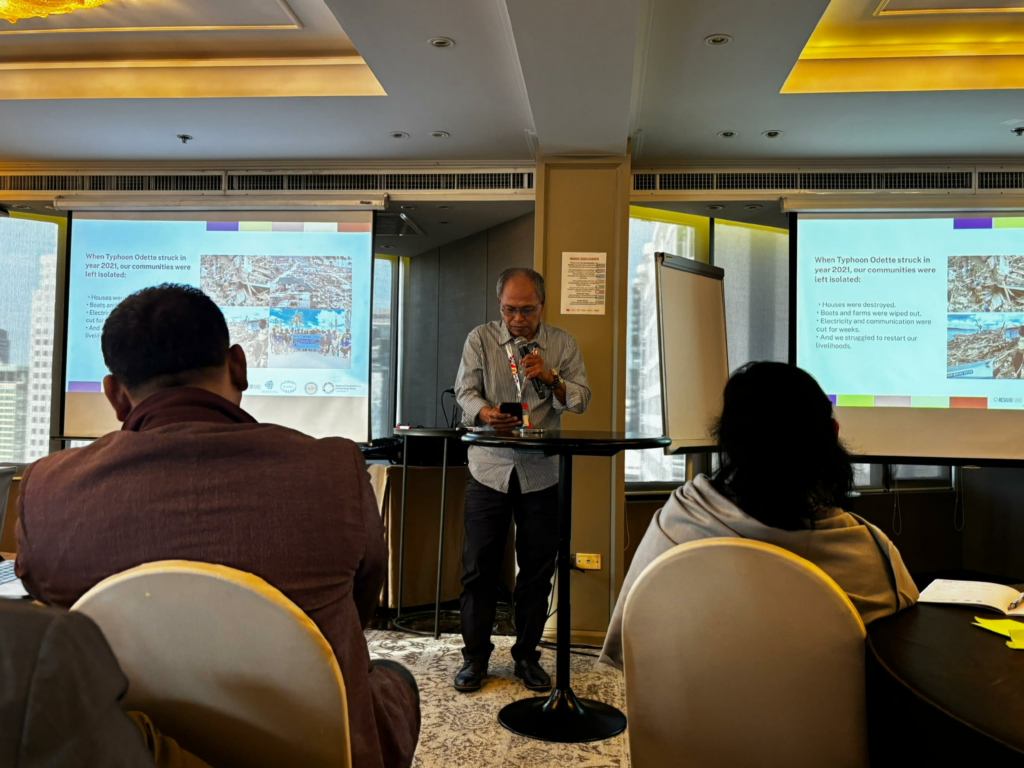
Sharing our story at RHPW affirmed that local experiences, knowledge, and leadership are valuable and deserve recognition in the international humanitarian arena. It demonstrated that localization is not just a framework—it is already alive in communities through systems like SCLR and Hinabangay.
My key learnings include the importance of investing in survivor leadership, trusting community systems, and sustaining partnerships that amplify—not replace—local capacities. These insights now guide our advocacy in Atoyay Rural community Agriculture Cooperative (ARCACO) and Socorro Hinabangay Inklusibong Pederasyon, Inc. (SHIP). In ARCACO, we integrate disaster resilience, livelihood recovery, and cooperative development grounded in Hinabangay. In SHIP, we advocate for localization, compassionate humanitarian action, and the recognition of survivor-led and community-based organizations as legitimate humanitarian actors.
Our experience with Typhoon Odette is no longer only a story of loss—it is a testament to compassion in action, collective strength, and the power of communities leading their own recovery.