REGIONAL HUMANITARIAN PARTNERSHIP WEEK
December 8-10, 2025 | Bangkok, Thailand
Community Partner Sharing
Opportunity to Lead, not just to survive, but to rise
By Dayalene Mhatet Tingaraan
President, Senator Ninoy Aquino College Foundation
Assalamualaikum warahmatullahi wabarakatuh.
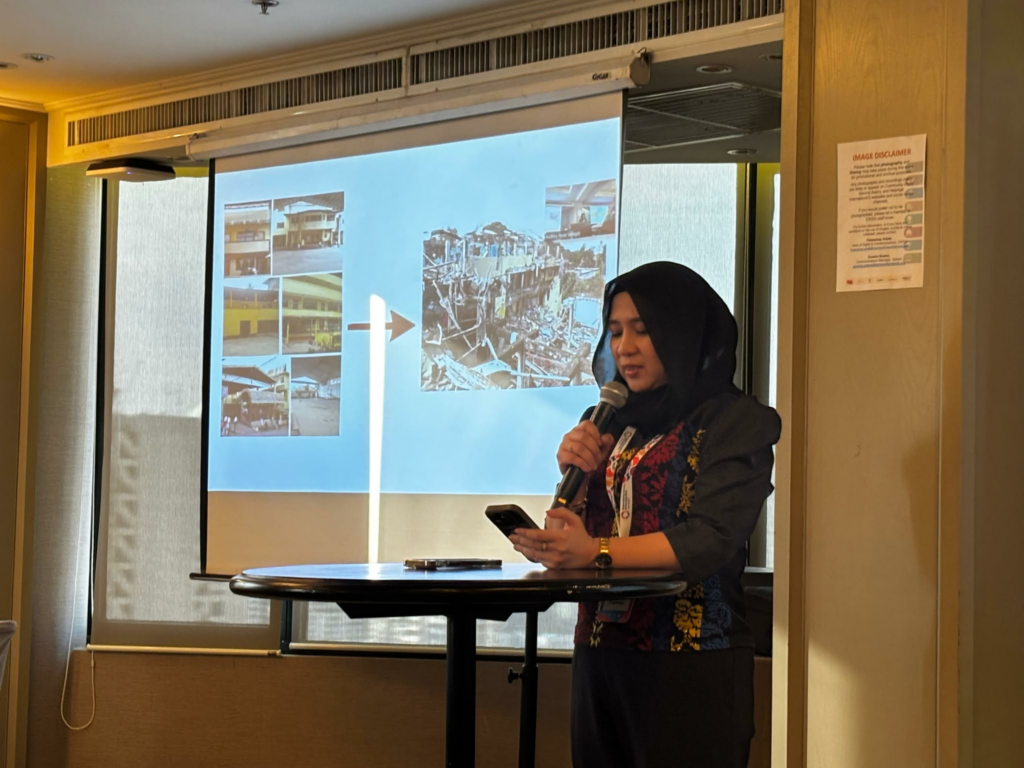
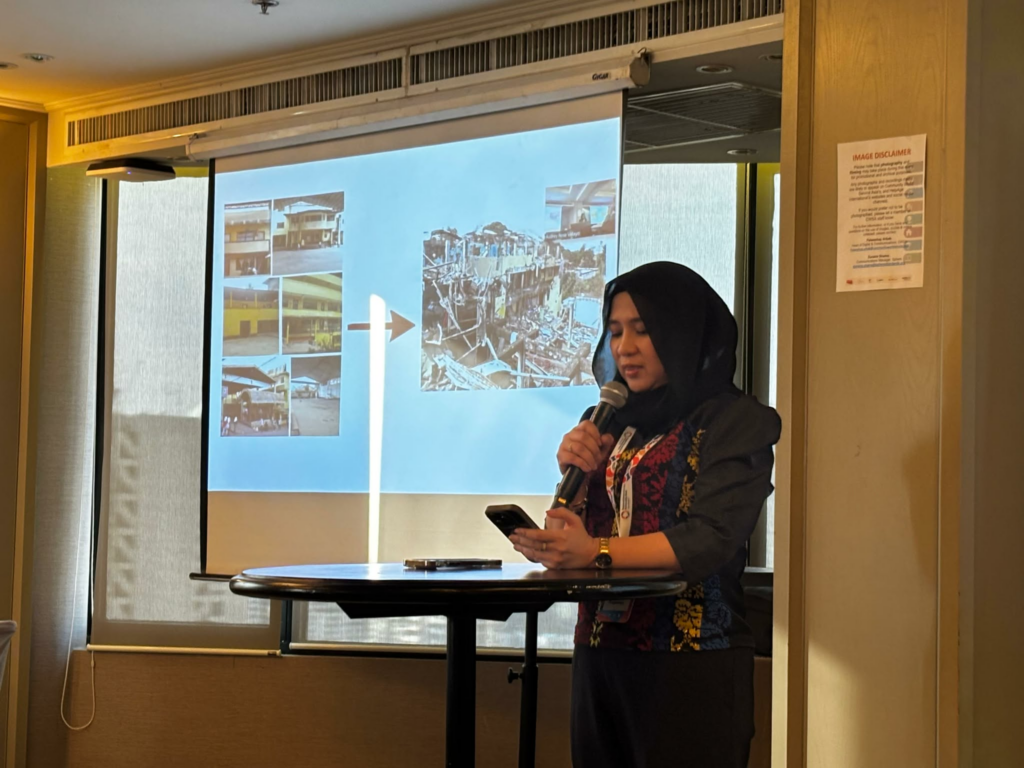
Allow me to begin by introducing myself. I am the President of the Senator Ninoy Aquino College Foundation, Inc. (SNACF)—a private educational institution that once served nearly 3,000 learners in the islamic city of Marawi, in the Philippines.
But in 2017, during the Marawi Siege, our entire school—our classrooms, our offices, our libraries—was reduced to ashes. Everything the foundation had built for decades was gone in a single moment.
Yet today, I stand before you not as a victim of that tragedy, but as an IDP advocate, an educator, and a survivor who continues to rise, rebuild, and fight for our communities after the fall.
“One action that truly protected our people’s dignity—something impossible under a rigid humanitarian project—was the community-led psychosocial healing and livelihood recovery circles that we organized for the Marawi IDPs.”
Most humanitarian programs come with fixed activities, fixed modules, and fixed outcomes. But through the flexibility of SCLR, we were given something rare and precious: the space to listen, to reflect, and to design our own solutions based on what we felt and what we needed as IDPs.
And when we listened to each other, one truth became very clear: our recovery was not just about food, shelter, or training—our recovery was about reclaiming our voices and our dignity.
So yes, SCLR allowed us to conduct healing circles where mothers, fathers, youth, and elders could share their trauma, their grief, and their hopes. These were safe spaces—guided by facilitators we trusted—where people who felt invisible finally felt seen again. But the transformation did not stop there.
Because once we started healing, we also started dreaming again.
This led us to organize something that completely changed the direction of our movement: community-led shared visioning and strategic planning workshops among different IDP leaders.
For the first time, we sat down together—not as victims, not as camps, not as clans—but as one community. And in those conversations, without any rigid project rules limiting us, we found our shared purpose.
We discovered that despite our different stories, we had one united goal: to work collectively for the passage marawi compensation bill- which we all at first thought would be an impossible dream.
And that moment—when leaders from various sectors, shelters, and barangays set aside personal interests and political differences—was one of the most dignifying experiences for us as IDPs.
No more ‘Us” or “them”. No more personal agenda. We acted not for ourselves, but for the rights and future of all Marawi IDPs. Through SCLR, we were able to:
- draft our own position papers,
- engage government agencies,
- hold dialogues with legislators,
- mobilize community consultations, and
- amplify the voices of the most vulnerable among us.
This level of collective action—this community-led advocacy—was something no typical, rigid humanitarian project would have allowed. There were no pre-written templates, no fixed indicators, no “by-the-book” activities.
It was the community leading its own struggle for justice.
And the difference it made was profound:
- People regained confidence, knowing their voices mattered.
- Communities rebuilt trust and unity, after years of displacement and division.
- And together, we contributed to the successful passage of R.A. 11696—proof that when IDPs are empowered to lead, real change becomes possible.
This is the heart of SCLR: It does not just deliver assistance—it restores dignity. It does not just support communities—it lets communities decide, lead, and own their recovery.
As an IDP, I stand before you today not as a passive recipient of aid, but as a representative of a community that found its strength again—because we were trusted with leadership, with decision-making, and with the chance to shape our own future.
And that is the power of SCLR: When you give people the opportunity to lead, they do not just survive—they rise.
Because of this way of funding, the biggest change in how our community sees itself is this: we no longer see ourselves as helpless victims waiting for assistance. We now see ourselves as leaders, as rights-holders, and as a community capable of shaping our own future.”
And if there is one thing we never want to go back to, it is this: We never want to return to a system where decisions about our lives are made for us rather than with us.
We refuse to go back to:
- projects where we are treated as mere beneficiaries,
- plans that do not reflect our lived realities,
- rigid systems that silence our voices,
- and a mindset of helplessness created by limited participation.
Because once a community discovers its own agency- once people see that their ideas and actions can create real change—there is no turning back.
Allow me to end by honoring the powerful words of the late Dr. Padoman Paporo— an IDP leader, a courageous woman, and a tireless advocate for the people of Marawi. She always reminded us:
“Nothing about us, without us.”
These words capture everything that SCLR stands for.
And it serves as a reminder to all humanitarian actors, government agencies, and partners: Real recovery is only possible when the people at the center of the crisis are also at the center of the solutions.
As IDPs of Marawi, we have lived this truth. We have embodied this truth. And we will continue to fight for this truth—today, and always.