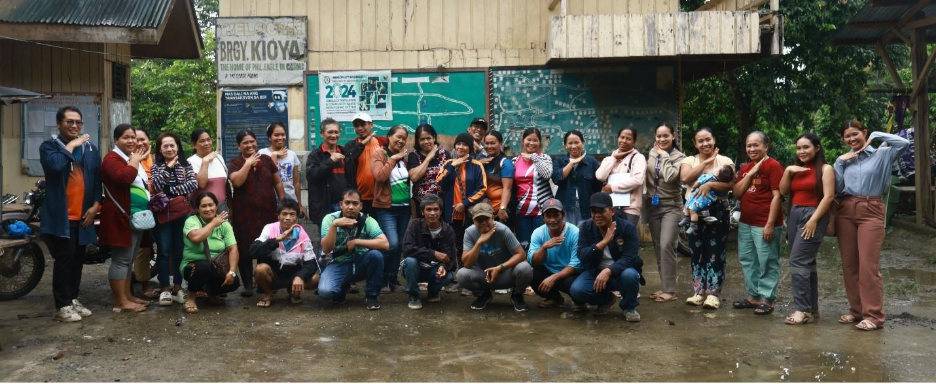
The Kioya United Abaca Fiber Association (KUAFA) began as a small and developing group in Sibagat, Agusan del Sur – newly organized, with limited members and resources. Established in 2024, KUAFA was among the production guilds formed under the GreenFiber Project of the Ecosystems Work for Essential Benefits (EcoWEB), Inc., with support from international funding partners Federal Ministry for Economic Cooperation and Development (BMZ) and German Relief Operation or Aktion Deutschland Hilft (ADH), through the AWO International, carrying a shared goal of building a sustainable community-managed abaca enterprise.
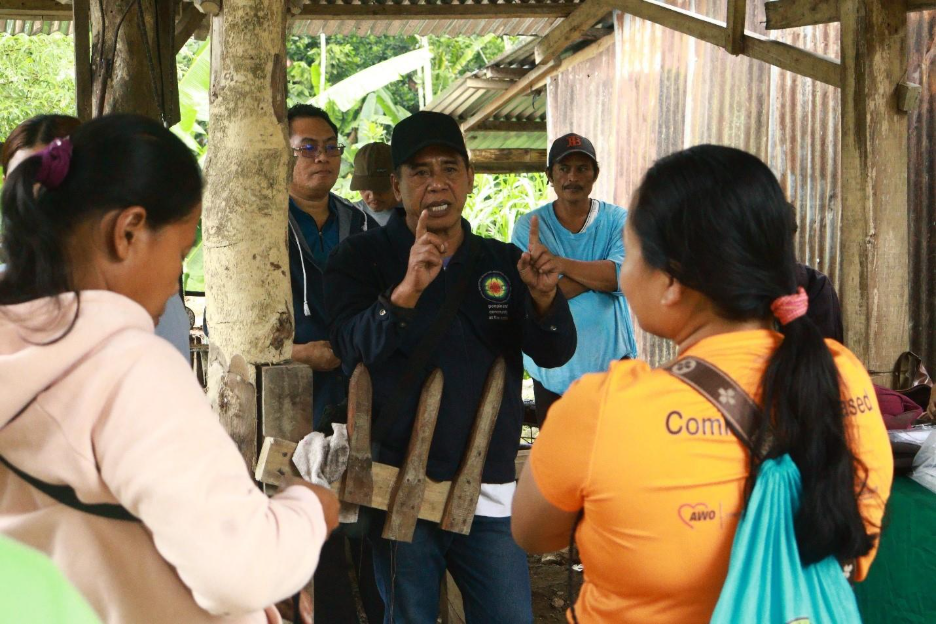
Through the EcoWEB project, the association received PhP75,000 in seed capital, PhP25,000 worth of buying station materials, conducted handicraft training, and acquired 40 units of modified abaca stripping knives and a Japanese-type abaca stripping machine.
In just one year, the group managed to grow its capital to more than PhP100,000.00, through the collective economic activities and sound financial management of the association led by Mr. Virgilio “Sir Jun” C. Escora, Jr.
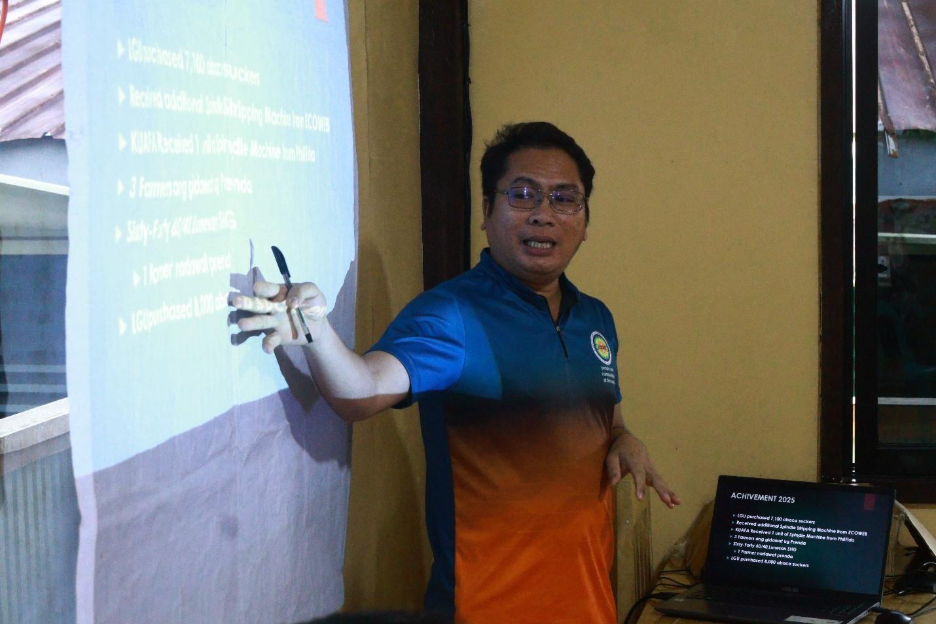
“Leading is never easy. It is normal to feel tired… Sometimes, what seems like a worst situation turns out to be a blessing in disguise because it can lead to best results,” shared Virgilio.
KUAFA’s economic activities include the buy-and-sell of abaca fiber, income from investment schemes, machine rental services, and the sale of abaca corms and modified abaca stripping knives. These income streams contribute to both individual livelihoods and the association’s collective funds.
In 2025, the association was able to sell up to 8,000 abaca suckers to the local government. They also received spindle stripping machines through the EcoWEB project as supported by PhilFIDA, expanding their investment facilities and allowing more farmers to access capital and production support.
At the core of KUAFA’s approach is the principle of placing people and communities at the center of development. Decisions on investments, production, and income use are made collectively, with priority given to the needs and capacities of member-farmers. The association underscored its commitment to inclusive participation and gender inclusion, within its operations.
“We are not gender-biased. If someone is willing to work, carry the load, or take on the responsibilities, then it’s fine as long as they are physically capable and responsible for their work,” shared Virgilio.
KUAFA has developed strong organizational practices that guide its growth, including the conduct of regular monthly meetings, strict financial record-keeping, and compliance with regulatory agencies. All transactions, purchases, and expenditures are documented, with income and interest regularly reported to members and stakeholders.
Funds are then allocated for repair and maintenance, reserved funds, and personnel salary, ensuring the association’s long-term sustainability. The group also practices organic and integrated farming, proper farm development, and appropriate shading management in abaca plantations.
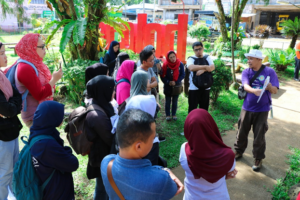
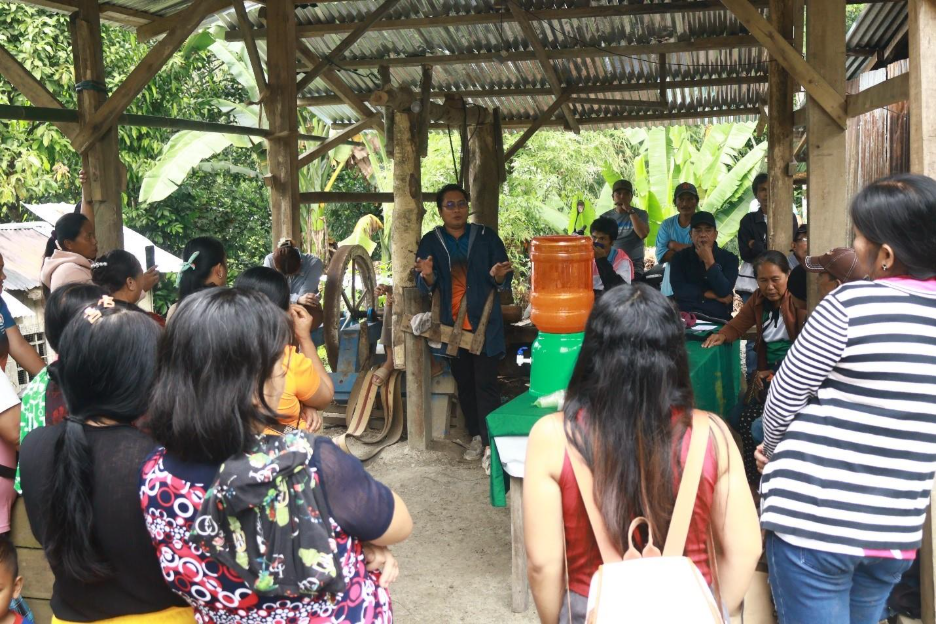
KUAFA recently shared their experiences and practices during an Inter-Production Guild Cross-Learning Visit facilitated by EcoWEB, where members of other production guilds participated in open discussions, comparing systems, challenges, and identifying practices to be adapted in their own organizations. This learning visit served as a space for peer exchange among community-based enterprises as supported by the GreenFiber Project.
Maintaining strong relationships with members, government agencies, non-government organizations, and private sector partners were key factors in the association’s growth.
Facilitated by EcoWEB, the GreenFiber Project is being implemented since 2023 in partnership with the Municipal Local Government Unit of Sibagat, CADT 093 and CADT 271, PhilFIDA Caraga, CSU, ASSCAT, NCIP Caraga, DTI Caraga, CDA Caraga, DOST Caraga, and other institutions.
By building strong governance, diversified livelihood activities, and inclusive leadership, KUAFA continues to demonstrate how community-led enterprises grow steadily while keeping people and shared responsibility at the heart of development.
By Kin Barkly Tibang & Jurniel D. Pareja
Photos by Doni Koshi S. Estacion