National Heritage Month
Regina Salvador-Antequisa
Executive Director, Ecosystems Work replica watches for Essential Benefits (ECOWEB), Inc.
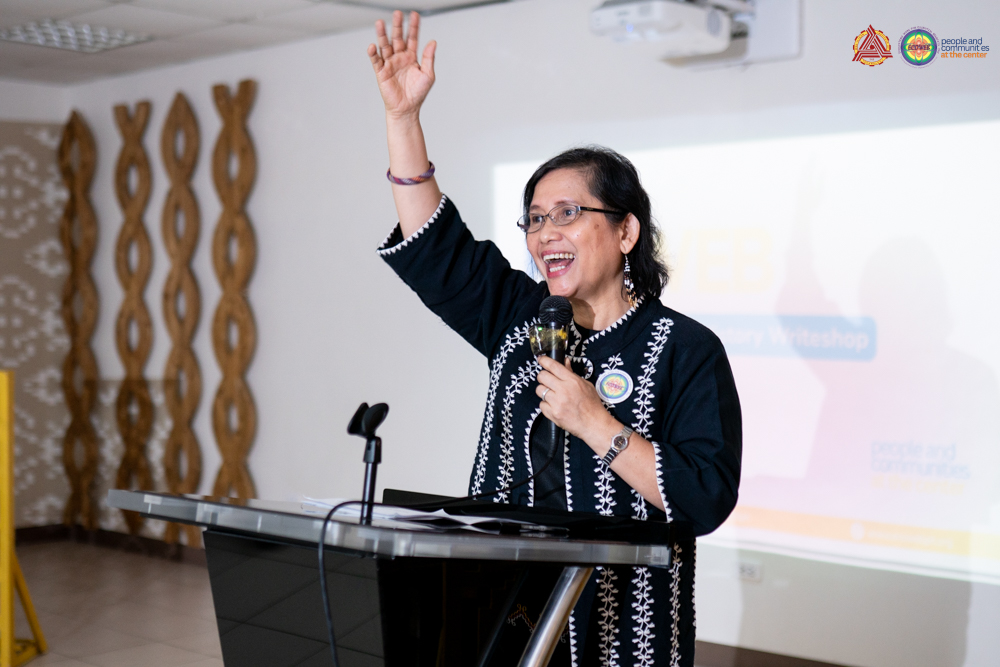
Thank you to our moderator, Sir John Leandro (Reyes).
Good morning to everyone.
On behalf of Ecosystems Work for Essential Benefits, or ECOWEB, Inc., I warmly and respectfully acknowledge Dr. Cecilia B. Tangian, Commissioner of the National Historical Commission of the Philippines; Dr. Jamelyn B. Palattao, Chairperson of the MSU-IIT Department of History and member of the Executive Committee of the National Committee on Historical Research and also other members present and other members of the committee: Dr. Faina A. Ulindang (Xavier UNivesrity); Prof. Abubacar Ali (MSU-Marawi); and Sir Ruhollah Al-Husseini Alonto (MSU-IIT); the respresentative of the National Commission for Culture and the Arts, Ms. Katlyn Marie Pamintuan; our distinguished replica watches UK lecturers and resource persons, from UP Diliman -Dr. Ian Christopher B. Alfonso and from MSU-IIT, Dr. Juvanni Caballero, and Assoc. Prof. Artchil D. Daug; our historians, researchers, teachers, students, cultural workers, fellow partners, all participants and guests, members of the ECOWEB team (Rockrock, our own historian, Bryan, Aisah and team members who worked hard to support this collaboration), and everyone who made this meaningful gathering possible.
I also wish to acknowledge Dr. Earl Jude Cleope, Head of the National Committee on Historical Research, and the members of the NCCA team who helped make this collaboration with ECOWEB possible.
ECOWEB and myself (being an alumnus of MSU-IIT IDS and of MSU Mrawi) are deeply honored, to be part of the Local History Writeshop: Mindanao History in the Making of a Nation, held in celebration of National Heritage Month 2026 under the theme, ‘Roots and Horizon: Our Shared Heritage, Our Collective Future.’ This theme speaks powerfully to the work that gathers us here today. It invites us to look back at our roots not merely as a matter of nostalgia, but as a serious act of remembering, learning, truth-seeking, and future-building.
For ECOWEB, local history is not separate from development, peacebuilding, climate action, indigenous peoples’ rights, child protection, disaster risk reduction, humanitarian response, and local governance. Local history is central to all these. It helps us understand why communities are where they are today, why replica TAG Heuer certain vulnerabilities persist, why some conflicts remain unresolved, why particular identities and claims over land are deeply held, and why resilience is often built not only from resources, but from memory, culture, relationships, and collective struggle.
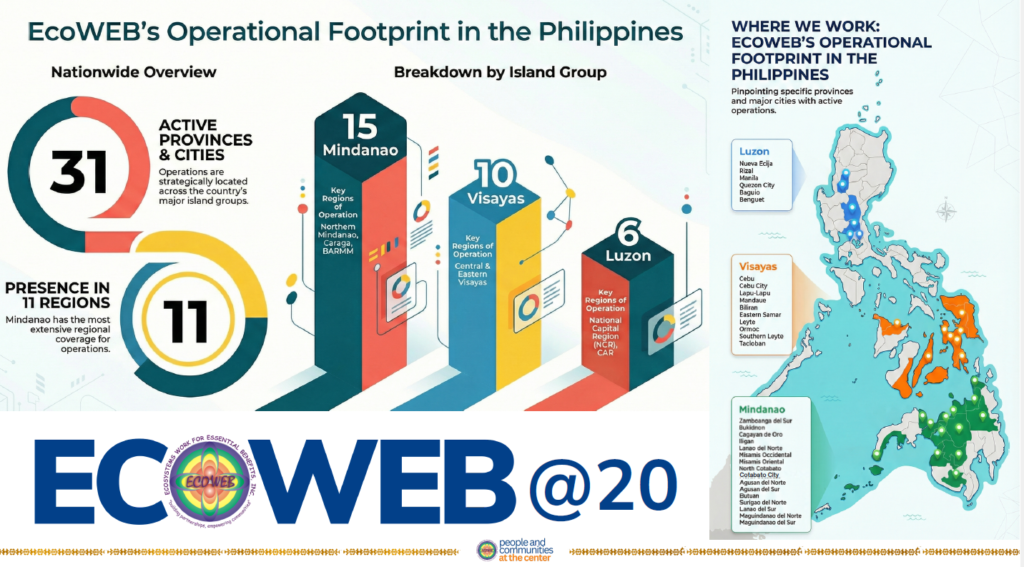
ECOWEB has worked with communities across Mindanao and other parts of the country , with a strong presence in Mindanao and the Bangsamoro region. Across different localities, cultures, faith traditions, and governance contexts, we have learned that meaningful development must begin with the dignity, knowledge, memory, and agency of communities themselves. Programs become more relevant, more accepted, and more transformative when they are grounded in the history, culture, worldview, and lived experience of the people.
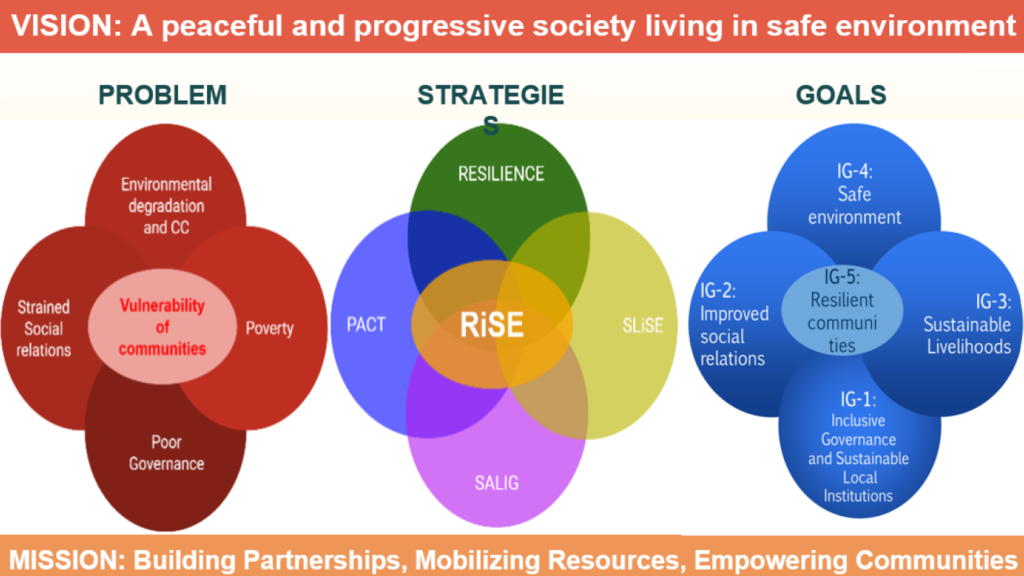
ECOWEB’s Vision, Mission and Goals are also very relevant to why we are here today. Our vision points us toward communities that are empowered, resilient, peaceful, and capable of shaping their own future. Our mission—building partnerships, mobilizing resources, and empowering communities—reminds us that meaningful development must be rooted in people’s dignity, identity, and agency. In this sense, history is not only an academic concern. It is a development resource. It helps communities understand where they come from, why certain injustices persist, how resilience has been built across generations, and how they can move forward with a stronger sense of identity, rights, and collective purpose.
This year is also meaningful for us because ECOWEB is marking its 20th year. For two decades, our organization has advocated for locally led and community-led approaches in development and humanitarian action. We have seen, again and again, that communities cannot be reduced to beneficiaries of projects. They are not empty spaces waiting for interventions. They are bearers of history, keepers of knowledge, protectors of culture, and authors of their own future.
This is why this writeshop matters. It presents Mindanao not as a footnote, not as a marginal space, and not as an ‘alternative’ history, but as an essential and foundational part of the Philippine story. Mindanao’s narratives are complex and multilayered: as we see in Indigenous societies and ancestral domains, Islamic institutions and maritime networks, colonial encounters and resistance, disasters and community survival, land and agricultural transformation, political movements, peace processes, and the continuing search for justice and self-determination. To write Philippine history without fully engaging Mindanao is to write an incomplete national story.
The topics shared for this writeshop show the richness and urgency of this work. In ‘Voices from the Frontier: The Jesuit Missionaries in Northern Mindanao and the Calaganan Mutiny of 1896,‘ we are invited to revisit colonial encounters not only through institutions and written authorities, but also through the experiences of communities who negotiated, resisted, adapted, and survived during a time of profound change.
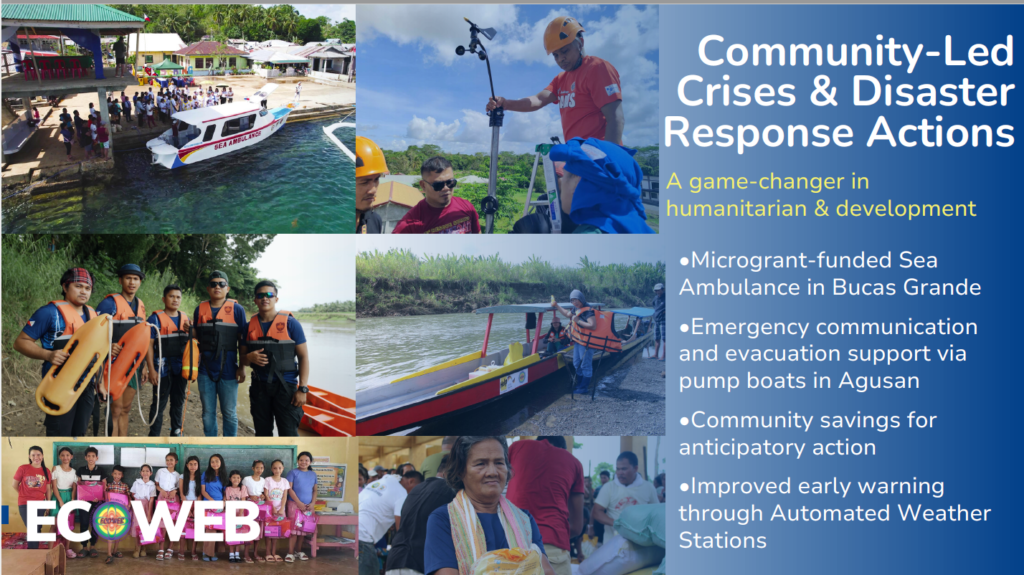
In ‘Recording Calamities: Mindanao Natural Disasters in the 19th Century Based on the Jesuit Letters,‘ we are reminded that disasters are not only environmental events. They are historical experiences. They reveal vulnerability, social organization, governance, faith, community response, and the long memory of people living with risk. This resonates deeply with ECOWEB’s humanitarian and disaster response work. We have seen that communities affected by crisis are not helpless. They draw strength from culturally-rooted mutual aid, local leadership, faith, kinship, indigenous practices, and a long history of caring for one another even before external assistance arrives.
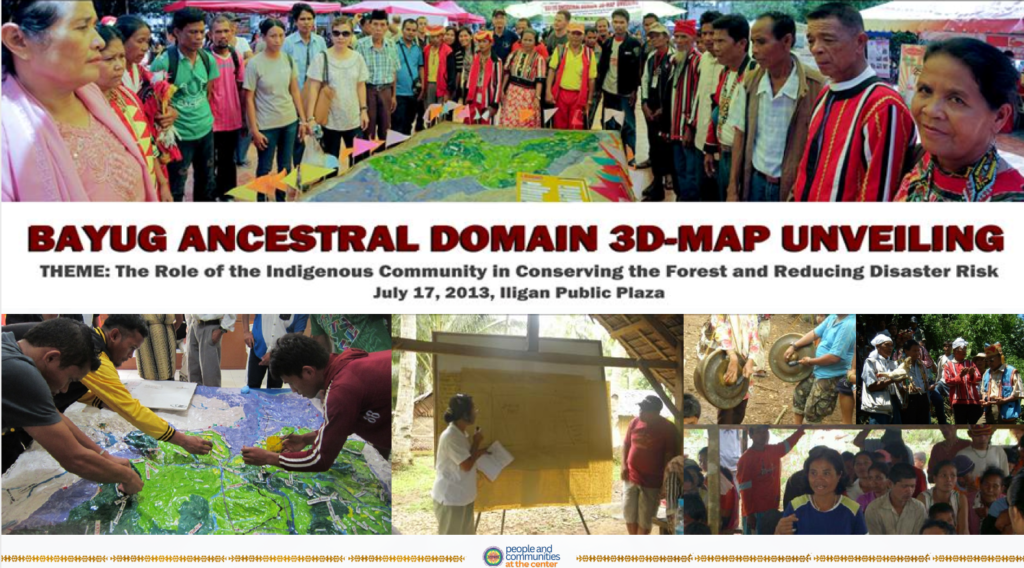
In ‘Tabang-Le: The Resistance Efforts of the Subanens of Sindangan Bay Against the Japanese Occupation,‘ we are reminded that Indigenous peoples were not passive subjects of history. They were actors, defenders, strategists, and leaders in the struggle for survival and freedom. This speaks directly to ECOWEB’s work with Indigenous Peoples, where history is inseparable from ancestral domain, identity, land, governance, culture, and self-determination. Any program that works with Indigenous communities must respect not only present needs, but also historical memory and collective rights.
When we examine American agricultural policies in Bukidnon, political party dynamics in Cagayan de Oro City and their effects on postwar rehabilitation, the persistence of the Mindanao conflict, and the foundational history of ADAMIC in Lanao del Norte, we are reminded that today’s realities did not emerge overnight. Land conflict, displacement, governance challenges, political divisions, social movements, and aspirations for peace are rooted in historical processes. If we want to transform these realities, we must first understand them deeply.
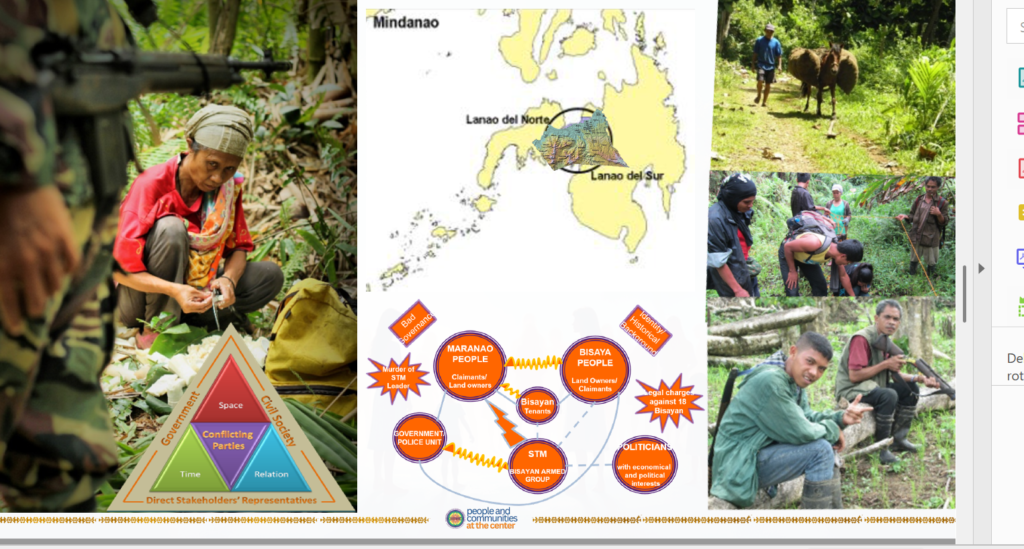
This is particularly important in peacebuilding. In our experience supporting conflict transformation processes, including resource-based and community conflicts in Lanao del Norte like in Barangay Lumbac of Kolambugan municipality, we learned that conflict cannot be addressed only through technical solutions or quick mediation. It requires an honest appreciation of context: how the conflict started, how it developed, who was affected, how relationships were damaged, how memories were formed, and how stories were passed from one generation to another.
Often, when a conflict has lasted for many years, the origin becomes blurred. Facts are remembered differently. Narratives change through repeated telling. What began as one incident may become, over time, a deeply held collective truth. This does not mean that history is irrelevant because people disagree. On the contrary, it means history becomes even more important. Looking at history is not simply about declaring who is truthful and who is not. It is about understanding how people remember, how they make meaning, how they locate themselves within a certain place, and how those memories shape present behavior and future possibilities.
The topic ‘Competing Truths, Shared Land: The Persistence of the Mindanao Conflict’ is therefore very powerful. It challenges us to go beyond simplified narratives. Mindanao’s conflicts are not merely about difference. They are also about historical injustice, exclusion, land dispossession, governance failures, mistrust, and competing versions of truth. But the phrase ‘shared land’ also gives us hope. It reminds us that history can be used not only to divide, but also to open spaces for dialogue, recognition, healing, accountability, and coexistence.
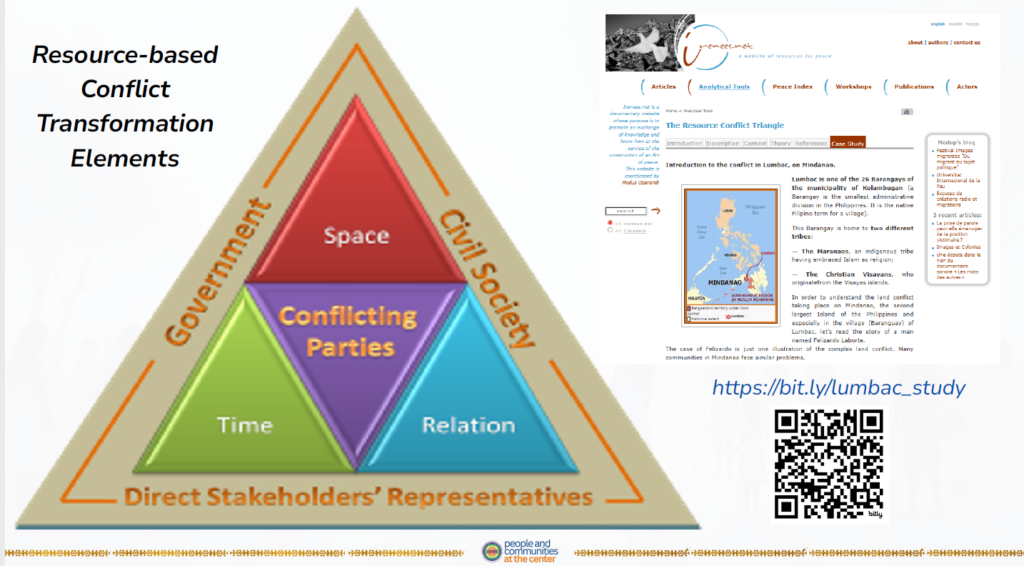
This is our learning in the Lumbac Conflict Transformation which experience inspired us to develop “The CONFLICT TRIANGLE” framework (as you can see in the screen) that showed the interface of Space, Relation and Time elements in a conflict and in its transformation process. If you want to know more about this case and the framework, you may click the QR code line to the published case study.
For ECOWEB, this is where history becomes practical and transformative. In community-led development, humanitarian action, climate resilience, and peacebuilding, we constantly ask whose knowledge counts, whose story is heard, whose pain is recognized, whose rights are protected, and whose leadership is supported. These are development questions, but they are also historical questions. They remind us that present realities are shaped by memory, lived experience, local knowledge, and struggles from the past.
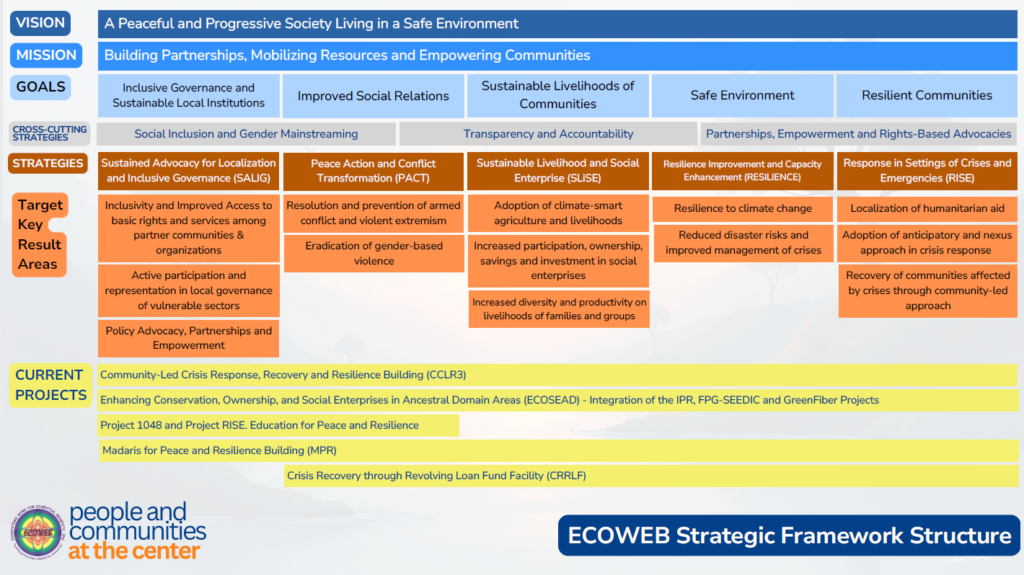
This is why ECOWEB values this collaboration that I hope will result to more complementary work in the future. Our Strategic Development Framework shows where partnership can be developed further.The writeshop’s objectives—to uncover hidden narratives, highlight Mindanao’s regional centrality, empower local voices, and foster collaboration among historians, researchers, educators, journalists, cultural workers, and communities—are strongly aligned with our commitment to locally led and community-rooted development. We especially appreciate that this program is not only a lecture series, but also a capacity-building and scholarly production process that can help bring Mindanao’s stories into the broader national historical discourse.
This matters because many community stories remain undocumented. Many accounts of resistance, survival, adaptation, leadership, and collective struggle remain in oral traditions, local archives, faith-based records, organizational files, family memories, and the recollections of elders. If these are not carefully documented, validated, and shared, they may disappear—and with them, important parts of our national story.
Our hope is that this writeshop will help move local history from scattered memory to shared knowledge; from oral accounts to documented evidence; from local archives to national consciousness; and from academic discussion to public understanding. We also hope it will strengthen the bridge between academic institutions and community-based organizations, because scholarship can deepen practice, and community experience can enrich scholarship.
As ECOWEB, we affirm our commitment to initiatives that strengthen heritage, peace, resilience, and people-centered development. We believe that when communities understand their history, they are better able to defend their rights, protect their culture, care for their environment, respond to disasters, build peace, and shape their future.
History is not only about what happened before. It is about how people remember, how they make meaning, how they struggle for recognition, and how they imagine what is still possible. May this Local History Writeshop help us write a more inclusive story of Mindanao—and through Mindanao, a more honest and complete story of the Filipino nation.
Daghang salamat, and congratulations to everyone who made this important undertaking possible.