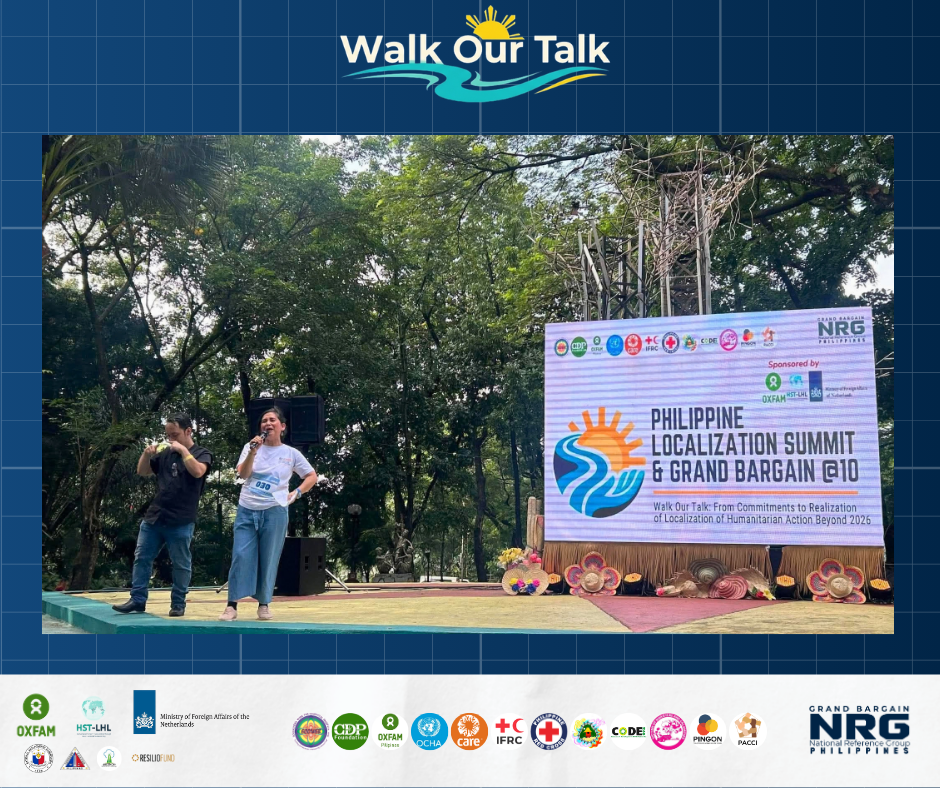
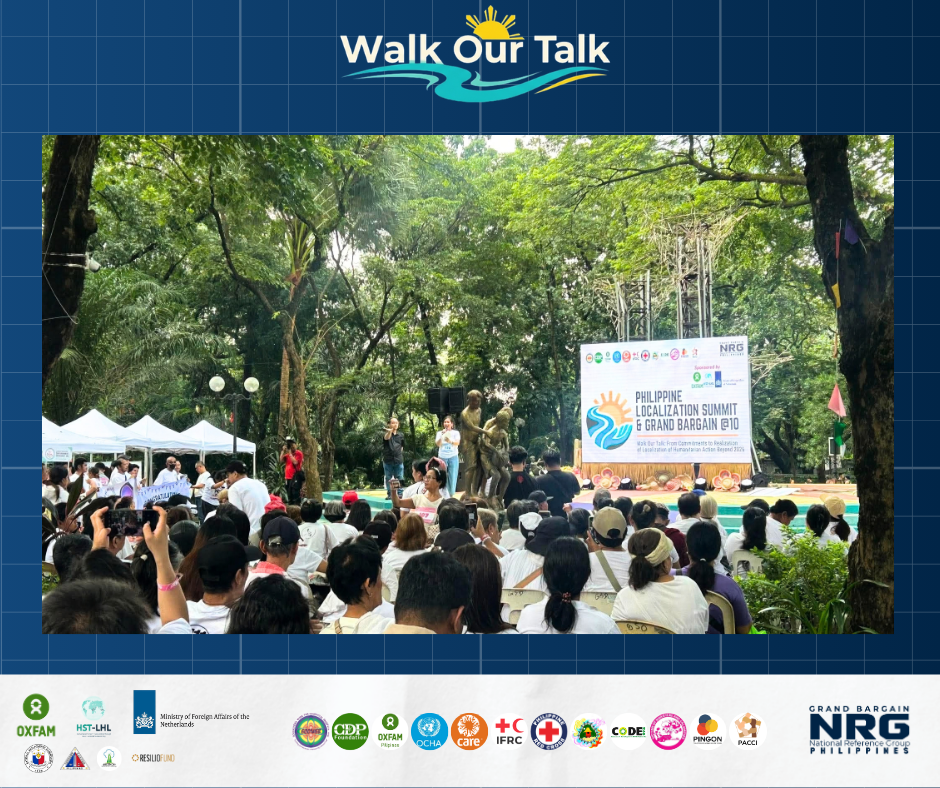
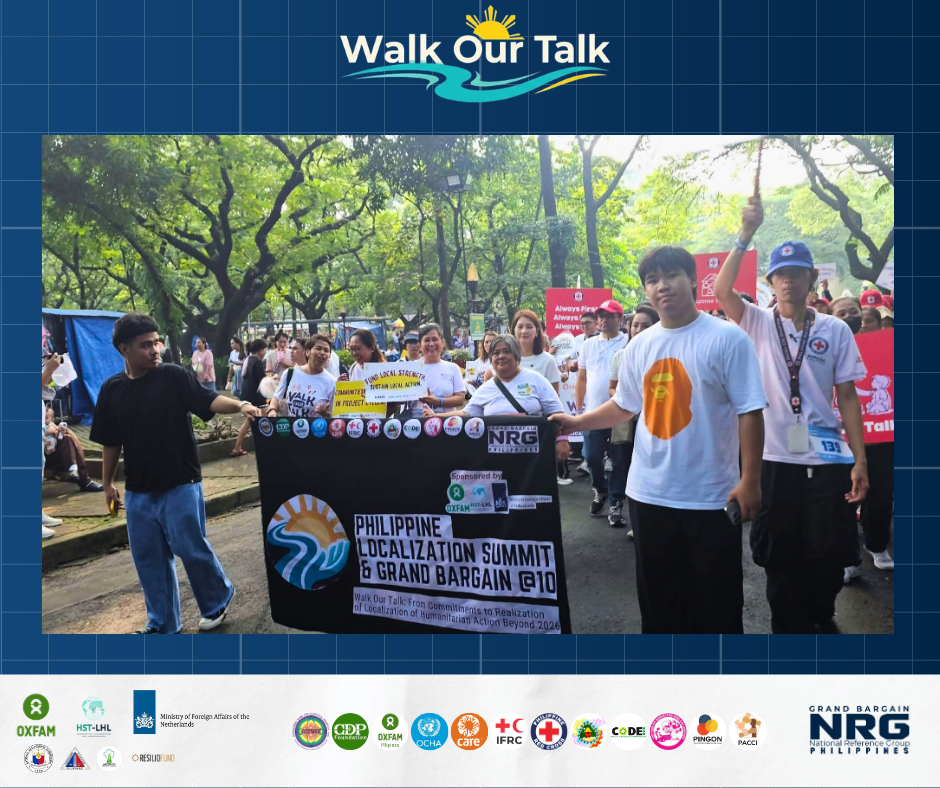
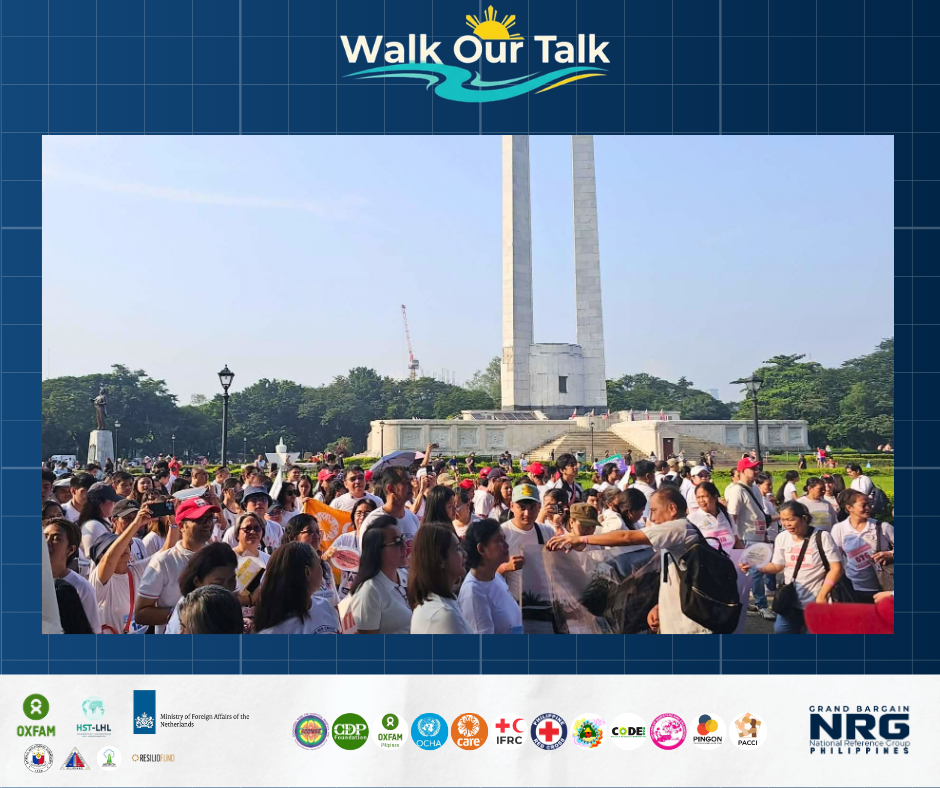
On September 27, more than 700 humanitarian advocates gathered at Quezon Memorial Circle for Walk Our Talk on Localization, marking 10 years of the Grand Bargain and calling for a humanitarian system where power, decision-making, and resources are more firmly rooted in local hands.
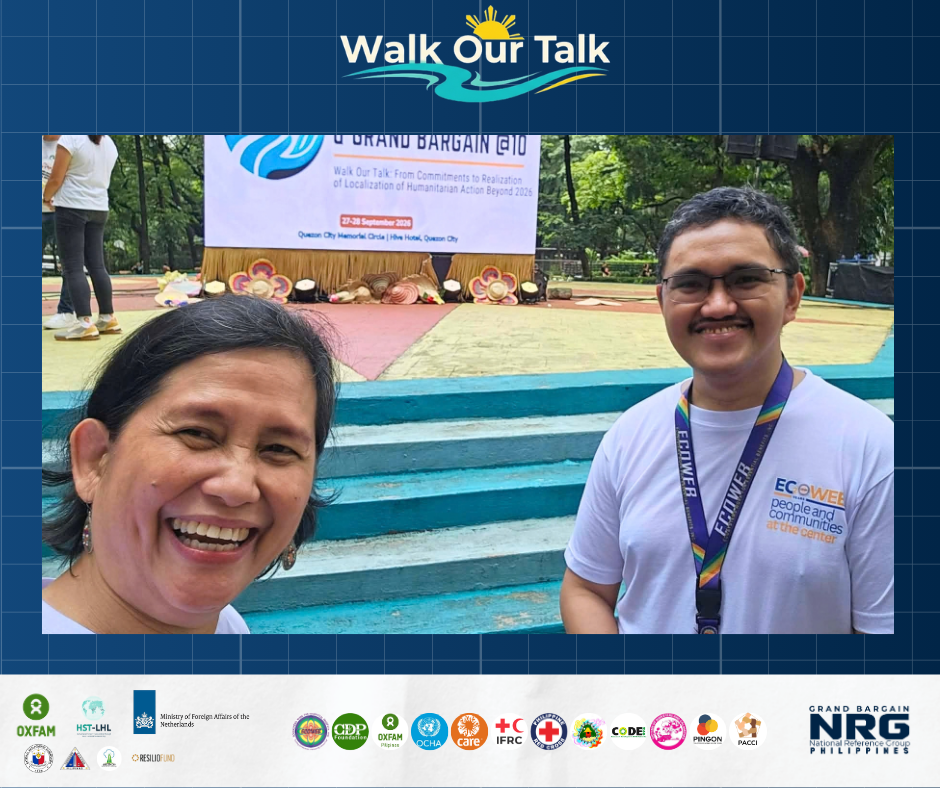
The activity was organized by the Grand Bargain National Reference Group Philippines, with ECOWEB Executive Director Regina Salvador-Antequisa serving as the NRG’s Local and National Actors focal point, together with Rhoda Avila of Oxfam Pilipinas and Loreine dela Cruz of the Center for Disaster Preparedness (CDP) as co-leads.
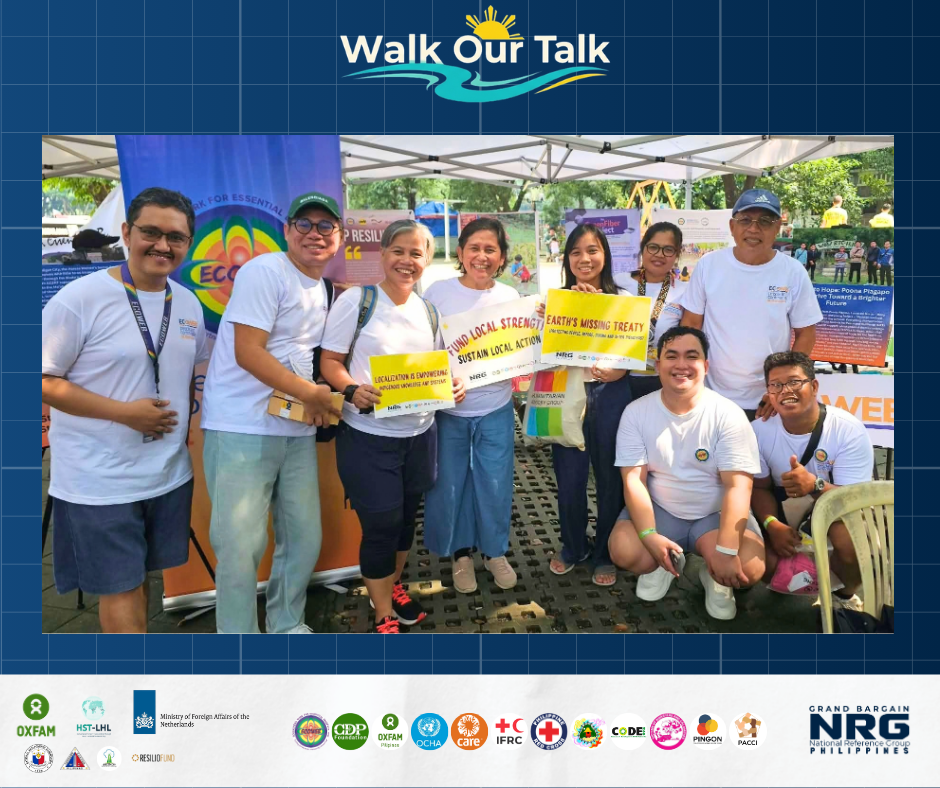
The NRG Philippines Core Members include ECOWEB, Inc.; Center for Disaster Preparedness (CDP); Oxfam Pilipinas; United Nations OCHA Philippines; CARE Philippines; IFRC Philippine Office; Philippine Red Cross; DRRNet Philippines; Caucus of Development NGO Networks; National Anti-Poverty Commission-VDC Sectoral Council; Philippine Inclusive NGO Network; and Philippine Arab Cooperation Council Inc. – PACCI.
The walk moved through three interactive pit stops: Shift the Power, From Voice to Power, and Fund the Shift, where participants tested commitments against realities on the ground, shared their demands, and reflected on what still needs to change.
At Shift the Power, participants examined commitments on direct funding, local leadership, equitable partnerships, flexible funding, and community-led action. The discussions showed that while progress has been made, important gaps remain.
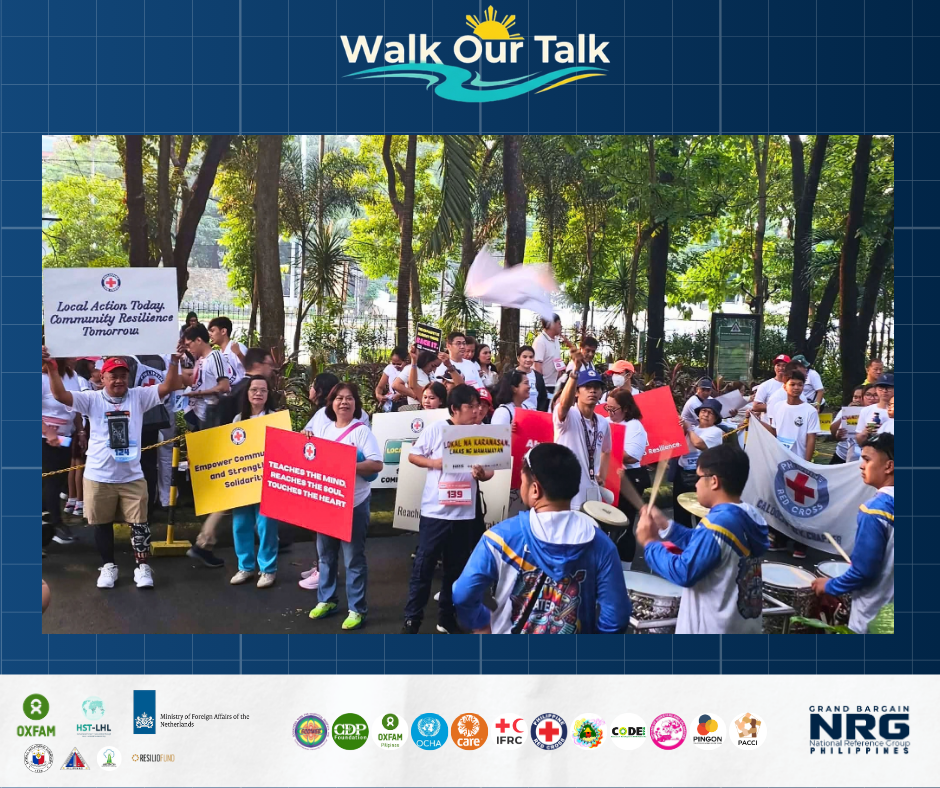
At From Voice to Power, participants used a Voice Wall to share their experiences and demands. A recurring message was that communities must move beyond being consulted – they must have a meaningful role in influencing humanitarian decisions and shaping responses to their own needs.
At Fund the Shift, participants identified four interconnected priorities for strengthening local organizations: institutional funding, multi-year programs, capacity building, and simplified compliance systems. One participant from the Center for Disaster Preparedness put it plainly:
“Para mapabilis: pondohan ang local organizations; magkaroon ng longer-term pero sustainable programs; palakasin ang kakayahan ng local actors; at gawing mas simple ang compliance requirements mula sa donors.” (To accelerate the shift, fund local organizations, provide longer-term and sustainable programs, strengthen the capacity of local actors, and simplify compliance requirements from donors.)
The discussions reinforced a central lesson from the 10-year journey: localization cannot remain a commitment on paper. The shift in power must also be reflected in who decides, who leads, and where resources go.
The insights gathered throughout the walk will contribute to the 2026 State of Localization Report and the Philippine Localization Agenda for the Global Annual Meeting in Geneva.
The activity was supported by Oxfam, Humanitarian System Transformation through Local Humanitarian Leadership (HST-LHL), the Ministry of Foreign Affairs of the Netherlands, Resilio Fund, NAPC, Quezon City LGU, and Quezon Memorial Circle.
Ten years of the Grand Bargain is a milestone – but not a finish line.
Walk our talk. Shift the power. Put communities at the center.