On the morning of June 8, 2026, a powerful magnitude 7.8 earthquake struck parts of Mindanao, severely affecting communities in General Santos City and the municipalities of Glan and Malapatan in Sarangani Province.
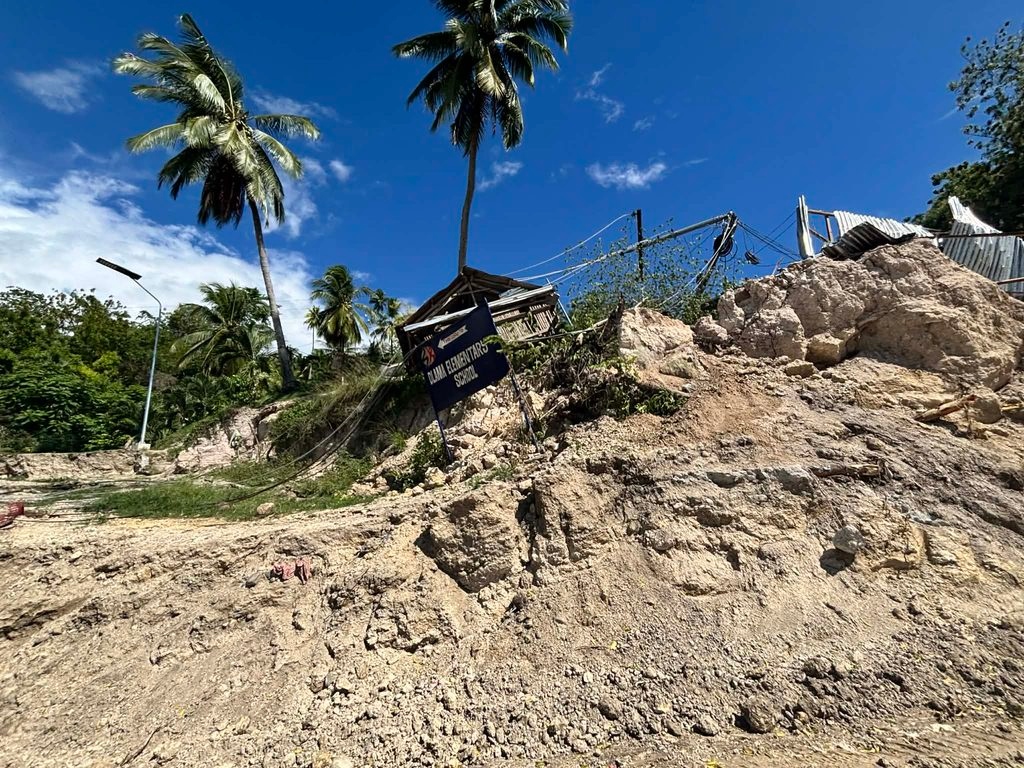
Homes collapsed or were rendered unsafe. Roads and public infrastructure were damaged. Landslides and ground liquefaction devastated some communities, while continuing aftershocks forced families to remain outside their homes and in temporary shelters. Beyond the visible destruction, the earthquake also disrupted livelihoods, access to water, electricity, communications, and the everyday systems families depended on.
In the aftermath, ECOWEB’s Survivor and Community-Led Response (sclr) team was deployed to affected areas. Rather than arriving with a predetermined package of assistance, the team first coordinated with local disaster risk reduction and management offices and went into communities to listen, understand the situation, and identify what survivors themselves considered most urgent.
This reflects a central principle of sclr: communities affected by a disaster are supported to lead their own response and recovery. Through appreciative inquiry and community engagement, ECOWEB helps organized groups identify their priorities, develop proposals, and access flexible microgrants. The communities then take responsibility for managing the resources, procuring the materials or services they need, and implementing or organizing the response themselves. In this way, external resources strengthen existing community capacities and leadership rather than replacing them.
Reaching Communities and Listening First
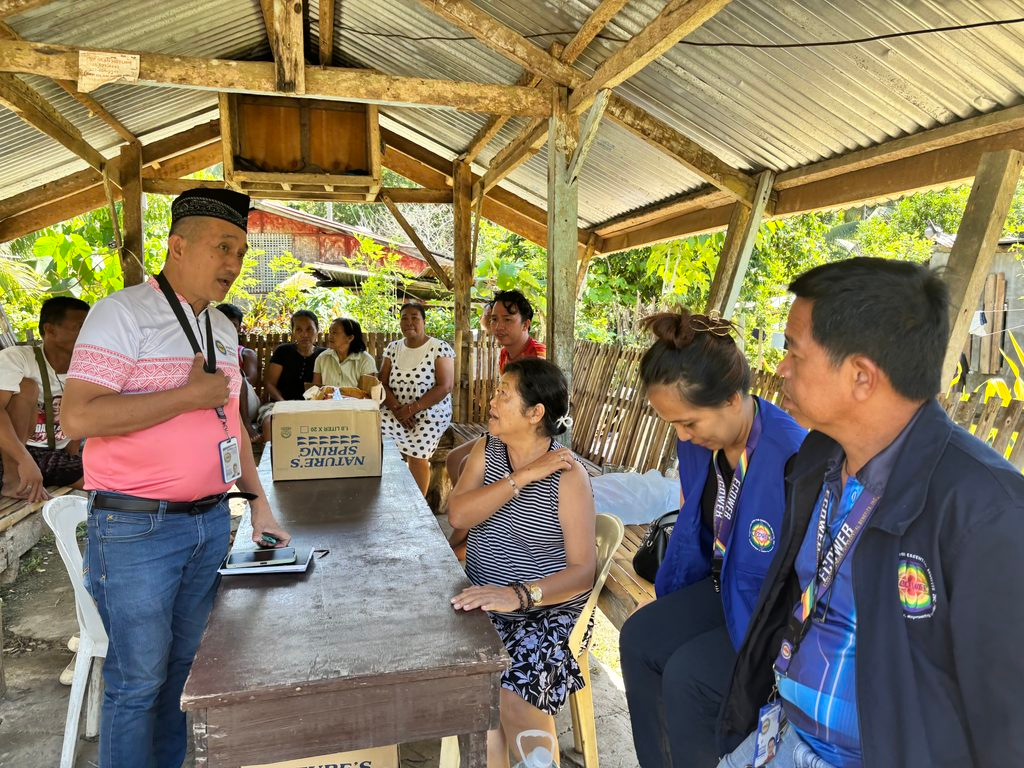
ECOWEB engaged affected groups and communities in General Santos City, Glan, and Malapatan.
In General Santos City, the team reached Barangays Lagao and Buayan. In Malapatan, engagement covered Barangays Sapu Padido, Sapu Masla, and Lun Padido. In Glan, the team reached Barangays Lago, Tapon, Glan Padido, and Kapatan.
Across these areas, the initial response documentation covered approximately 4,989 affected families – 938 in the communities reached in General Santos City, 3,449 in Glan, and 602 in Malapatan.
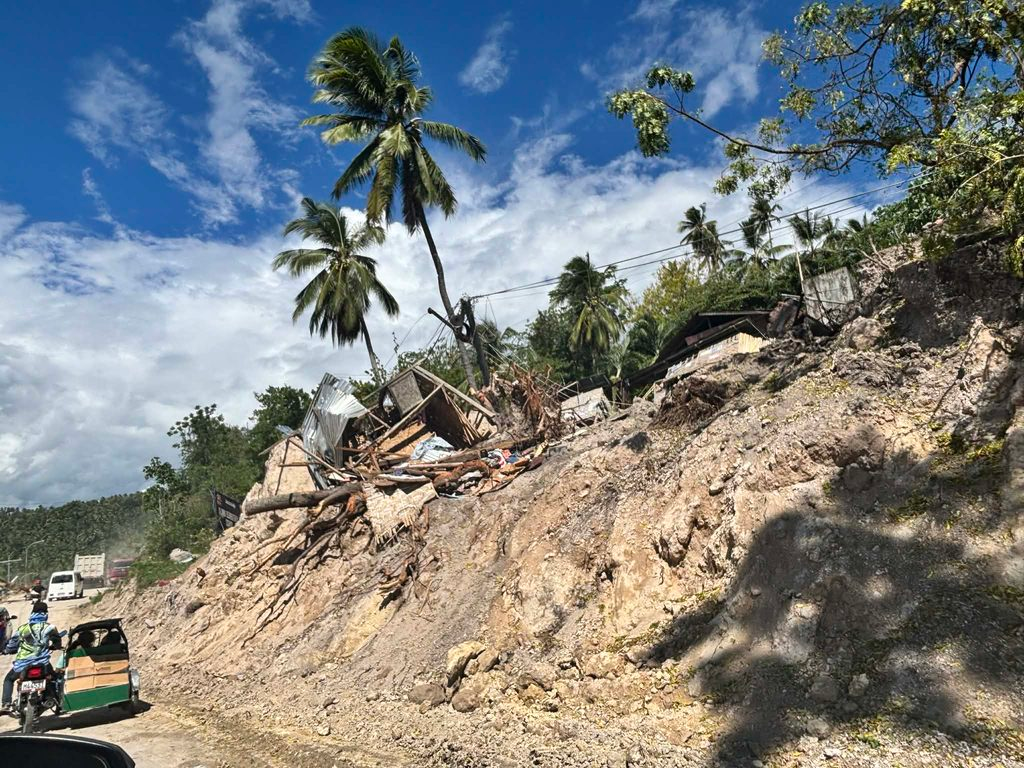
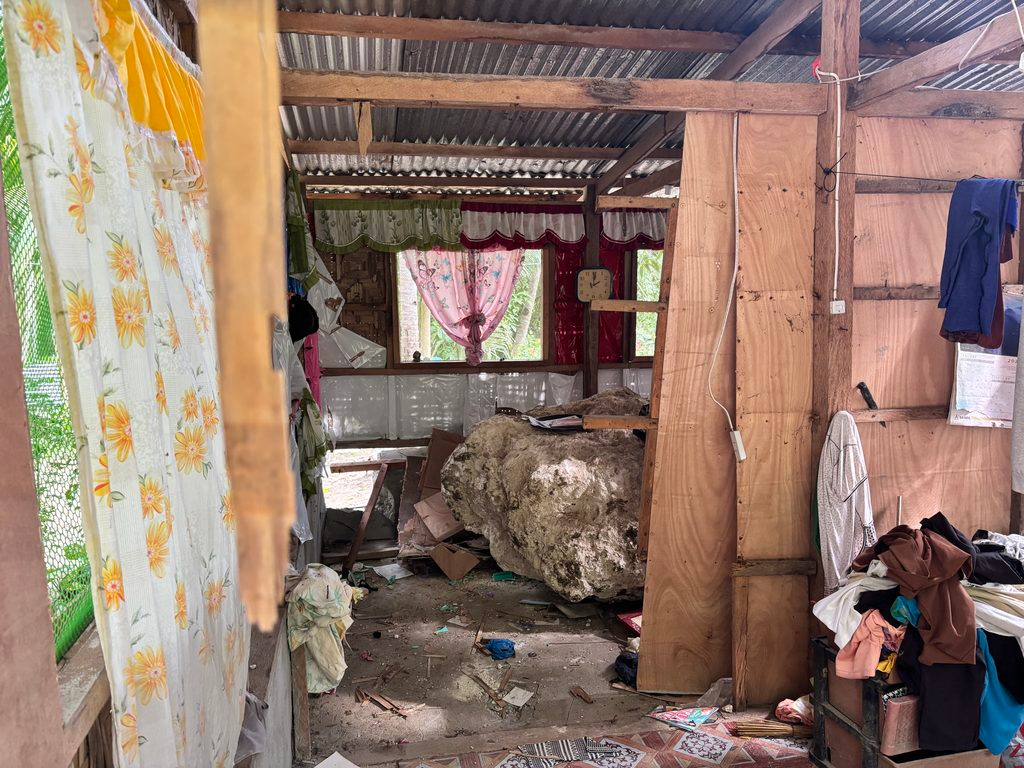
The devastation varied from one community to another. In Barangay Kapatan, Glan, houses were toppled and destroyed following ground liquefaction and landslides, with debris affecting portions of the national highway. In Barangay Lago, huge boulders rolled down from the mountains during earthquake-induced landslides, destroying houses and forcing residents to stay in makeshift tents.
In Sapu Masla, Malapatan, the first floor of a two-storey house collapsed completely. Public infrastructure was also heavily affected, with buildings in the Glan municipal center reduced to rubble and several structures remaining unsafe because of the risk of sudden collapse.
The needs were diverse, and so were the solutions identified by the communities themselves.
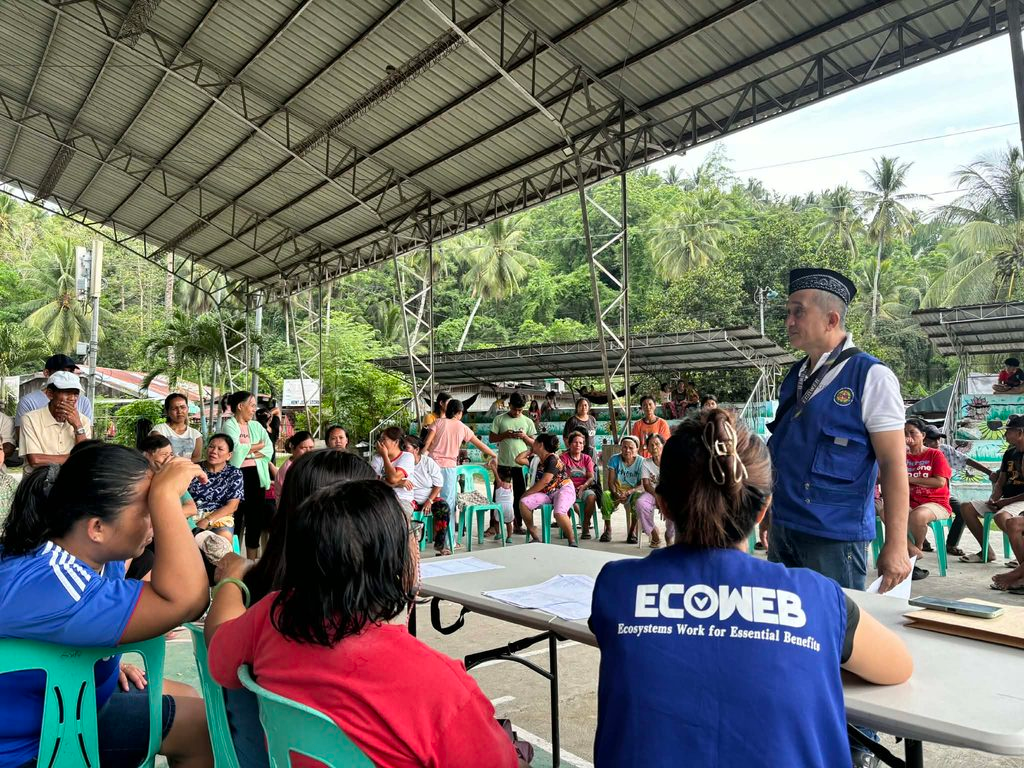
Through the sclr process, affected groups developed and submitted 22 community proposals across the areas reached. These proposals covered priorities including shelter repair and housing materials, livelihood support, kitchen utensils, water access, and solar lighting.
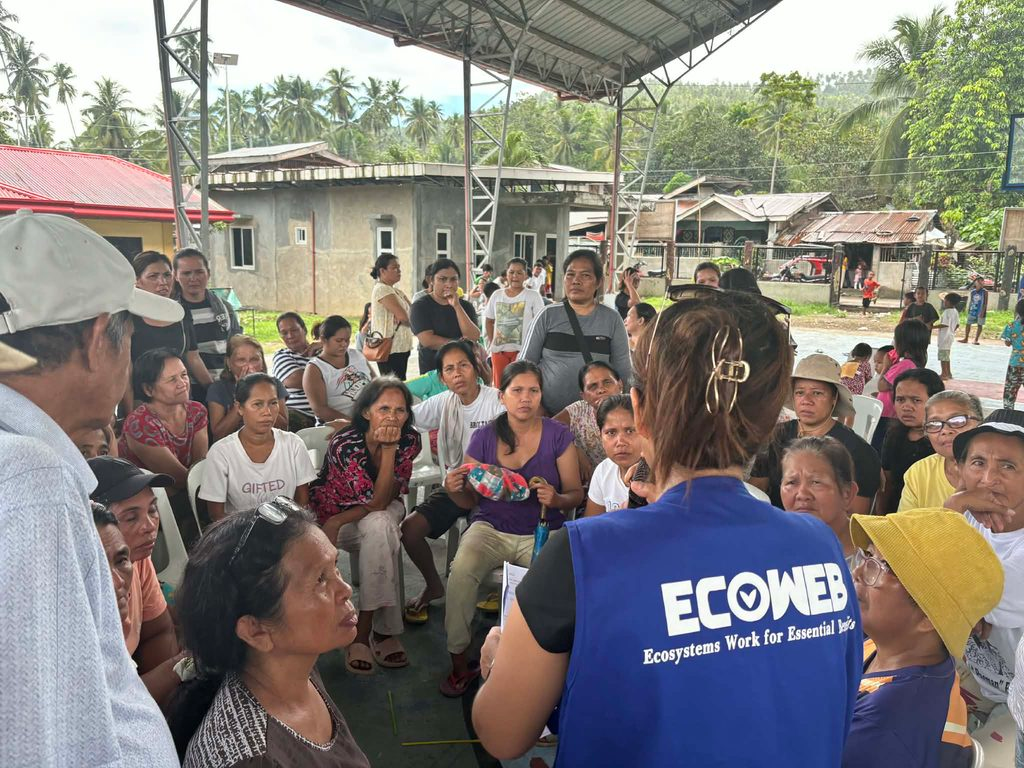
The role of ECOWEB was to provide resources and accompaniment that enabled these groups to act on their own proposals. Instead of ECOWEB deciding what should be distributed, purchasing all the materials, and carrying out the response on behalf of survivors, the sclr model places the responsibility and decision-making closer to the people directly affected. Communities manage the support provided to them and determine how best to use it according to their approved proposals and local priorities.
This approach also complemented assistance provided by government agencies, humanitarian organizations, civil society groups, and other responders, including food packs, water, temporary shelter, psychosocial support, and medical assistance.
Rebuilding a Fishing Livelihood Through Pagbinoligay
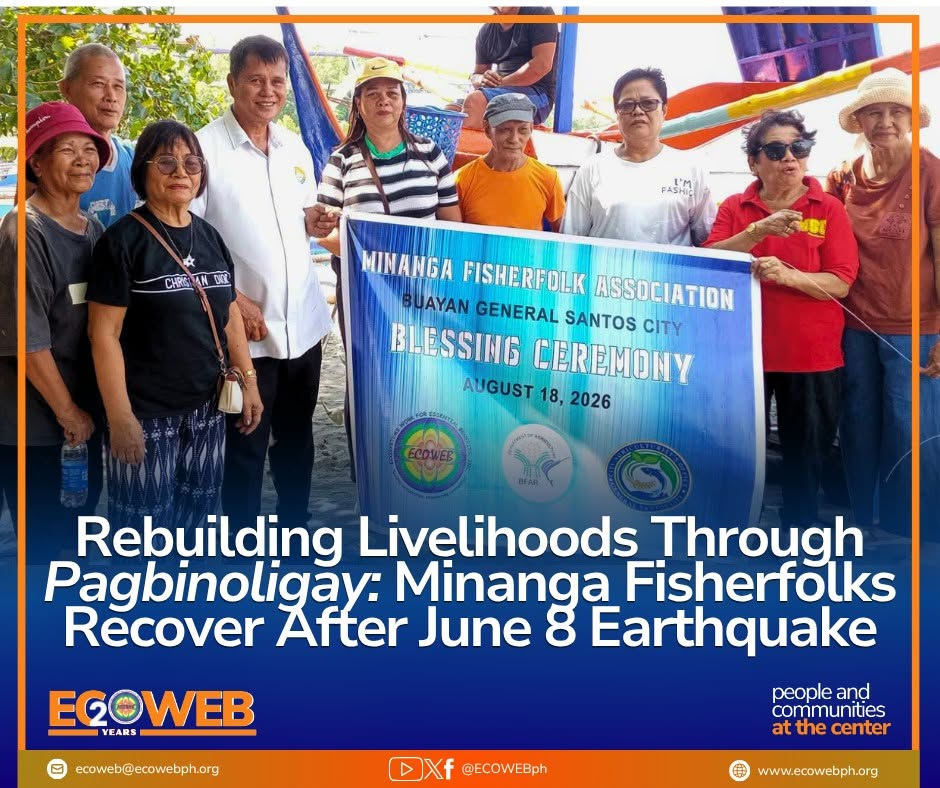
In Purok 4, Minanga, Barangay Buayan, General Santos City, the earthquake affected the Minanga Fisherfolks Association, a community-based organization of fisherfolk and their families that has been active since 2014.
Fourteen houses were totally damaged, while others sustained partial damage. Fishing boats, engines, and equipment were also affected. Continued aftershocks, strong waves, and concern over a possible tsunami prevented fisherfolk from immediately returning to sea, putting an important source of food and income on hold.
Yet the community had an important resource that survived the disaster: pagbinoligay, or helping one another.
During the earthquake, association members helped move families to safer areas. In the days that followed, they continued supporting one another as the community dealt with power and internet disruptions and shortages of potable water.
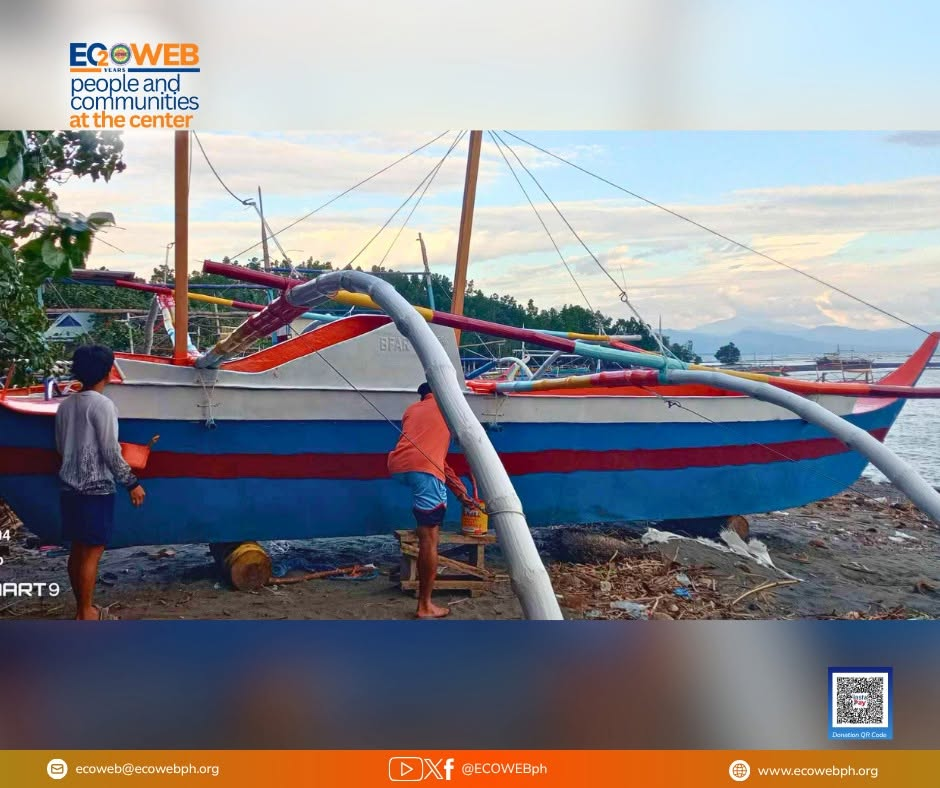
Through ECOWEB’s sclr microgrant mechanism, the association developed and submitted its own recovery proposal, “Bangka alang sa Pangabuhian.” The initiative focuses on restoring a fishing banca so affected members can gradually resume their livelihood.
The proposed ₱70,695 initiative covers materials and equipment such as ropes, fishing net materials, electrical supplies, a battery charger, battery clamps, and other items needed to make the boat operational again. The association itself will manage the implementation of the proposed recovery action using the resources provided through the microgrant.
The initiative benefited 17 families or 52 individuals, including 27 women, 25 men, and one person with disability. For the association, rebuilding is about more than repairing a boat. It is about restoring families’ ability to earn, provide food for their households, and regain confidence in their capacity to recover.
The association’s experience also reflects the importance of building on community strengths. Its members have long participated in mangrove planting, coastal clean-ups, and other environmental activities with local government and environmental agencies. Their commitment to protecting the coastal environment goes hand in hand with their efforts to restore the livelihoods that depend on it.
“Daghang-Daghang Salamat”: Light Reaches Those Who Need It Most
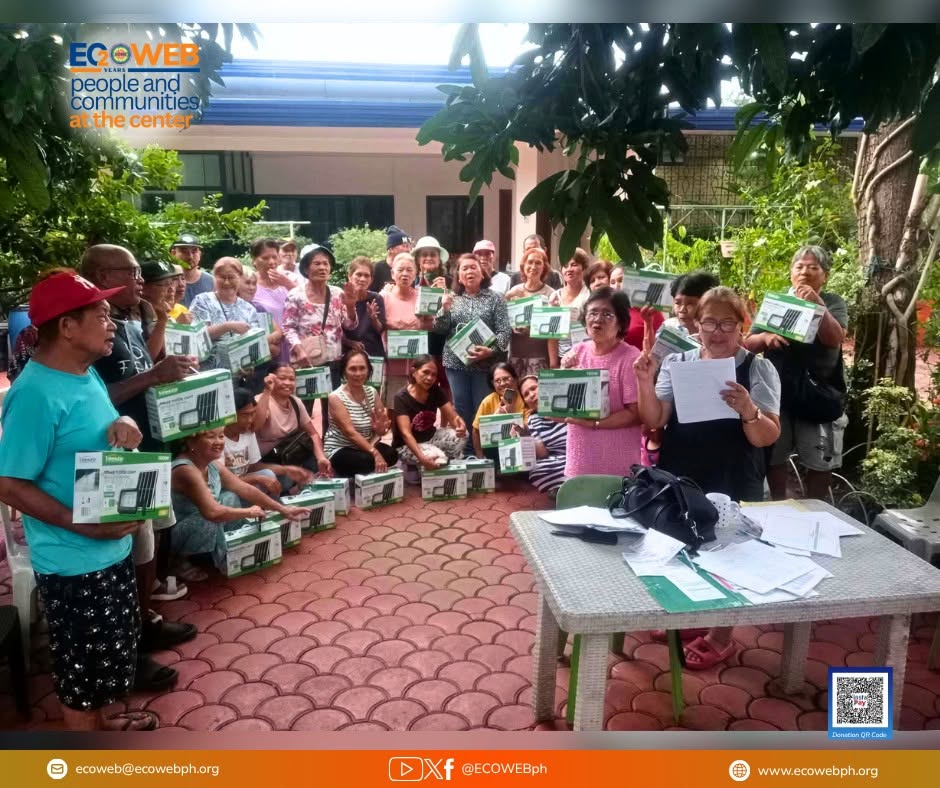
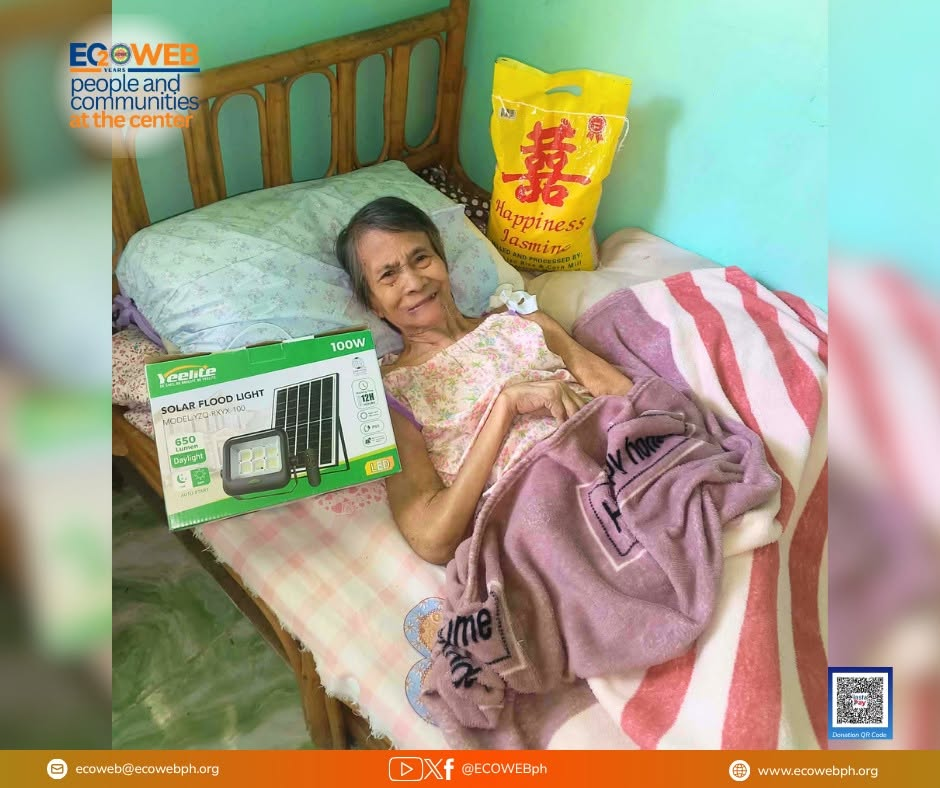
In Barangay Lagao, General Santos City, the Senior Citizens Chapter 8-A of Balite Pag-asa also received support through ECOWEB’s sclr approach.
Following the earthquake, the group used its microgrant to support affected community members, including through solar lights that could help families cope with power disruptions and unsafe conditions after the disaster.
What is particularly significant is that the group did not limit the assistance to its own members.
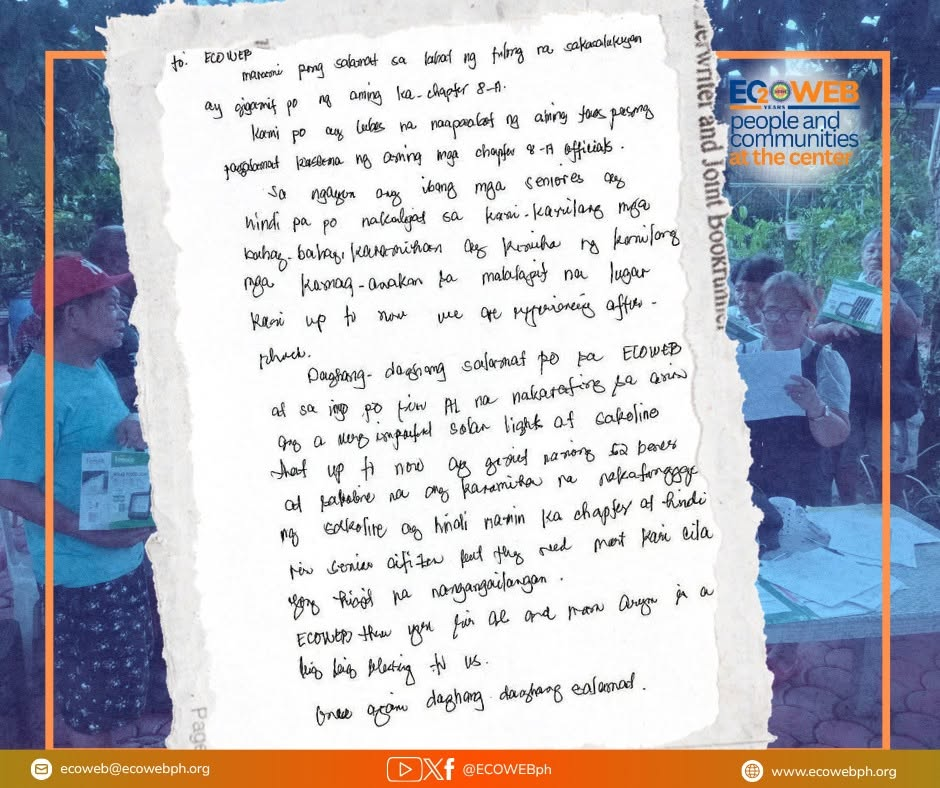
The community itself helped identify who needed the support most and managed the distribution of the assistance. In a letter to ECOWEB, the group explained that among the 52 beneficiaries were people who were neither members of their chapter nor senior citizens – but who, in their assessment, were more in need of the assistance.
“Daghang-daghang salamat po sa ECOWEB… ang karamihan na nakatanggap… ay hindi namin ka-chapter at hindi rin senior citizen but they need most.”
The experience illustrates an important aspect of sclr: communities are trusted to make decisions about how resources can best serve people affected by a crisis. The grant does not simply enable the purchase of assistance – it enables communities to organize, manage resources, and take action based on their own understanding of who needs help and what will make a difference.
Beyond Relief: Supporting Communities to Lead Recovery
The June 2026 Mindanao earthquake demonstrated both the scale of destruction that a sudden disaster can cause and the strength that already exists within affected communities.
ECOWEB’s response was built around that strength. Through rapid deployment, coordination with local authorities, appreciative inquiry, community proposal development, and flexible microgrants, ECOWEB supported survivors to take an active role in their own recovery.
The communities’ various proposals show how different those priorities can be. Some communities identified shelter and housing needs. Others prioritized solar lighting, livelihood recovery, kitchen equipment, or other locally identified concerns. This is what makes sclr different from a conventional relief model. ECOWEB does not determine the response on behalf of communities. Instead, it provides resources, accompaniment, and space for affected groups to decide and act.
Communities identify their priorities, prepare proposals, manage the grants, procure or organize what they need, and implement their chosen actions. Their existing organizations, relationships, knowledge, and solidarity become part of the response.
For communities such as the Minanga Fisherfolks Association, this means using a microgrant to rebuild the livelihood that sustains their families. For Chapter 8-A, it meant ensuring that assistance reached people beyond their own membership who they believed needed it most. These experiences show that recovery is not something that happens to communities. It can happen with communities and, importantly, be led by them.
As affected families continue rebuilding after the earthquake, ECOWEB’s role is to help ensure that resources reach survivors in ways that strengthen their ability to decide, organize, and recover on their own terms. From emergency response to recovery, the power to act remains where it belongs: in the hands of the communities themselves.
By Kin Barkly Tibang
Photos by Audrey Rose Velayo, Aryn Pasia, and ECOWEB community partners